

Logistics Fails: Warehouse Errors and Equipment Downtime
Every day, warehouse mishaps occur that never make it into reports but systematically eat away at profit. An employee can't find an item, mixes up storage zones, ships the wrong product — and suddenly an order is ruined, the client gets a refund or loses trust.
Each such mistake is not just the cost of the goods, but also time spent fixing it, reputational risks, and a collapsed shipping schedule. Warehouse errors accumulated over a month turn a profitable project into a loss-making one.
A separate headache is equipment downtime. A forklift or stacker sits idle because the operator hasn't been cleared for the job yet: nowhere to train, the mentor is busy, and experiments on real equipment are too risky.
Classic training stretches over weeks and pulls experienced employees out of the process. As a result, the warehouse grinds to a halt, and money goes toward paying for idle time. Downtime losses are usually blamed on seasonality, but in reality it's a flaw in the training system.
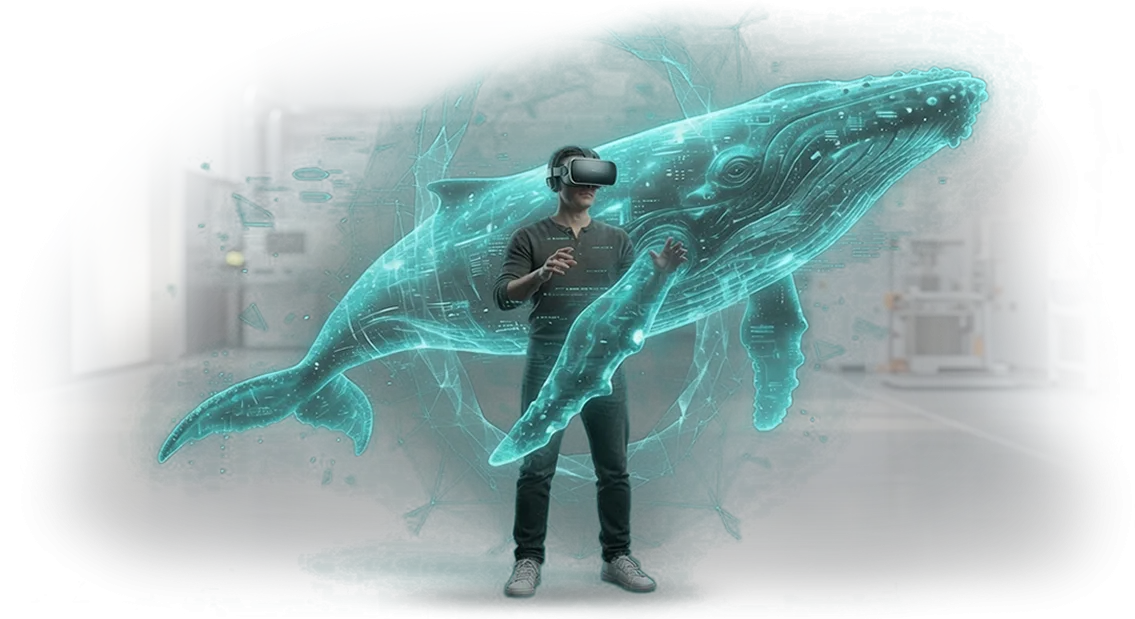
Virtual and augmented reality solve both problems without disrupting the operational cycle. A trainee puts on a headset — and finds themselves in an exact copy of the warehouse: practicing routes, barcode scanning, emergency situations, and working with equipment.
Mistakes in the simulation have no consequences but provide the necessary experience. After such training, the employee is ready for a real shift, and the number of warehouse errors drops sharply.
We develop applications for Apple Vision Pro and other devices that integrate into your training and monitoring process. The client gets not just technology, but a tool that reduces downtime, accelerates new hires to full productivity, and makes logistics predictable. This investment pays off through saved orders and stable team performance.
VR/AR Benefits for Logistics: Control, Speed, Accuracy
In logistics, the cost of a mistake is measured not only in money but also in client time. Incorrect picking, shipping delays, lost cargo — all of this hits reputation and revenue.
VR and AR solutions take control to a new level: employees see exactly what to do, and managers see how the process is going.
One of the main effects is error reduction. Instead of paper instructions and memory, workers get visual hints right in their field of vision: where the product is, where to put it, which route to take.
This is especially important in warehouses with a large assortment and high staff turnover. New employees start working without errors from day one, and the defect rate drops.
The second effect is speed. Finding a product with augmented reality takes far less time than the traditional way. No need to check a terminal, scan barcodes, or search with your eyes for a shelf. The system guides the worker directly to the right cell.
This speeds up order assembly and allows more requests to be processed per shift without expanding the staff.
The third effect is full process control. A manager can see at any time which tasks are being completed, where delays occur, and how evenly employees are loaded. Data is collected automatically, so reports don't need to be prepared manually. This makes warehouse or transport management transparent and clear.
To make all of this work reliably, we build solutions on the basis of Apple Vision Pro — a professional device that ensures precise overlay of digital hints onto real objects. This gives the client a dependable tool for daily work, not an experimental toy.
As a result, the business gets measurable improvements: fewer errors, faster operations, full control.
VR/AR Formats for Logistics Tasks
In logistics, every minute of downtime and every picking error turns into losses. VR/AR on Apple Vision Pro addresses these problems through three formats: training, control, and navigation. They work on a single device and integrate into existing processes without stopping the warehouse.
| Format | For whom | What it gives the client |
|---|---|---|
| Training | New employees, warehouse operators | 2x faster onboarding, skill practice without risk to real equipment |
| Control | Shift supervisors, quality department | Real-time deviation tracking, quick response to errors, reduced defect rate |
| Navigation | Order pickers, warehouse staff | Optimal route right before your eyes — less time finding products, faster picking |
Which format to choose depends on the task. If you need to onboard newcomers quickly, take training. When operational accuracy matters — control. When every minute counts — navigation.
In most cases, we combine formats: first an employee trains in a virtual environment, then sees hints in real work and gets immediate feedback.
This approach delivers measurable business results: a 30–50% reduction in errors, higher order processing speed, and shorter training time. We don't sell technology for its own sake — first we analyze your process, then we propose a format that solves your specific task. A pilot on one site is possible so you can evaluate the effect before full deployment.
How a Project Unfolds: From Brief to Launch
A clear process means a predictable result. We've split the work into stages so that at every step you can see what's happening, what's already done, and what decisions are needed from you.
No "black boxes": you always know where the project stands and when you'll get a concrete result.
-
Brief and task immersion. We discuss your logistics: which operations you want to speed up, who will use the application, which scenarios are needed — from employee training to warehouse navigation. We lock in project goals and success criteria.
-
Work plan and timeline. We put together a plan with stages, approval checkpoints, and dates. You get a realistic schedule tied to your production cycle, so the integration doesn't interfere with warehouse or delivery operations.
-
Prototype and approval. We show how the application will look and work: main screens, action logic, gesture and interface interactions. At this stage you submit changes before full development begins — this saves time and budget.
-
Implementation. We build the complete application: interface, 3D content, integration with your accounting systems and data. We work on professional equipment and tools, so the result is stable on Apple Vision Pro devices.
-
Testing and launch. We test the application in real scenarios: at the warehouse, in the training room, or in the field. We prepare instructions and train your employees so the launch goes off without downtime.
-
Support and growth. After launch, we stay in touch: collect user feedback, fix issues, help with updates, and refine functionality for new business needs.
Thanks to this approach, you get not just an application but a tool embedded in your processes that delivers measurable results — faster training, fewer errors, higher order processing speed. And approval at each stage guarantees the final product meets expectations.
What's Included in the Deliverable: A Complete Business Kit
When you order application development for Apple Vision Pro, you get not just a program but a complete kit for your logistics. It includes everything needed for launch, employee training, and smooth operation without extra hassle.
-
A ready-to-use application for your logistics tasks: warehouse control, routes, order picking. Employees get clear hints right in their workflow and master processes faster.
-
Instructions and regulations for operators and administrators — simple guides for setting up and using the application. Your team will quickly get the hang of it and will be able to train new employees without your involvement.
-
Hands-on staff training. We conduct sessions tailored to the specifics of your warehouse or logistics center, so employees start using the solution on day one.
-
Support at every stage. After launch, we stay in touch: help resolve issues, quickly fix any difficulties, and adapt the application to changes in your processes.
-
Regular updates and refinements. The application grows with your business: we add new scenarios, improve the interface, so the tool always meets current needs.
-
Built-in analytics. You see how operations have accelerated, how much time the team saved, and where reserves remain. This gives a clear picture of implementation effectiveness.
The complete kit is included in the development cost. We accompany the project from day one until your team works confidently — you get a tool that pays for itself quickly and delivers value to your logistics every day.
Case Study: How a VR Trainer Cut Losses in Logistics
When a warehouse assembles thousands of orders daily, even a small percentage of errors turns into direct losses: sorting mistakes, returns, missed delivery deadlines.
Most often the cause is human error: new employees learn on real orders and inevitably waste the company's time and money. We solve this problem with VR trainers that move training into a safe virtual environment.
A telling example is the project for the logistics operator VolgaLog. The company faced a high rate of picking errors at a new warehouse: every tenth order went out with an incorrect item.
After four weeks of using the trainer, the error rate dropped by 47%, and the average onboarding time for a new hire fell from two weeks to three days. Warehouse managers gained a tool that assesses employee performance objectively, without a mentor's involvement.
The economic effect turned out even higher than expected: losses from defects and rework nearly halved, and the throughput of the picking area grew by a third with the same headcount.
Employees master routes, scanners, and packing rules faster, and turnover during the probation period decreased — newcomers stopped being afraid of making mistakes on real orders.
The key result is not just "training in VR" but a manageable business metric visible in reports within a month. The trainer can be adapted to a specific warehouse, product range, and internal regulations, so the effect is reproducible at every new site.
The approach pays off quickly and works proactively: you reduce losses before they become a permanent cost item.
How to Choose the Right Format for Your Task?
Choosing a format isn't a matter of fashion, it's a matter of efficiency. The same business process can be visualized in different ways: sometimes you need full immersion, sometimes a light hint at the workstation is enough.
To avoid overpaying and get a predictable result, it's important to base your decision on the specific task, working conditions, and how employees will use the solution.
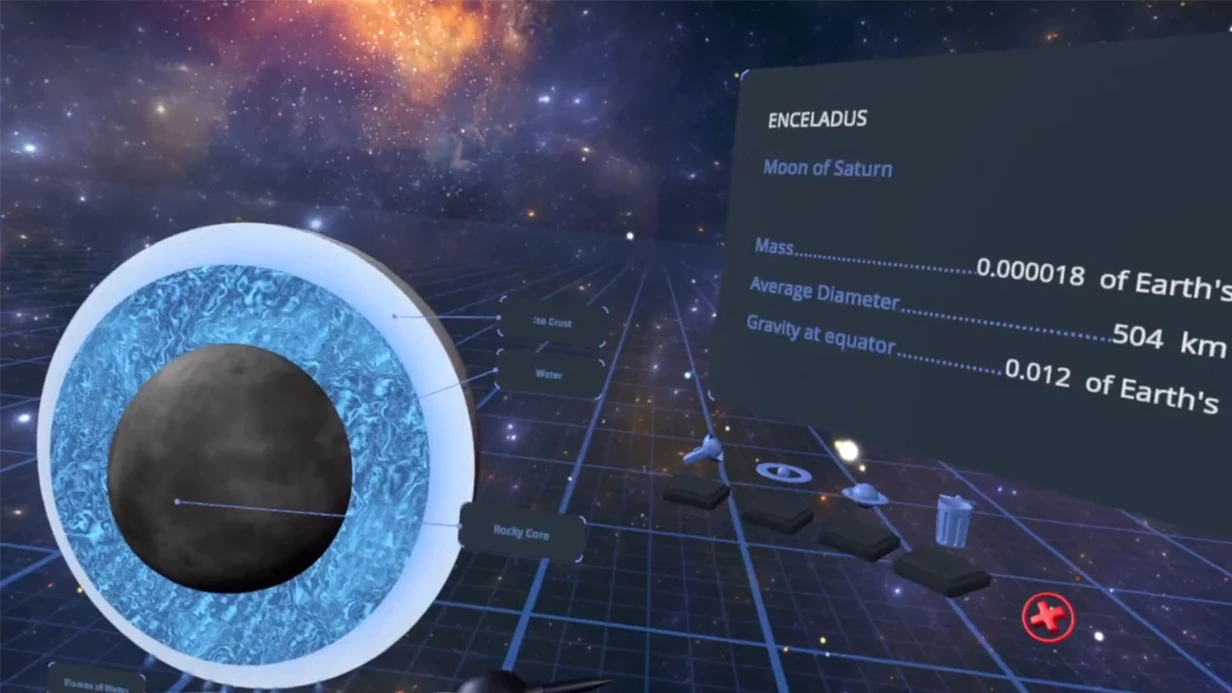
Virtual reality (VR) is indispensable when you need to show an environment that doesn't exist yet or is dangerous to enter. It's ideal for staff training: practicing emergency procedures, handling unusual orders, getting familiar with new warehouse equipment.
The employee enters a safe scenario and gains experience without risk to themselves or the cargo. For logistics, where mistakes are costly, such training pays off through reduced defects and injuries.
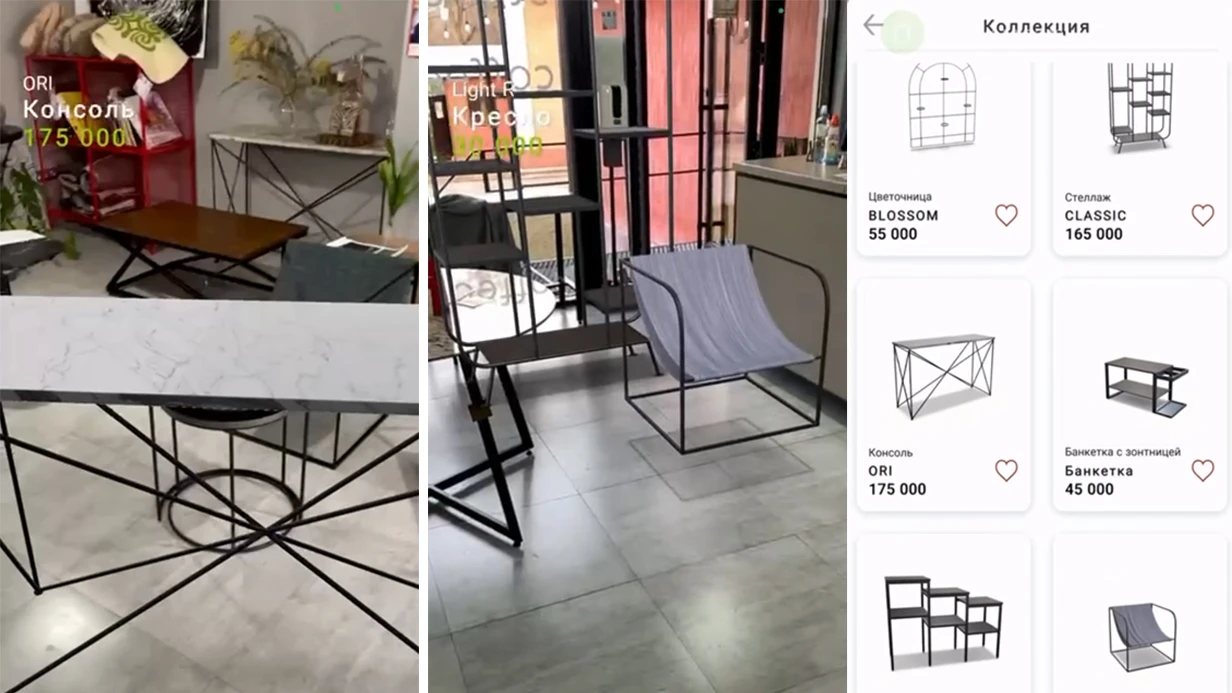
Augmented reality (AR) solves a different problem — it overlays virtual data onto the real world. The employee sees the warehouse as usual, but hints appear around them: route to the right cell, cargo quantity, assembly sequence, size information.
This helps newcomers work effectively from day one, reduces errors, and speeds up operations. AR works where you don't need to leave the workstation — training happens right in the process.
Mixed reality (MR) combines both approaches: virtual objects are not just overlaid but interact with reality. It's the choice for complex tasks — for example, designing rack layouts, verifying equipment passability, or gathering a team to discuss a new warehouse layout.
MR provides a full 3D picture before construction or rearrangement even begins, saving time and budget.
To make a decision, answer three questions: what do you want to improve — speed, quality, safety, or cost; where do your employees work — office, warehouse, field; and whether digital process descriptions already exist.
If you're unsure, describe your task to us — together we'll determine the format, scenario, and suitable equipment, including Apple Vision Pro. One call with our specialist will save you from guesswork and give you a working implementation plan.
Common Concerns: Addressing Your Fears
Adopting Apple Vision Pro in logistics often seems like an expensive and risky step. Clients worry that processes will stall, employees won't master the technology, and the result won't justify the investment. Let's go through typical concerns and show how we address them in practice.
Isn't this too complicated for our team?
We take on connecting Vision Pro to your warehouse accounting system and set up scenarios for your operations. Employees don't need to understand the technology: they see a simple hint — where to go, what to take, where to put it. Training takes one or two days, then the team works at their usual pace.
How much does it cost and when will it pay off?
We don't sell a "box" — we build a solution for your task. The cost is made up of scenario setup, integration, and support. In logistics, payback comes from reduced picking errors and faster order processing. After a short audit of your warehouse, we'll give you the numbers and payback period.
Will the timeline slip?
A typical pilot takes four to six weeks: from brief to testing on your site. Then we scale step by step — first one zone, then the rest. You see a working result in the first iteration and understand how to plan further deployment.
Is our data safe?
Integration goes through secure channels; data on cargo and routes stays inside your infrastructure. Access to headset functions is role-based, and all actions are logged. If needed, we document requirements in an NDA and the contract.
If you're in doubt — start with a demo at your warehouse. We'll show how Vision Pro speeds up picking and reduces losses on real operations, and answer your team's questions. Leave a request — we'll call you back within one business day.Order VR/AR Development Now
You can reduce losses from downtime and staff errors within the first month after implementing an AR solution. So that you see the real effect on your operations — not on a slide deck — we've built a transparent request workflow with fixed steps and a clear result at each stage.
What you get after submitting a request for Vision Pro development for logistics tasks:
- Consultation on your scenarios. We analyze where the AR solution will pay off fastest: picking, labeling, warehouse navigation. We'll answer whether the task fits Apple Vision Pro or needs a different device.
- Cost and timeline estimate for your scope. We calculate not "a development project in general" but your specific operations, headcount, and peak loads. We lock the numbers into a commercial proposal.
- A launch plan without shutting down the warehouse. We show how the pilot will run, how many employees are needed, and which equipment to rent or buy. All risks and dependencies are documented in advance.
- A prototype to test on your operations. Before full-scale development, you get a working scenario that can be tested on real processes and adjusted to your needs.
- Launch and team training. We implement the solution, configure it for your WMS, and conduct training — without disrupting operations and with hands-on skill reinforcement.
- Post-launch support. We monitor metrics, refine the interface and logic based on the first weeks of use, so the effect doesn't fade after the project wraps up.
Leave a request on this page — we'll call you back within one business day, clarify the task, calculate the cost, and show a launch plan for your warehouse.