

VR Solutions for Oil and Gas: How Not to Lose Customers
Today’s oil and gas clients don’t make decisions based on booklets and flat slides. There is more information than ever, and less time to review a proposal: if you don’t show the scale and value of a project in the first few minutes, a competitor captures the client’s interest.
Traditional presentations lose up to 70% of audience attention — meetings end with a formal “we’ll think about it,” and the contract goes to another company.
Immersive technologies — virtual and augmented reality — solve this problem.
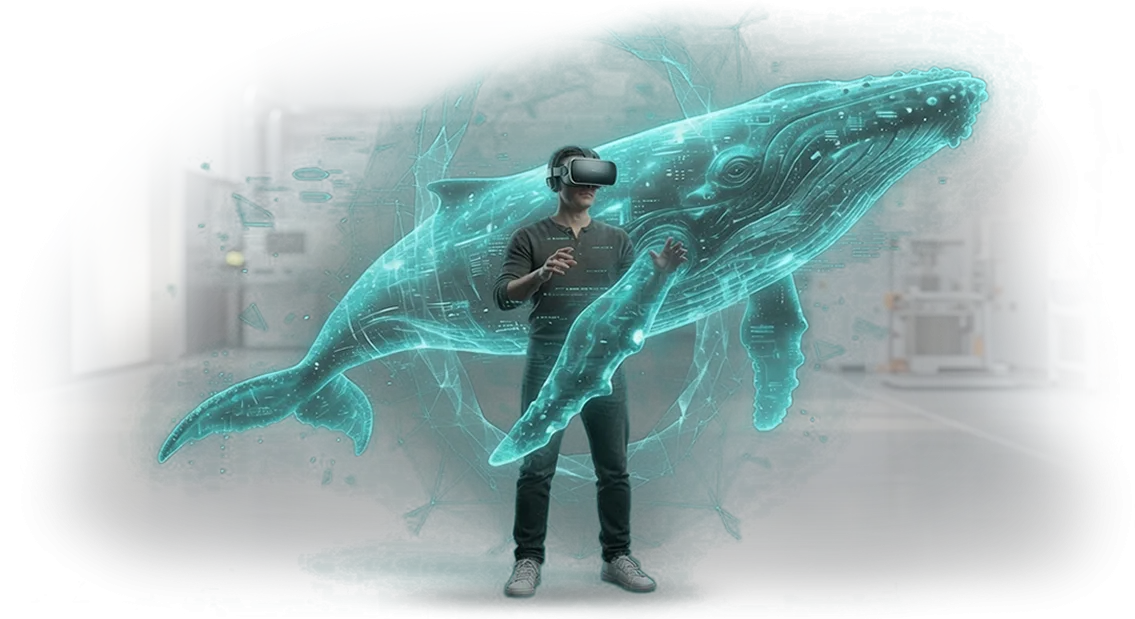
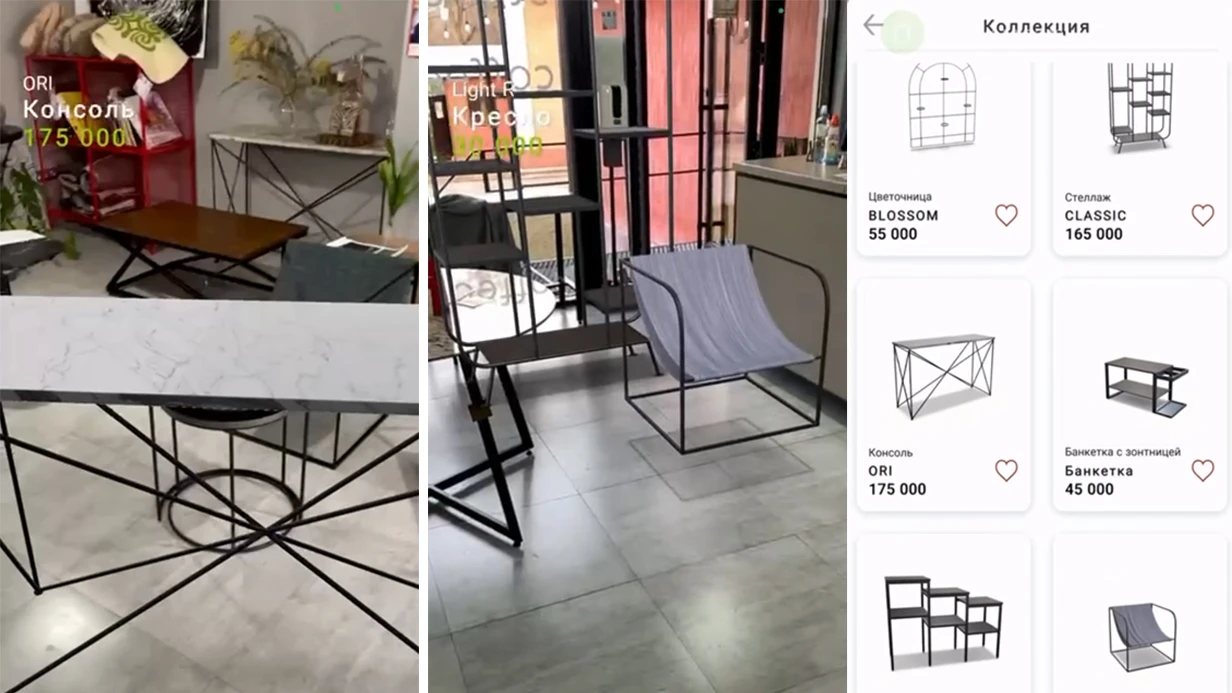
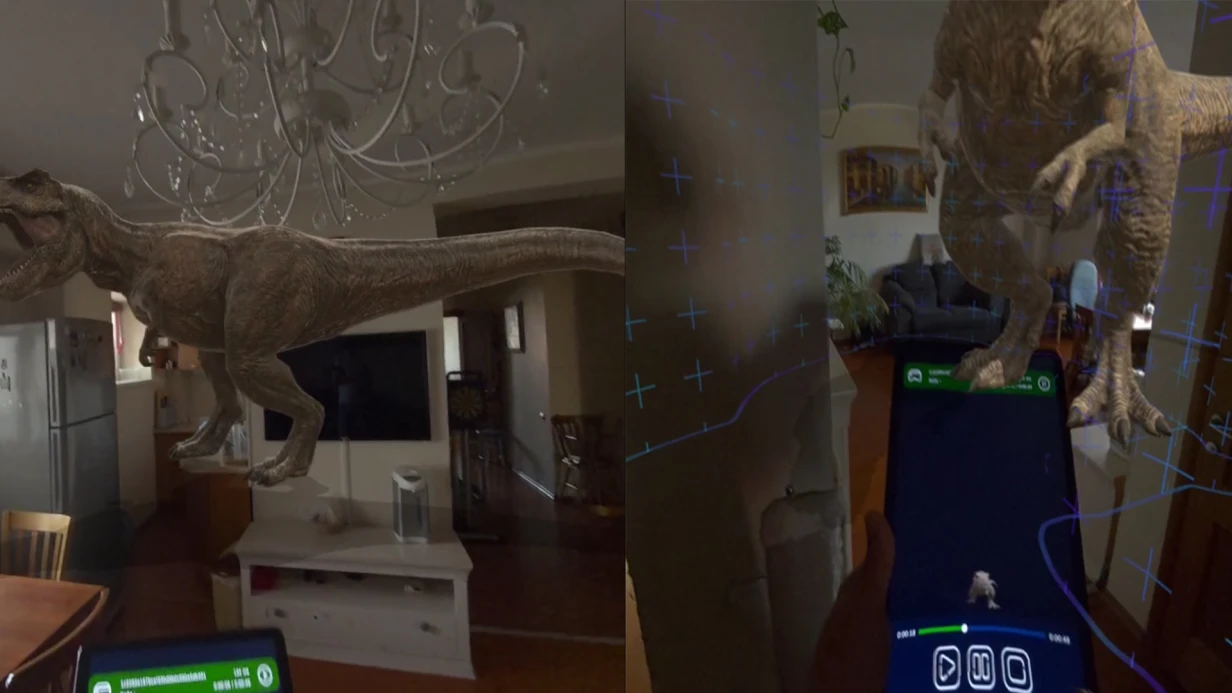
A VR tour of a field or plant, an interactive 3D model of equipment, AR data overlays on a real facility — all of this holds attention 3–4 times longer than an ordinary slide and sparks lively discussion.
You don’t just tell the client about a solution; you let them “experience” it before signing the contract.
We have been creating VR/AR solutions for industrial companies for over 10 years.
We help oil and gas operators and service contractors translate complex technical expertise into a language the client understands: we show facilities, processes, and results in augmented and virtual reality. This works at tenders, exhibitions, and personal negotiations — wherever deal outcomes are decided.
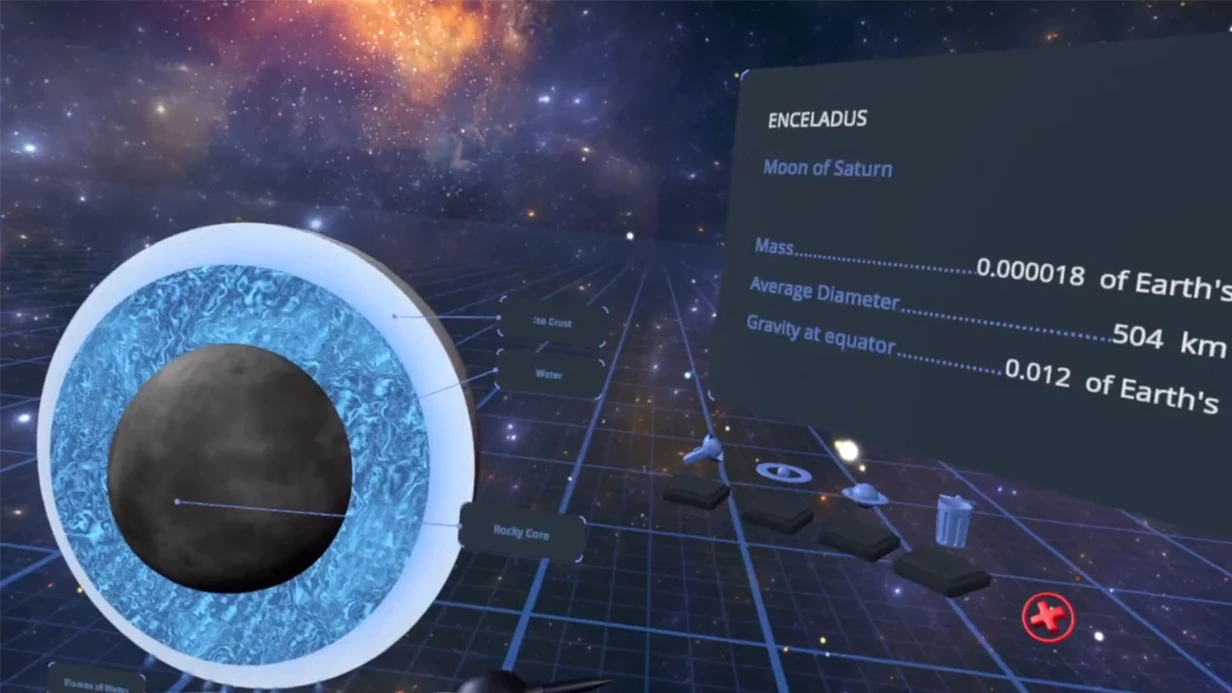
Interactive VR presentations are especially effective for attracting customers. Instead of a dozen pages of specifications, clients get a realistic flyover of the facility, real-time control of key parameters, and the ability to “look inside” any installation.
This approach builds trust and removes objections right at the demonstration stage. The client sees not promises, but a ready result — and chooses you.
If your team is losing audience attention in negotiations, don’t postpone implementation: immersive formats have already become the standard for industry leaders. Start with a pilot demonstration — show one facility in VR or AR, and you’ll feel the difference in client reactions. We’ll handle the rest: from script to deployment on your hardware or ours.
What Business Gets from VR/AR
Modern oil and gas businesses face expensive logistics, difficult staff training, and insufficient visual clarity when presenting products.
Virtual and augmented reality solve these challenges: they move people into a digital environment where they can safely master equipment and examine facilities in minute detail.
We implement VR/AR solutions on current professional devices, including Apple Vision Pro, so you get a measurable business result.
Staff Training Without Risks and Downtime
Employees practice actions on virtual simulators that replicate real installations and emergency scenarios. This reduces production errors and speeds up new employee onboarding several times over.
Product Presentations That Increase Conversion
Instead of flat drawings and photographs, customers see a full-size 3D model of the equipment. The client views the product from all sides, can “look inside,” and assess its scale. Such demonstrations shorten the sales cycle and increase the success rate of negotiations.
Brand Recognition at Exhibitions and Events
An interactive VR/AR zone attracts visitors and holds their attention far longer than a standard booth. Guests share impressions on social media — the brand gains extra reach without advertising costs.
Savings on Logistics and Business Travel
Specialists inspect remote facilities and accept contractor work through AR tools without traveling to the site. Managers conduct virtual tours for investors and partners, saving time and travel budgets.
We adapt each of these scenarios to your company’s tasks, from operator simulators to interactive product catalogs. Describe your challenge — we’ll propose a solution with clear performance metrics.
VR/AR Project Formats for Oil and Gas
For oil and gas, safety, speed of commissioning, and clarity for investors and inspectors are equally important. But one technology won’t cover all tasks: staff training requires one set of tools, while product demonstration to customers requires another.
That’s why we select a format based on the specific business task rather than offering a “universal” solution.
Below are the main VR/AR project formats we develop for oil and gas companies. They run on professional equipment, including Apple Vision Pro, and integrate into existing training, sales, and design processes.
| Format | For Whom | What It Gives the Client |
|---|---|---|
| Virtual tour | Project managers, investors, supervisory representatives | Full immersion in the facility without traveling to the site: time savings, safety, fast approvals |
| Training simulator | Employees, occupational safety specialists | Practicing actions in a safe environment, skill growth, lower accident rates |
| Interactive catalog | Sales and marketing department | Visual demonstration of equipment and solutions to customers, faster deals |
| 3D visualization | Engineering teams, contractors, construction clients | A clear picture of the future facility before work begins, early error detection |
Each format solves its own task: a simulator prepares personnel for emergency situations, a virtual tour replaces complex business trips, and an interactive catalog turns a presentation into a dialogue.
We help you choose the right format for your task and turn it into a working tool that is used in everyday practice.
How Turnkey VR/AR Development Works
Predictability is critical for the oil and gas industry: a solution must work without failures and deliver a clear result. That’s why we’ve structured the process so you control every stage and see what you are paying for.
-
Brief and analytics. We start with interviews with your specialists: we examine scenarios — from operator training to equipment control. We determine which format fits: a virtual simulator, AR instruction, or process simulation.
-
Prototype and approval. We prepare an interactive prototype: you see the interface, logic, and scenarios. We agree on details and lock in timelines and cost — this eliminates rework and unnecessary expenses.
-
Development and content creation. We build the application with professional tools and fill it with your 3D models, diagrams, and data. At this stage, you already receive working versions for evaluation.
-
Testing with your employees. We run pilot launches, collect feedback, and adjust the interface and scenarios. We make sure the solution is comfortable for the people who will use it every day.
-
Deployment and training. We install the application on your devices — from headsets to tablets, including Apple Vision Pro. We provide a brief orientation for employees and administrators.
-
Technical support. We stay in touch: we update content, add new features, and resolve technical issues. You are never left alone with the product.
As a result, you get a tool that is embedded into operations and delivers measurable impact: faster training, fewer errors, greater safety.
What Is Included in a VR/AR Solution Delivery
You receive not “a project for the sake of a project,” but a ready-made tool that covers oil and gas production challenges from day one: personnel training, process control, and facility visualization. The delivery package includes everything needed for full operation by your own team.
VR/AR Solution Delivery Package
- Source materials — all project files that you own without restrictions. At any time, you can hand them to another team or develop them yourself without becoming dependent on a contractor.
- Working documentation — clear instructions for installation, configuration, and maintenance. Prepared so any engineer can understand them, even without VR experience.
- Regulations and scenarios — methodological materials embedded in the application: operator checklists, emergency procedures, training templates. Your specialists don’t guess what to do — they follow a proven scheme.
- Employee training — we train your team until they are fully confident in using the solution. We show real tasks, review mistakes, and answer questions. Usually two or three sessions are enough for staff to work independently.
- Warranty service — we fix errors and technical failures discovered during operation free of charge. We update the application to reflect changes in your production processes during the warranty period.
Warranty and Support
Warranty is not a formality, but your protection against downtime. If something stops working, you don’t look for a new contractor or pay for urgent modifications — you contact us, and we resolve the issue promptly.
This is especially important in oil and gas, where every hour of training or control downtime means a risk to safety and budget.
Documentation and training are included in the cost, so you always understand how the system works and can quickly adapt it to new tasks.
Such a package allows a company not just to buy technology, but to implement it into daily operations without downtime and additional expenses.
Real Case: Doubling Conversion
An oil and gas holding company — let’s call it Volga-Oil — approached us with a problem familiar to the industry. The product was complex and expensive, and ordinary presentations didn’t help buyers see its value. Potential customers came to negotiations, but deals never closed, and inquiries were few.
We proposed moving the presentation into the Apple Vision Pro space. The client’s managers and engineers put on the headset and “walk around” the equipment, see it at 1:1 scale, and open key components — without traveling to the site or renting special machinery. This shortened the approval cycle and removed the objections that had been slowing down the deal.
The results proved significant for the entire industry: in two months, the number of inquiries doubled, and the conversion from negotiations to deals roughly doubled. Key case figures:
| Metric | Before Implementation | After Implementation |
|---|---|---|
| Monthly inquiries | 40 | 85 |
| Negotiation-to-deal conversion | 6% | 12% |
| Average deal cycle | 28 days | 14 days |
| Share of repeat inquiries | 15% | 32% |
After the initial launch, the client ordered an additional module for personnel training — the same format made it faster to bring employees up to speed on the equipment.
Today, we are expanding the VR project for the company’s new product lines and are ready to replicate this experience at other enterprises in the sector.
How to Choose a Contractor for a VR/AR Project
When choosing a contractor for a VR/AR project in the oil and gas industry, it’s important to look not at promises but at three key pillars: portfolio, development timelines, and quality guarantee.
They determine whether you get a tool that is actually used in production or a presentation prototype that stays on the shelf.
Start with the portfolio. Ask to see projects close to your industry: training simulators for personnel, remote control systems, maintenance planning.
If the contractor has oil and gas cases, they understand your regulations, safety requirements, and the specifics of field conditions. If the portfolio only contains games and showrooms, there is a high risk of getting a pretty but useless picture for production.
Development timelines are the second criterion. A reasonable contractor won’t give an exact date on the first call, but will propose a phased plan: brief, prototype, pilot, and launch.
For oil and gas, it’s critical to meet an equipment shutdown date or scheduled shift training, so demand fixed milestones and accountability for missing them. This also shows how the contractor handles project management.
Quality guarantee and cost form a single system. A good contract includes post-launch warranty support: fixing errors, adapting to new OS versions, or updating scenarios. A minimal price without warranty will result in paying someone else to refine the product.
We work with a transparent estimate and provide a guarantee on the result — that’s why we are chosen for projects where a mistake is costly.
Frequently Asked Questions About VR/AR Development
Before launching a VR/AR project, oil and gas clients often have typical doubts: will timelines slip, will the application work on existing equipment, what pitfalls will arise during implementation, and what it all means for the business. We answer the key questions right now — without complex technical details.
How long does application development take?
Timelines depend on the tasks: a training simulator, field visualization, or AR instruction for a maintenance crew each take different amounts of time. On average, a project takes 2–4 months from brief to launch if requirements are stable.
We break the work into stages and show intermediate versions — you see results as early as the third week.
Will the application work with our equipment?
Yes, if you already have headsets, tablets, or computers, we adapt the solution to your devices. For Apple Vision Pro and other current headsets, we build native versions that use all the capabilities of the device. Before launch, we test on real hardware so employees don’t encounter unexpected failures.
What risks exist in a project and how do you mitigate them?
The main risk is developing something the business doesn’t need. We address this with a mandatory prototype: within a couple of weeks, you hold a working sample of the key scenario in your hands and evaluate it with your employees.
Then we lock the requirements and move forward — this reduces the likelihood of rework at the end of the project.
How does integration into existing processes work?
We don’t disrupt your IT infrastructure. The application integrates with existing systems through clear interfaces, and employees receive brief training and reference materials.
Operations teams get technical support during the warranty period — your specialists won’t be left alone with the system.
These are just some of the questions we hear at the start. If your situation is non-standard, describe it in your request, and we’ll propose a solution with realistic timelines and clear terms.Ready to Discuss Your VR/AR Project?
Tell us about your task — we’ll advise where VR/AR can genuinely speed up work and reduce costs. In oil and gas, safety, accuracy, and speed matter: from personnel training to monitoring complex facilities. We’ll help you find a scenario that pays off.
After your inquiry, you receive not general words, but concrete steps and numbers. A personal manager is assigned to every stage — you always know who is responsible for the result.
What happens after your inquiry:
- Free consultation with an engineer and producer — we’ll review your task and determine which VR/AR/MR format will deliver the greatest impact.
- Preliminary project estimate — transparent, broken down by stages and deadlines, with no hidden payments.
- Prototype of a key scenario — we’ll clearly show how an employee will interact with the solution (training, maintenance, control).
- Personal manager for the entire project — one contact, prompt responses, progress reports.
- Implementation plan tailored to your infrastructure specifics — from pilot launch to scaling across all sites.
- Hardware and software recommendations — only what is actually needed, with justification for the choices.
Leave a request — we’ll discuss how VR/AR fits into your processes and prepare a proposal for your budget. The first step takes 15 minutes, then we work according to a clear plan.