



Psychotherapy is losing clients because of a flat format
People come to a psychotherapist expecting change, but often encounter monotony: conversation in an armchair, familiar techniques, the same exercises. Over time, motivation drops, sessions turn into routine, and the client first skips meetings, then stops coming altogether.
For a practice, this means direct losses: retention falls, repeat visits become rare, and word of mouth stops working — because there is nothing for the client to share.
When therapy does not produce a tangible emotional response, even a good specialist risks losing their flow of clients.
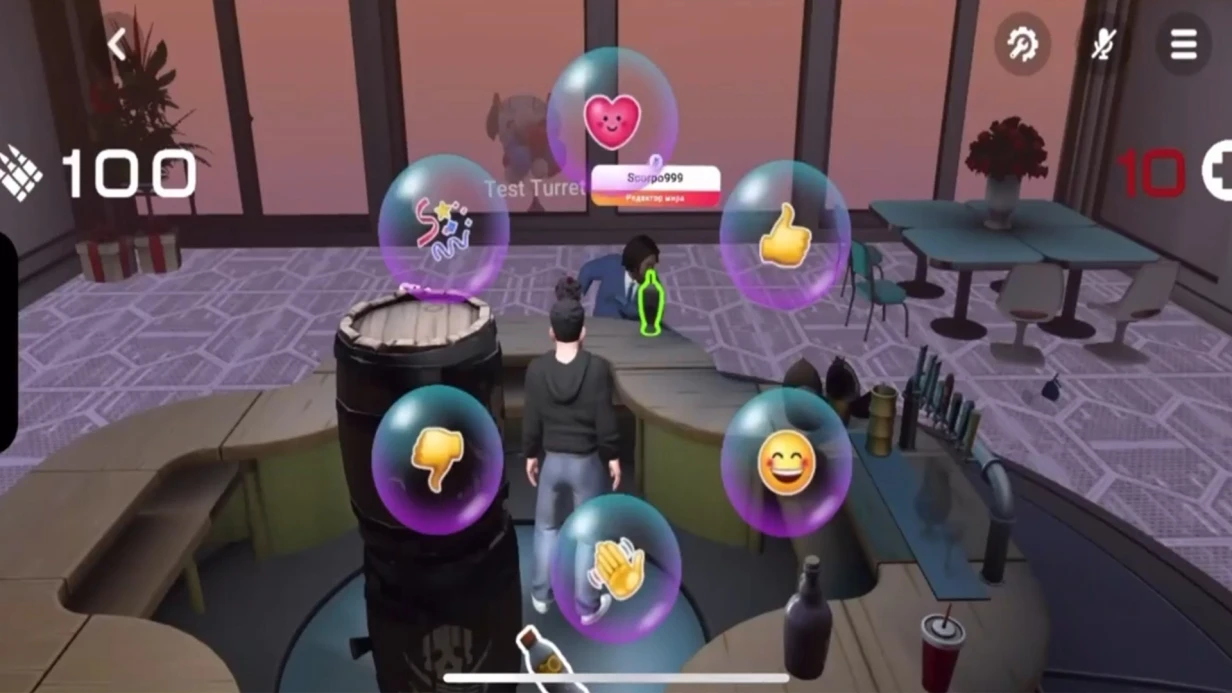
New formats are changing the situation. Spatial applications for psychotherapy move the client into a controlled environment where they can literally see their anxiety, work with an image, and replay a difficult situation in safe conditions.
This brings back engagement: the client becomes a participant in the process rather than a passive listener.
This approach enhances the effect of therapy and at the same time increases loyalty. People remember an unusual experience and come back for more. They also tell others about it — so the practice gains new clients without additional advertising spending.
We help psychotherapists and clinics create such applications for their methods. Together we turn a standard session into a vivid, memorable process — with benefits for both the specialist and their clients.
What immersive formats give your clients
Immersive applications change how patients perceive therapy: instead of abstract conversations, they get a controlled experience where they can safely live through a difficult situation.
This reduces anxiety before a session and increases trust in the specialist — the patient gets involved faster and skips visits less often.
For the clinic, this directly affects business metrics: higher schedule occupancy, more repeat bookings, and more referrals. Patients who see measurable progress become loyal and bring their acquaintances — while the marketing budget does not grow.
The specialist gets a tool that strengthens their competencies: complex topics become more visual, sessions become more structured, and preparation time decreases.
Instead of explaining metaphors with words, the therapist shows the patient an immersive environment and immediately moves on to working through the request.
The immersive format is also a way to stand out among other clinics and private practices. Modern technology positions you as a progressive expert who cares about results. Such a reputation attracts a more solvent audience and opens partnerships with corporate clients.
The main result of implementation is not replacing live communication, but strengthening it. Patients feel cared for, achieve therapy goals faster, and stay with you for a long time.
Immersive applications pay off through revenue growth, repeat visits, and brand recognition — exactly what a clinic invests in development for.
VR/AR/MR application formats for psychotherapy
A universal VR application for psychotherapy does not exist: different methods and requests require different scenarios. Some need a calm environment for relaxation, others need a simulation of a frightening situation to work through fear.
The right format choice determines how quickly the patient sees results and whether they stay engaged in the process.
Below are the typical formats that we adapt to the goals of your practice. These are not technical specifications, but a description of the therapeutic effect the patient receives and how it affects your work.
| Format | For which request | What it gives the patient and you |
|---|---|---|
| Virtual exposure | Phobias, panic attacks, anxiety | Safe immersion into a frightening situation. The patient works through fear under the therapist's control, and you get a controlled scenario for a sustainable result. |
| Relaxation environments and biofeedback | Burnout, stress, psychosomatics | The patient learns to manage breathing and state in a visually calm environment. The session becomes clear: progress is visible immediately, which increases trust in therapy. |
| Social simulations | Communication difficulties, social phobia, preparation for public speaking | Training dialogues and confident behavior without the risk of real awkwardness. You build a scenario for a specific request, and the patient practices the skill repeatedly. |
| Mixed reality (AR) | Body work, psychosomatics, rehabilitation | Overlaying virtual cues onto the real space helps the patient notice bodily tension and change reactions. Convenient for homework between sessions. |
We do not deliver a "boxed product" — we analyze your working method and select or refine a scenario to match it. If you need to combine several formats in one application, that is also solvable: the patient receives a continuous program rather than scattered exercises.
We handle the technical side — device selection, setup for your office or remote format. All you have to do is start the session and watch the patient do what previously caused a deadlock.
How development for your method proceeds
We have structured the process so that you see results at every stage and can influence them. No "blind" work: you know exactly what is happening, when you will receive the finished application, and how long it will take. The result is not a "black box" but predictable development with clear control points.
Stages of work on your method
- Brief and immersion. We study your method, goals, target audience, and constraints. We capture expectations so we can move forward precisely according to the task.
- Scenario approval. We show how the application will guide the user through the steps of your method. We discuss details and make changes before development begins.
- Prototype development. We create a working version that you can see and "touch." At this stage, it is easy to adjust the logic and interface.
- Testing with patients and specialists. We check safety, usability, and effectiveness on real users. We collect feedback and refine the application.
- Launch and team training. We set everything up for your equipment, show staff how to use the application, and provide instructions.
- Support and development. We monitor stability, respond quickly to emerging questions, and help add new features as your practice grows.
This sequence gives you the main thing — confidence in the result and the ability to influence it at any moment. You are not waiting for "surprises" at the finish line, but calmly moving toward launch together with us.
What is included in the application delivery
We deliver not just an application, but a ready-to-use tool for a psychotherapy practice. The package includes everything needed for launch and daily use: from setup for your office to staff training and long-term support.
Full delivery package
- Application for Apple Vision Pro, adapted to your method and session scenarios — from virtual exposures to mindfulness practices.
- Setup for your clinic: specialist profiles, individual patient plans, session parameters, and integration into your workflow.
- Team training — practical training for therapists and administrators. After it, every staff member confidently conducts a session and helps the patient get comfortable.
- Regulations and instructions: patient memos, safety protocols, action algorithm in emergency situations. All in plain language, without technical details.
- Support in the first months — prompt assistance, updates, and scenario adjustments based on your session results. We do not disappear after launch.
This package addresses the client's main concern: you do not get a "bare" device and a program file, but a working service that delivers results within the first week.
We handle all settings, training, and regulations — your team focuses on patients rather than figuring out the interface.
Transparent support and clear instructions make it easy to integrate the new method into your practice. And if questions arise along the way, support responds within one business day — so you always feel confident in the tool.
Case study: how a clinic doubled patient retention
A psychotherapy clinic faced a typical industry problem: more than half of patients dropped out after the first 2–3 sessions. Regular online meetings and homework did not hold attention, and fear of therapy only increased.
We proposed supplementing the standard program with virtual reality sessions on Apple Vision Pro — this made it possible to create a safe environment for working through anxiety states.
Instead of abstract conversations, the patient immersed in controlled scenarios: calm locations for relaxation, virtual dialogues with trigger situations, and progress visualization. This lowered the barrier to entry and made therapy tangible.
The clinic integrated VR sessions into its existing program, and we trained psychologists to work with the device.
What changed
The main result — patient retention doubled: 64% continue the course to the end, whereas before only 32% remained. The average number of sessions per patient increased from 4 to 9, and the share of repeat visits rose by 40%.
Patients come to sessions more willingly because they perceive VR as part of modern treatment, not as an extra burden.
Reviews also confirm the effectiveness.
One patient wrote: "I finally stopped being afraid of my panic attacks — in the virtual environment I learned to cope with them, and then transferred that into real life." The clinic head noted that after implementing the technology, word of mouth brought 25% more new patients, and the average check per course grew thanks to additional VR sessions.
The case shows: properly implemented immersive therapy is not an experiment, but a tool that delivers measurable business results. If you want to get the same metrics in your clinic, let's discuss how to adapt the solution to your specifics.
How to choose a VR/AR/MR application format for your direction
The format of a VR/AR/MR application should be chosen not by fashion, but according to your medical task and the scale of your practice.
A narrow specialization, individual consultations, and work with phobias require one solution, while a clinic with a patient flow and group programs requires something quite different.
There is no universal "best format": there is an approach that solves your specific problem.
For a private practice and individual therapy, intimate scenarios on Apple Vision Pro are optimal: a session application for working with fears, anxiety, or relaxation.
The patient remains in the familiar office environment, and you control the scenario and see their reaction in real time. This is gentle on the client, increases their trust in the method, and does not require a special room.
If you run group sessions, work with employee burnout in companies, or develop a clinic, you need different solutions: multiple sessions, scenarios with progress, and the ability to tailor the program to each patient.
Here, the key is not impressive graphics, but a well-structured method and a clear result-control tool for you as a specialist.
The main selection criterion is the "before/after" scenario: what the patient should feel and how you will measure the effect.
This determines the composition of the package, the number of sessions, and how quickly the application starts working for your reputation and schedule occupancy.
For our part, we select the format based on your direction and practice scale: we analyze the patient flow and your goals, propose a scenario that is easiest to implement, and support you from the first launch to stable daily use.
Common doubts before ordering development
The decision to develop a VR/AR/MR application for psychotherapy raises natural questions: how will the technology change work with patients, is it too risky, who will support the project after launch.
These are normal doubts — we address them at a preliminary consultation and confirm the answers in the contract.
Below are the most common ones. If your question is not here, just write to us: within one day we will send examples of similar cases and calculate timelines for your task.
How long will development take, and when will I be able to see the result?
We start with a short task description and prototype — before the main work begins, you see the usage scenarios on your patients. Then each stage ends with a demonstration of a working fragment, and the final timeline is fixed in the contract. This way you understand how many weeks until the application appears in your office.
How is patient data protected?
Confidentiality is a fundamental part of the design. Session data is stored in a closed environment, with access available only to authorized staff of your clinic. We do not share information with third parties, and we provide backup and server architecture that prevents leaks.
What if patients do not accept the technology?
To avoid risking your main practice, we implement a pilot stage: you try relaxation or phobia-work scenarios on 2–3 clients. We collect their impressions, adjust the interface and content, and only then increase the scale. This minimizes risk and gives you confidence that the solution suits your audience.
What happens after a year: will the application and support remain?
You receive a finished product with source code and instructions, as well as a support contract. Throughout the entire term, we maintain compatibility with current platform versions, update materials, and help your team master new features. If you want to expand the scenario — we will refine it on the same terms.
Let's discuss your task and get started
Working with psychotherapy requires a special approach: your patients must feel safe, and you must feel confident in the result. We develop VR/AR applications for Apple Vision Pro and have already helped mental health professionals implement new session formats. Tell us about your task — together we will find a solution.
After your inquiry, you will immediately receive:
- A free consultation — we will discuss your idea, goals, and the device's capabilities for therapeutic practice.
- A brief — we will suggest which questions are important to clarify so as not to miss details of the future application.
- A task analysis — we will see how the application fits into patient work and which scenarios will bring value.
- A timeline and budget estimate — you will understand the stages and cost before the start.
- Format recommendations — we will suggest which therapy scenarios are most effective to implement first.
This way, we move the conversation from "interesting, but unclear" to a concrete plan. You get not general words, but a clear roadmap.
Leave a request — we will start with a free consultation. On the very first call, you will understand how the application will help your patients and how we will organize the work.