

Clients Are Not Ready to Travel to You: You Need an Office Space Demonstration
The modern client values their time: they are only ready to drive across the city to see an office once they have almost made a decision. Every trip involves coordinating schedules, parking, traffic, and rescheduling meetings.
The longer the visit is postponed, the longer the decision takes, and the higher the risk that the client chooses a competitor who presented themselves faster and more convincingly.
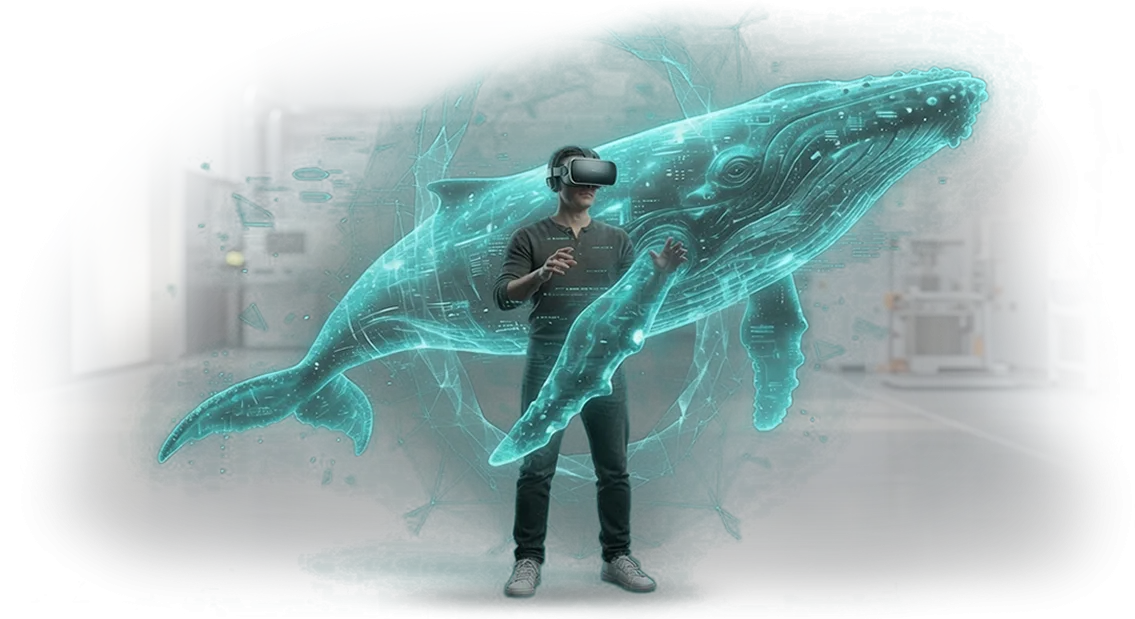
A virtual office tour removes this objection even before the in-person meeting. We develop a browser-based 3D demonstration: the client opens a link on their phone or laptop and “walks” through the space — seeing the layout, atmosphere, meeting areas, and rest zones. They don’t need to go anywhere to form a complete impression and make a preliminary decision.
This format is especially valued by out-of-town and busy executives whose word decides the fate of a deal. They don’t need to set aside half a day for travel: they can simply open the link at a convenient time, even from their phone between meetings.
Instead of a week of coordination — one short viewing, after which the meeting turns into a discussion of terms rather than an initial inspection. Refusing to travel stops being an obstacle: the demonstration comes to the client itself.
That’s exactly what we cover at our team: we make WebAR demonstrations of office spaces that show the property in its real environment and speed up the decision to close a deal.
The client sees everything with their own eyes without leaving their office — and you get a short path from first contact to contract.
What a Virtual Office Tour Gives Your Clients
Guest Engagement
A virtual tour immerses visitors in your office even before they call you. Instead of dull photos, a person walks through meeting rooms, sees workstations and lounge areas — and within a couple of minutes already feels part of the space.
This kind of engagement keeps attention on your website much longer. And the longer a person explores the office, the higher the chance they’ll want to see it in person.
Audience Reach Before the Visit
The tour can be embedded on your website, opened on social media, or sent as a link in a messenger. This removes the “go and see” barrier: a potential client or job candidate gets to know the company without spending extra time.
Reach also grows through sharing: people share unusual interactive links more often than photos. Every forwarded tour brings new interested users.
Brand Recognition
A virtual tour is part of your brand identity: colors, layout, interior details. When candidates, partners, and clients view it, they form a holistic image of the company that stays in memory for a long time.
The interactive format sets you apart from competitors. An office that can be “walked through” online says that your business is modern and open — and that builds trust.
Leads from the Website
The tour encourages action. At every key point, you can add a button like “Book a tour” or “Reserve a meeting room” — and the visitor leaves a request without exiting the virtual space.
These requests arrive with high motivation: the person has already seen the office, evaluated it, and is ready to talk. Conversion of these leads is noticeably higher than that of those who only looked at photos.
Formats for Presenting Office Space in WebAR
The same office can be shown in a dozen different ways — the question is what task the client is solving. Some need to quickly “sell” the space to a tenant, someone is preparing the opening of a new branch, and someone wants to impress guests at a presentation.
The WebAR format is chosen according to the scenario: from a simple virtual tour to an interactive model or overlaying digital layers onto a real building.
| WebAR Format | For Whom | What It Gives the Client |
|---|---|---|
| Office virtual tour | Tenants, investors, remote employees | Viewing premises without a personal visit: layout, light, views from windows — saves time on shortlisting |
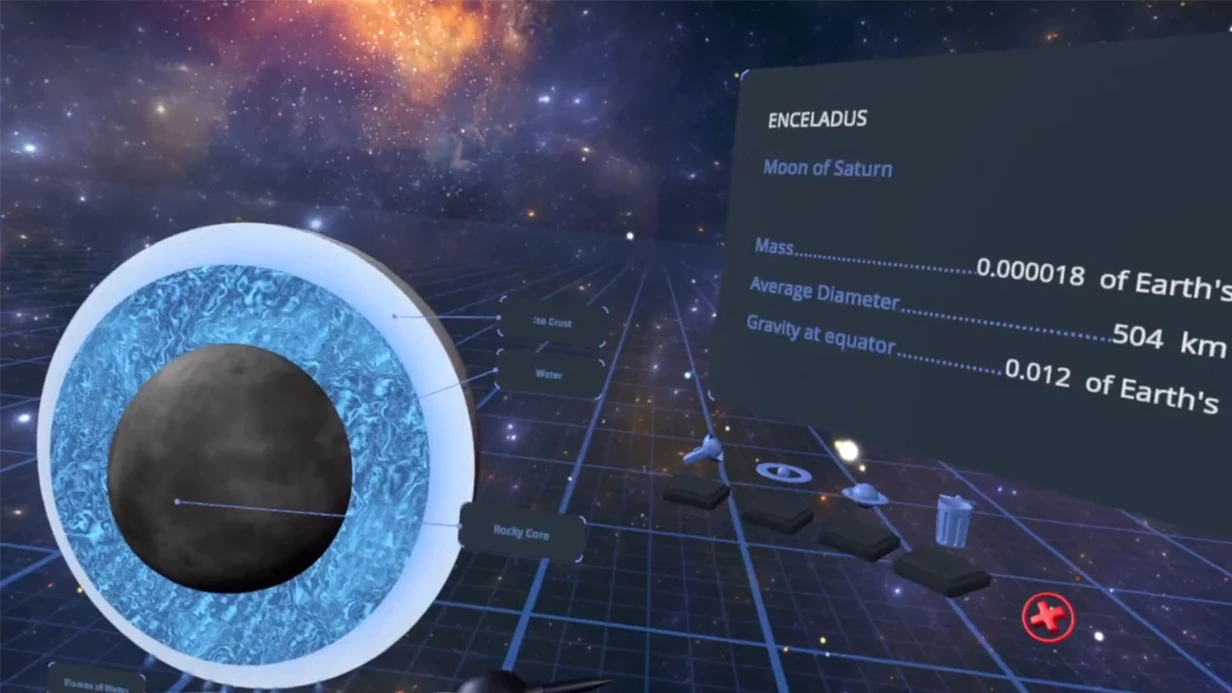
| Interactive 3D model | Managers, designers, builders | Clear zoning and scale: you can “walk” through floors, move partitions and furniture before renovation |
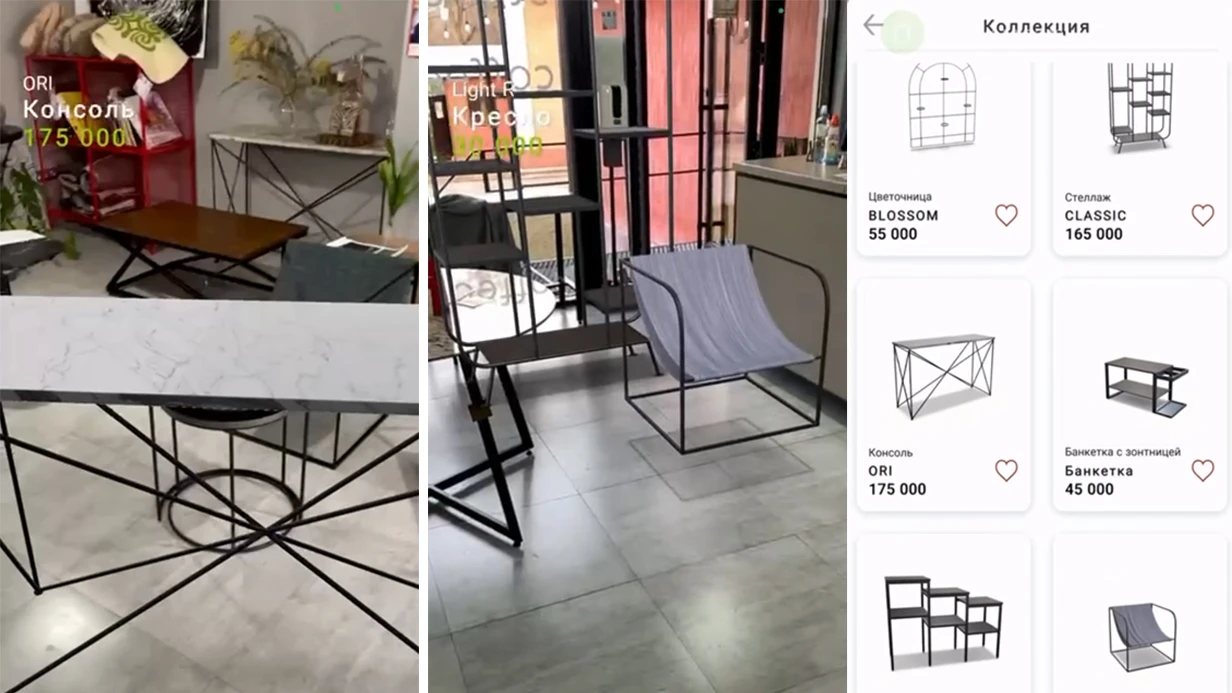
| AR overlay | Showroom visitors, clients on site | Augmenting real space with digital data: zone names, infrastructure, hidden communications — everything on a smartphone |
A virtual tour is suitable when you need to show the office to someone who physically cannot come. An interactive model is indispensable at the layout stage: it turns drawings into a volumetric story that is understandable without an architectural background.
AR overlay works on a live site: point your camera at the building and see where offices, meeting rooms, and rest areas will be.
We choose the format based on the specific task and stage of the deal, rather than offering “what’s trendy.” If needed, we combine: first a virtual tour for the initial introduction, then an interactive model for discussing details.
The result is that the client gets a tool that genuinely accelerates decision-making — not just a pretty image.
Step-by-Step Plan for Launching a Virtual Office
We work according to a transparent process: you don’t have to guess what the final result will be — you see the output at every stage. Below is the path a project takes from the first conversation to a working link you can share.
-
Brief and goal. We discuss why you need a virtual office: to show the space to clients, introduce new employees, or surprise partners. This determines the content and emphasis.
-
Technical plan and timeline. We fix the WebAR development stages, the scope of the 3D model, and the launch date. You get a clear plan with no hidden work or unexpected costs.
-
3D model approval. First we create a wireframe: layout, furniture, meeting rooms, and interior details. You make edits before we add interactivity — this saves budget and time.
-
Tour assembly. We add navigation, pop-up captions, and video to the model. We test that everything opens quickly via a link on ordinary smartphones and tablets — with no app installation required.
-
Test launch. We give you a draft link; you view the tour on your own device and show it to colleagues. We make corrections before publication so the final version is perfect.
-
Launch and post-support. We publish the final version and help you set up access for employees and clients. After launch, we stay in touch: adjusting text, adding photos, or adding a new hall.
The full cycle takes from two to four weeks — the exact timeline depends on the scale of the space. You control every stage and get a tool that works in a browser on any device and requires no special knowledge to use.
Final Scope of Work and Guarantees
The project includes a ready-to-use WebAR solution for presenting office space: a visitor opens a link on their phone and sees a 3D layout of the premises right in the camera, without installing apps or taking extra steps.
The team has already optimized the model for mobile devices: it loads quickly and runs reliably on most modern smartphones, so the presentation doesn’t “freeze” at the most important moment.
The final scope of work includes:
- A working “turnkey” WebAR solution — from the initial capture of the space to hosting on your domain or a secure project cloud.
- An optimized 3D model of the office — realistic materials, correct lighting, and convenient navigation through floors and zones, without unnecessary details that slow down loading.
- User instructions — a short guide for guests and a detailed manual for your team: how to open the demo, share the link, and embed it in a presentation or website.
- Result guarantee — we fix the timeline and acceptance criteria before work begins. If the solution fails testing on your chosen devices, we refine it at no extra charge.
- Technical support during the event — we support the launch on the day of the event, respond promptly to questions, and update content right in the middle of the event if needed.
- Training for your team — a short session after which administrators and managers run the demo themselves and advise visitors.
- Source materials and project access — you can edit 3D scenes when the layout changes or add new zones for future events.
This is not just a “viewing link,” but a fully finished tool for an impressive presentation of your space. Clear instructions, trained staff, and launch support remove all risks — all you have to do is invite guests and show them what a modern office looks like.
Case Study: How a Virtual Tour Brought New Clients
We made a virtual tour for the commercial real estate developer Territoriya. Previously, potential tenants spent weeks on in-person viewings: several trips to properties, schedule coordination, repeat meetings.
As a result, deals stretched to 2-3 months, and some clients went to competitors who responded faster.
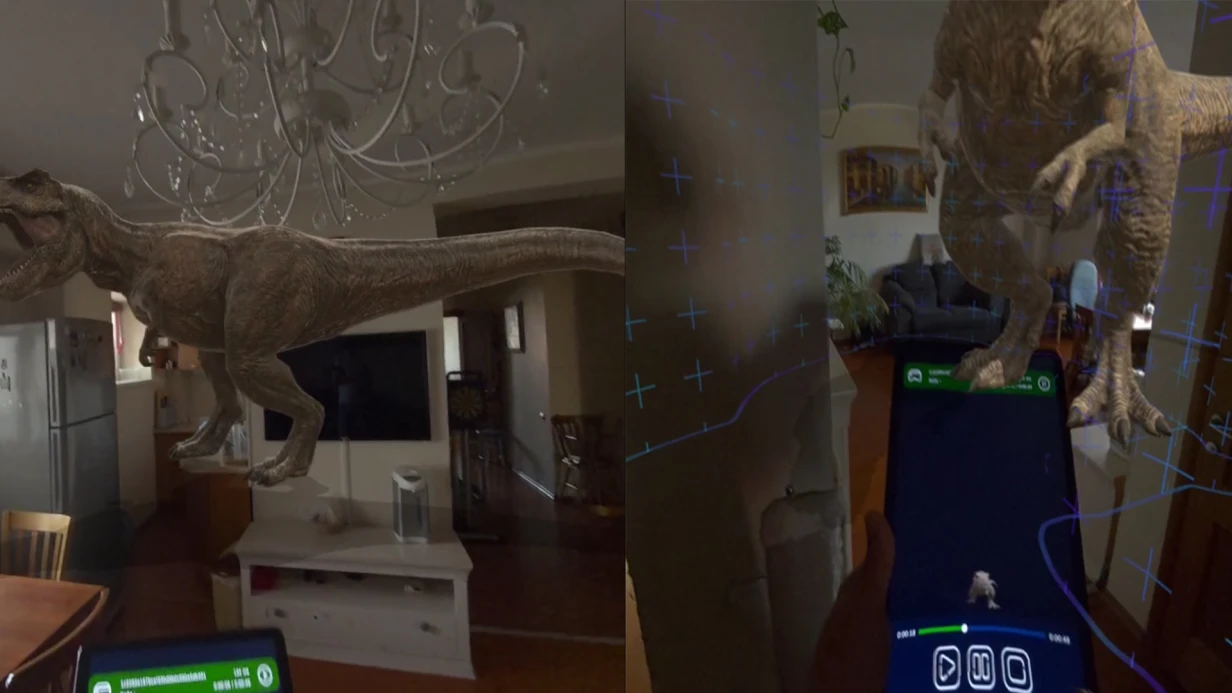
We developed a WebAR tour of the office space. A client opens a link from their phone — and within a minute sees the layout, finishes, and views from the windows in a three-dimensional format. No need to install an app or wait for loading — everything works right in the browser.
A tenant can “walk” around the future office at any time, even if the building is still under construction.
We measured the results after 3 months of active sales. The number of viewing requests increased by 57%, and the time from the first inquiry to contract signing dropped from 45 days to 12 days.
Importantly, clients arrived at meetings already familiar with the layout and asked specific questions — discussions moved faster and more often ended in a deal.
The developer became so convinced of the effectiveness that they ordered similar tours for three new properties. We provide ongoing support: updating layouts, adding rented areas, and rebuilding the tour to match changes in finishes.
This made it possible to sell offices without physical presence — and therefore without extra spending on time and logistics.
For the client, the key thing is not the technology, but the speed of sales and the growth in inquiries. The WebAR tour turns a static presentation into an interactive showcase that works around the clock and does not require a manager to be present.
How to Choose the Right Virtual Tour Format?
When an office is unconventional — a complex layout, several levels, or a historic building — standard virtual tour templates don’t work. They show the space as a set of pictures, but they don’t convey the scale or the logic of movement.
That’s why choosing a demo format should start not with a catalog of technologies, but with questions: who will see the tour, what decision the viewer should make, and what result you expect.
For a business owner, a virtual tour is a tool for selling rental space, presenting a headquarters, or onboarding new employees. If a tenant needs to assess the size of zones and traffic routes, a panoramic format with navigation works well.
If the goal is to show corporate culture, it’s better to create an interactive scenario — with zones that open up or pop-up hints.
Individual requirements are a reason for a flexible solution, not a limitation. We select a format for your task: from a web version that opens in a browser without installation to a fully realized space with movement between floors.
On the technical side, we use professional 3D visualization tools — the key is to define the scenario and checkpoints for each floor in advance.
To choose the right demo format, we do a short audit: we review the layout, key zones, audience, and launch channels. In the end, you get a solution for your deadlines and budget — not “the trendiest option,” but a tool that solves a business problem.
This removes the fear of wasting budget: you understand what you’ll receive before development even starts.
If your office is unconventional and you’re unsure about the choice, send us the floor plan and a few words about your task. We’ll propose 2-3 implementation options with an assessment of their business impact.
This way, choosing a format stops being a technical puzzle and becomes a step toward greater recognition and sales.
Answers to Common Questions Before You Start
Before starting, clients often worry that WebAR is complicated, time-consuming, and expensive. In fact, the format was created precisely to remove these concerns: guests open a link, point their camera, and see the office space on their screen. No installations and no technical skills — just a phone and internet.
We’ve gathered answers to the main questions we hear during the brief.
Do guests need to install an app to view the tour?
No. WebAR works directly in the browser — on both iPhone and Android. A guest simply follows a link or scans a QR code, and the tour opens in a couple of seconds. This removes the main barrier: a visitor won’t install anything just to view it once.
Is it difficult for the user?
It’s minimal: point the camera at a flat surface or a QR code the size of a business card. We test scenarios on different phone models before launch, so the client doesn’t have to figure it out alone. If something doesn’t work, a simple hint appears on the screen.
How long does creating a tour take?
Usually one to two weeks from the brief to the finished link. The timeline depends on the size of the space, the number of scenes, and whether you already have ready-made 3D models.
At the start, we set the deadline in the contract so you’re certain to make it in time for the event.
How is the project budget formed?
Transparently: we assess the number of locations, display complexity (design, 3D objects, animations), and integration with your materials. After the brief, you receive a fixed estimate with no hidden extras. Often a WebAR tour costs less than printed mockups or a video — and it works much longer.
What happens after launch?
We provide a guarantee of stable operation and stay in touch on the day of the event. If something needs adjusting, we make changes promptly. What’s more, the tour link remains yours forever — you can use it in email campaigns, on your website, and in presentations.
The most important thing to understand: WebAR for presenting office space is a tool that strengthens your marketing, not extra technical headache. We handle development, testing, and support — all you need to do is send the link to clients and partners.Start Your Project Today: Leave a Request
Leave a request for a WebAR demonstration of your office space — and within one working day you’ll receive a cost calculation and a launch plan.
The WebAR consultation is free and non-binding: we’ll analyze your tasks and show how the technology can strengthen your presentations, exhibitions, and negotiations.
This is especially convenient when there’s no time to dig into technical details. Just describe the usage scenario: who the demo is for, where it will be used, and how many people will see it. We’ll handle the rest — offering the right format, timeline, and budget.
We work remotely, so your location doesn’t matter: you can leave a request at any time, and we’ll schedule a call for a day that suits you. It will take no more than 15–20 minutes.
What you get by leaving a request:
- A free WebAR consultation: we discuss your goals, audience, and the key spots in the office to show.
- Cost calculation within one working day — an exact figure with no hidden payments.
- A clear plan: work stages, deadlines, and responsible contacts set out in the estimate.
- Format selection for your task: a link for correspondence, a code for printed materials, or an embedded block for your website.
- Turnkey launch: optimization for smartphones, instructions for your staff, and preparation for the event.
- A reserved launch date — if you have an event planned, we’ll adjust our schedule around it.
Leave a request — and let’s start the project today. Within a day, you’ll have calculations and recommendations that you can immediately show to your team or management.