

Demonstrating Equipment That Doesn't Generate Leads
An exhibition is an investment that must pay off in leads. But when visitors walk past your booth and there are almost no contacts after the event, the participation budget turns into sunk costs.
Ordinary posters, models, and videos on screens no longer hold attention: guests see the same thing at every booth.
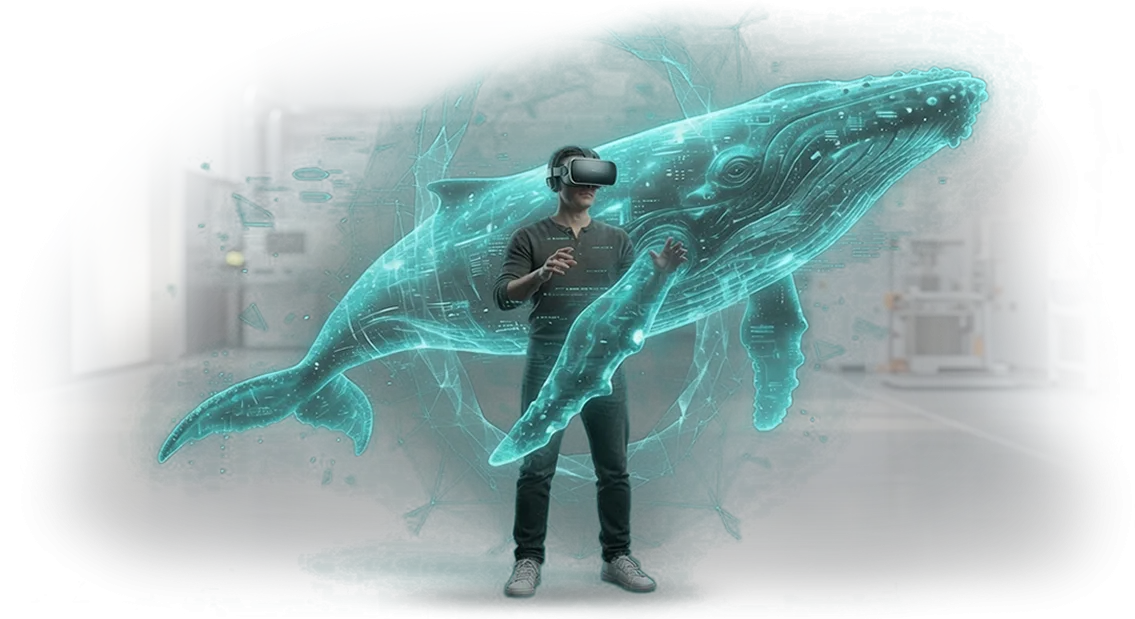
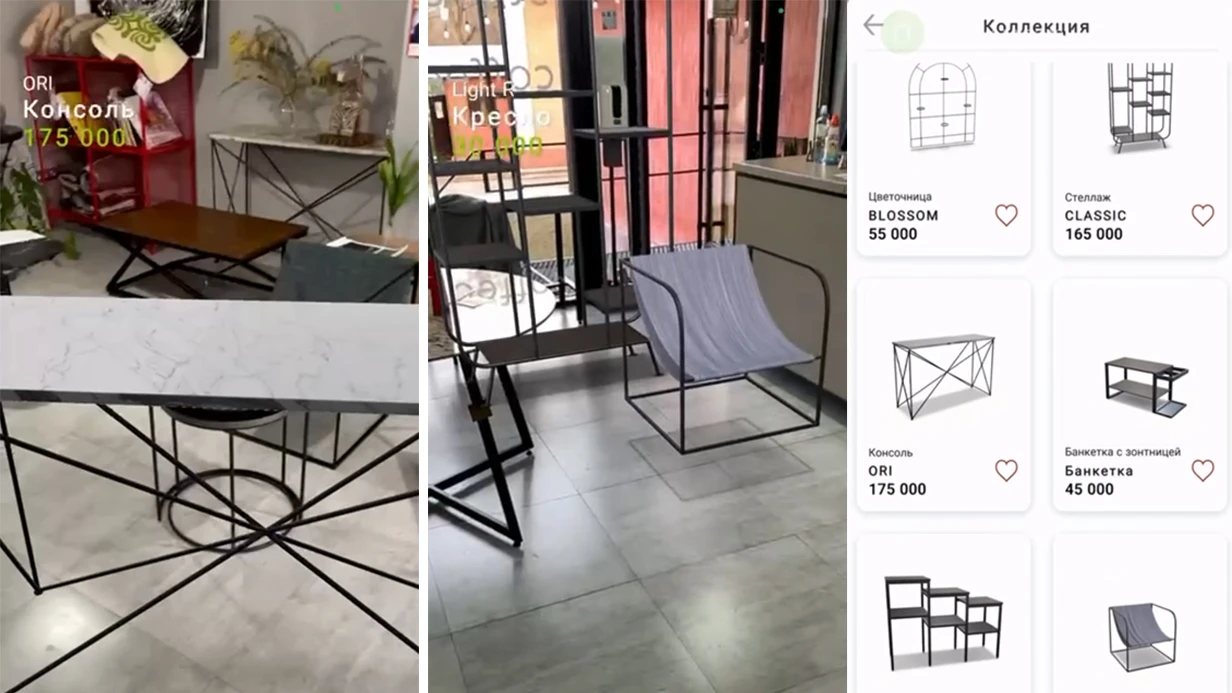
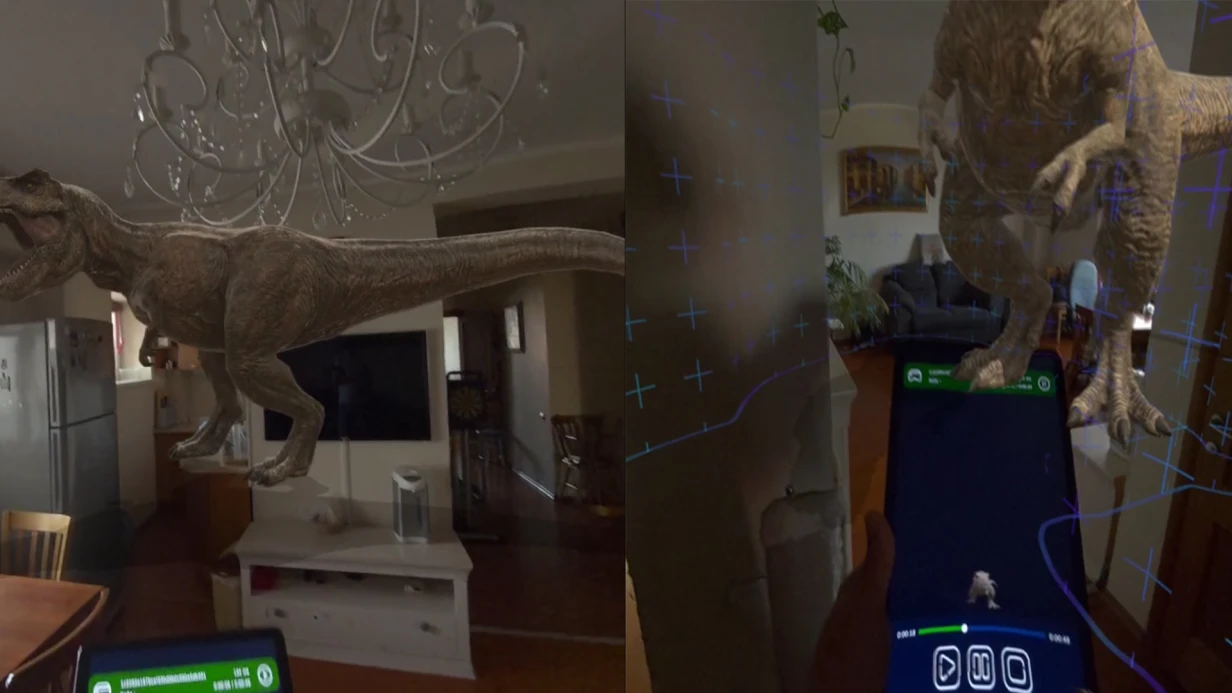
A WebAR for your exposition solves this problem. A visitor points their smartphone camera at a placard — and the equipment "comes to life" in 3D: they can examine details, rotate the machine, look into the cab, or view it in cross-section.
Interactive demonstration stops people at your booth and makes them stay longer than the usual two seconds. It's exhibition attention that works for brand recognition and product memorability.
Such interaction is not just entertainment — it leads to action. After viewing, the guest sees an offer to leave a contact and get a test drive, catalog, or consultation.
This way, leads from the event are collected in a convenient file, and your sales team starts working before the exhibition even closes, while interest in the product is still warm.
In the end, the exhibition pays off not by the number of brochures handed out, but by the number of meetings with those who are genuinely interested in buying. You see exactly which exhibit triggered a response and understand which models need more attention next time.
We create WebAR experiences that turn your exposition into a source of leads. Show us your equipment — we'll explain how to build an interactive demonstration for your specific task and integrate it into your exhibition booth.
What an Interactive 3D Presentation Gives You
An interactive 3D presentation transforms a booth from a place where passersby glance at banners into a point of attraction. Guests stop, start examining details in volume, and return to the exhibit with a specific question — and that's the first step toward a sale.
The first thing the format delivers is audience engagement. A person needs just a couple of seconds to understand: this is not another video on a screen, but a real "live" model they can control.
Visitors stay at the booth for an average of 3–5 minutes instead of 10 seconds — enough time to examine the design, open the cab door, and rotate the equipment to the right angle.
This interaction is built on interest, so it works even with those who came not to buy but for the experience.
The second result is brand recognition. A bright three-dimensional image is remembered much better than flat printed materials. When the guest later sees your logo at the exhibition, they will mentally return to that vivid moment they spent at your booth.
The brand is perceived as modern and tech-driven — especially when it comes to complex equipment that can't always be lifted or rotated in real life.
The third is expanded audience reach. Interactivity naturally provokes photos: people capture the unusual 3D model on their smartphone, share it on social media, and tag the company.
Each such post works for you for several days after the event ends, attracting attention from those who couldn't attend in person. These are extra free mentions with genuine engagement.
The fourth is collecting qualified leads. It's easy to build in a step where the visitor leaves a contact in exchange for useful information: a catalog, a specialist consultation, or a test-drive booking.
Thus, everyone interested in the model becomes a measurable lead for your sales team. You don't just get booth traffic statistics — you get a ready-made database of interested people.
In short, an interactive 3D presentation solves several business tasks at once: it holds guests' attention, strengthens brand association, expands reach through social posts, and collects contacts from potential customers.
It's a tool that pays off from the start — because it turns an exhibition from a costly event into a source of warm leads.
Formats for Demonstrating Equipment for Different Tasks
Exhibition visitors will walk past if the equipment can't be touched. Large samples are difficult to transport, and a static booth doesn't show capabilities in action.
A WebAR application brings the demonstration to life: the equipment appears right in the hall, at the required scale, with key specifications.
Depending on the task — displaying a sample to the public, helping a sales manager sell, training employees, or launching a promo — we select the appropriate interactive format. The table shows typical scenarios.
| Format | For whom | What it gives the client |
|---|---|---|
| Exhibition WebAR | Booth staff and exhibition visitors | Brings a sample to life in the hall without shipping equipment, holds visitors at the booth, collects contacts |
| Mobile presentation | Sales managers | Shows equipment to clients in the office or on-site — with specifications and options |
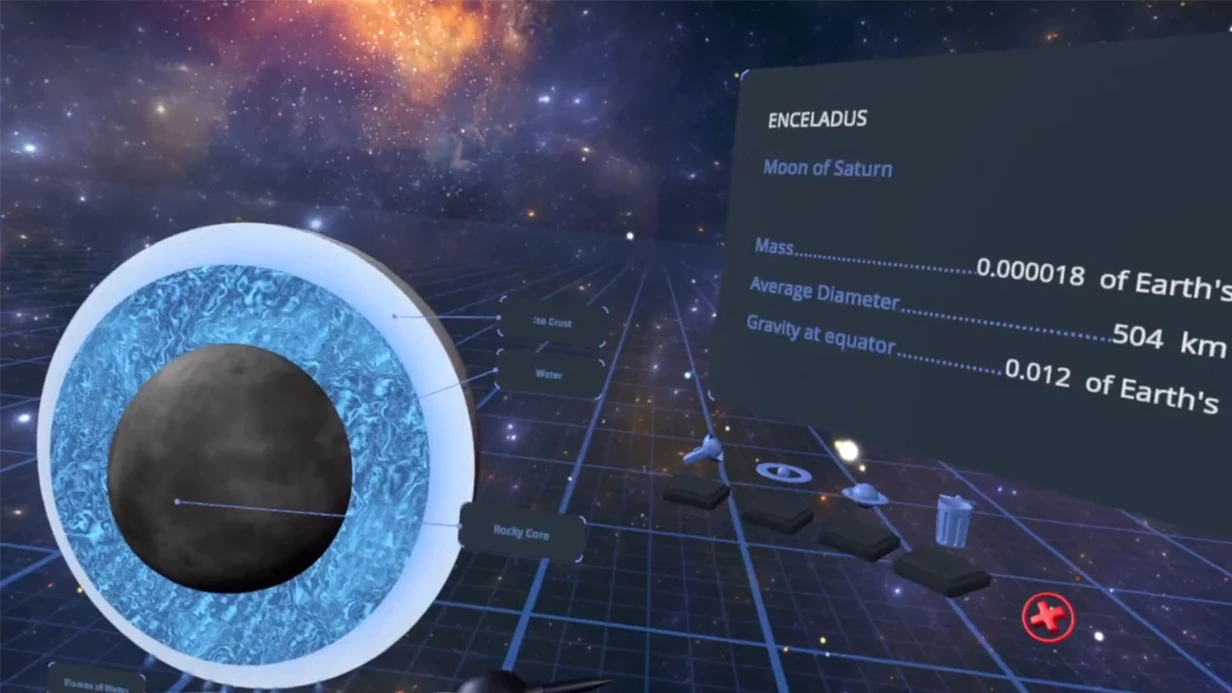
| Interactive trainer | Training centers and learning departments | Allows studying the machine's structure and operation without risk of breakage, shortens onboarding time |
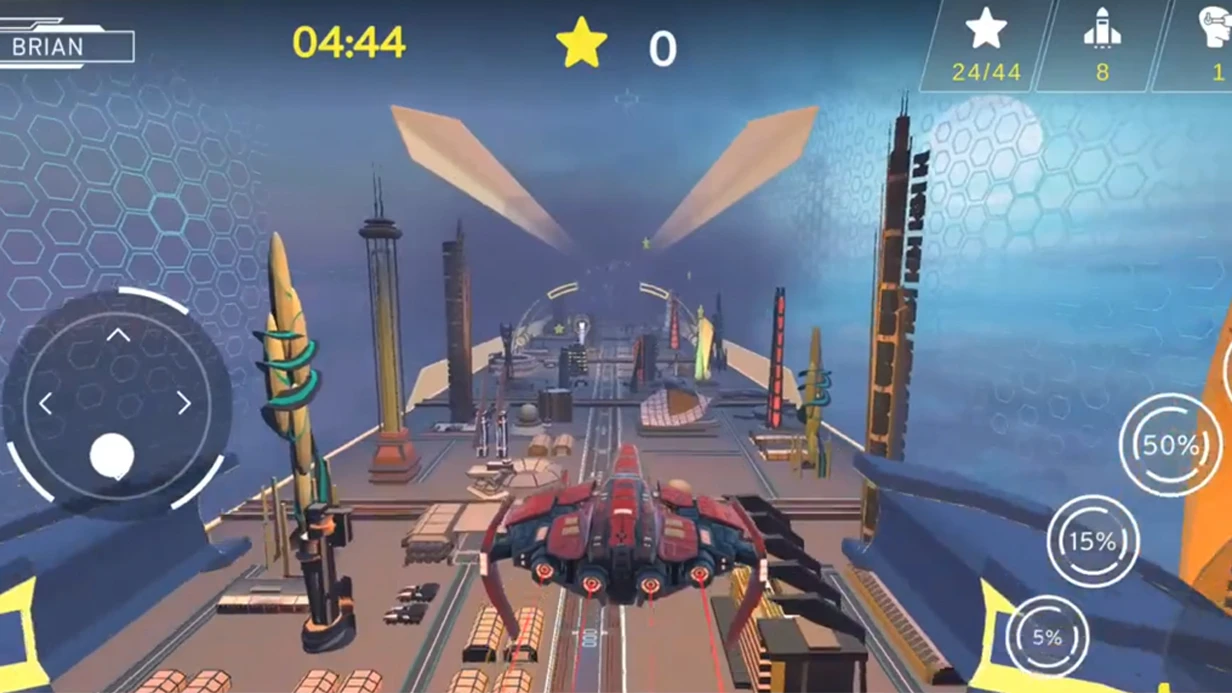
| Promo format | Marketing and advertising campaigns | Delivers a "wow" effect and viral content: users share AR photos and videos |
Each format runs on the same WebAR application, so you can add another scenario without new development. Choose one option and you get a tool that scales to your next exhibition, training session, or ad campaign.
How the Project Runs: From Brief to Launch
We've structured the process so you always know where the project stands and what comes next. Instead of abstract "development stages," you get a tangible result: an approved mockup, a test version, a working product, and support after launch.
-
Development brief — a short call or questionnaire: you tell us about the equipment, audience, and demonstration scenario. We clarify how the visitor will interact with the 3D model and record the project goals in a clear plan.
-
Mockup approval — we draw the screens and structure: what the user sees, where they click, how the model opens. You make edits before the main build begins — no rework or wasted costs.
-
Build and test version — we create a working WebAR scene and test it on different devices and under different lighting. You receive a link to check it right on your smartphone.
-
App launch — we host the WebAR on your domain or use our hosting. You get a ready link and a printable QR code to quickly launch the demonstration at an exhibition, in a showroom, or in a catalog.
-
Post-launch technical support — if a visitor can't open something or the model displays incorrectly, we resolve the issue promptly. We monitor compatibility with current browsers and devices.
-
Project evolution — we look at analytics: how many people opened the demonstration, how long they studied the equipment, and at which step they left. We suggest improvements to increase conversion: new models, languages, or integration with your CRM system.
Each stage ends with a concrete deliverable: a document, mockup, link, or report. You're not waiting for "something unknown" — you see progress toward launch from day one.
What's Included in the Delivery: A Complete Kit for Your Event
You receive not just an application, but a ready-made turnkey solution. We assemble the kit so nothing needs to be figured out on the spot: everything is configured, tested, and packed for launch.
What's included in the delivery:
- Ready-to-use WebAR application — works from any smartphone without installation, via a link or QR code. A quick start for guests: point the camera — see the equipment in action.
- Demonstration scenario — a script tailored to your task: from the first glance to a detailed inspection of the model, with emphasis on the right specifications.
- Staff instructions — simple 1–2 page guides: how to open the demo, what to tell guests, and how to handle common situations. Training takes 15 minutes; no technical specialist is needed on-site.
- Team training — we run a short session with those who will meet guests: showing how to launch the demo, switch modes, and assist visitors.
- Event analytics — after the event you receive a report: how many people opened the app, how much time they spent in the demo, and which models were viewed most often. This data shows real interest in the equipment.
- Technical support on the event day — an on-duty specialist is available from morning to evening. If something goes wrong, we resolve it remotely within minutes.
- Contingency plan — spare QR codes, an offline version of the demo, and clear steps for internet outages, so the event doesn't stop.
All of this is packaged into one kit and delivered to you a few days before the event. All you have to do is run the event — we handle the technical side.
Case Study: How an Interactive Presentation Boosted Sales
Industrial equipment is a complex product: buyers are not ready to make a decision based on a catalog; they need to "feel" the machinery. At an exhibition, this is limited by booth space and the availability of samples.
For a manufacturer of industrial installations, we developed a WebAR for production — an interactive presentation: a visitor points a smartphone at a model or poster and sees the equipment in 3D, in cross-section, with service zones.
PromTech (name changed) came to us with a typical request: increase the number of leads from the exhibition without increasing the booth cost. Previously, managers spent 10–15 minutes describing a model, but visitors remembered little.
After introducing the interactive experience, the time spent at the booth grew from an average of 2 to 7 minutes because the client controls the scenario themselves: opening components, changing configurations.
The salesperson simply answers questions and records the contact — this shortened the lead handling cycle and increased on-site leads.
Implementation Results
Over two exhibition days, more than 300 visitors went through the WebAR, and the sales department saw a 1.8x increase in leads compared to the previous event.
Some clients came to the booth immediately after seeing the 3D presentation — it had been sent out to the database before the opening. A month later, 12% of participants returned with a request for equipment quotes.
The implementation case showed: you don't need a huge exhibition sample or a hologram — just a WebAR that works on visitors' own devices.
The project paid off through the increased conversion to leads, and the client kept the tool for training dealers and sending to customers after the exhibition. Thus, the WebAR became a permanent sales element, not just a one-time booth demo.
What If You Have Specific Requirements?
Of course, specific requirements are not a limitation but a challenge we solve every day. Your equipment can be anything: a rare model, a complex structure, an oversized object, or machinery that cannot be moved.
We don't force your product into a ready-made template; instead, we build the demonstration around its features to showcase all the advantages of your particular device.
For us, an individual project means that at the start we analyze your equipment: what it looks like, what its key parts are, and who will interact with it.
Based on that, we select the optimal presentation scenario: detailed inspection, component breakdown, virtual testing, or buyer guidance at every stage of choice.
You don't need to explain "how WebAR works" — just tell us what matters to your client and what the demonstration should highlight.
We work with professional equipment and refined tools, but the key is flexibility for your task. If your equipment is unusual in shape, size, or display conditions, we adapt the scenario and interface so the user gets a realistic and convenient experience.
In the end, you get not "a demo for demo's sake," but a working sales tool that meets your expectations and earns your clients' trust.
So if you're worried that your task is too specific — that's exactly the case where an individual approach delivers the maximum result.
Tell us about your requirements, and we'll propose a solution that fits into your process and brings measurable value: increased interest, more inquiries, and a clear presentation of complex equipment. Leave a request, and together we'll find the best format for your product.
Frequently Asked Questions About Implementing an Interactive Zone
Before launching an interactive zone, clients always have questions: will we have time to prepare, will an unusual format disrupt the program, what happens if the equipment fails.
We've gathered the four most common concerns and answered them briefly so you can make a decision with total clarity.
How long does it take to develop an interactive zone?
Timelines depend on the scenario: a simple augmented reality zone takes one to two weeks, an immersive virtual reality project takes up to two months. If the date is already close, we'll offer a ready-made solution based on proven templates — adaptation takes 3–5 days. We fix the exact date in the contract after a preliminary brief.
Is it difficult to integrate the zone into our venue?
Not from our side. We bring the equipment, install it, configure it, and run a test session taking into account the specifics of your venue. Your team doesn't need to understand technical details — just allocate the space and provide access to electricity.
What guarantees and maintenance do you provide?
We work under a contract: we take responsibility for the result and provide a warranty on equipment and software. We support you throughout the event period — a technical specialist is available and can be present on-site if needed.
What if something goes wrong on the day of the event?
You'll have a direct contact for technical support — average response time is 15–20 minutes. Backup equipment and a backup scenario are prepared for the venue, so the program continues without noticeable pauses.
Ready to Bring Your Exposition to Life?
Guests walk past a booth if the equipment is just sitting under glass. An interactive exposition turns viewing into a live experience: visitors "open" the machine themselves, look into the mechanisms, and see how the components work. This holds attention and creates a reason to talk with your managers.
Leave a request for development — and we'll contact you within 15 minutes. No "we'll call you back later." You'll get a free consultation where we'll discuss how WebAR fits into your exposition and what it will bring to your business.
What you receive immediately after your request:
- A personal manager who will dive into the context of your exhibition or showroom.
- A free consultation: demonstration scenario, format, and touchpoints with visitors.
- A timeline and budget estimate — before work begins, with no hidden stages.
- Examples of similar solutions from our practice, so you can see the result before the start.
- A clear project plan: stages, team members, and what we need from you.
- Fixed cost and dates — not "sometime."
After that, it's simple: we agree on the scenario, you provide the 3D model or drawings — and we create an interactive exposition for your booth. We'll train your staff and stay in touch.
You can start the project as early as this week. Leave a request — let's discuss how to bring your exposition to life.