



Interior Design Doesn't Sell Without AR Visualization
A client doesn't buy an interior from a picture—they buy the feeling of "I live here." Regular renderings and photos show the space from the outside, but they don't provide the key thing: feeling the scale, walking between the furniture, understanding how light falls on the sofa in their exact room.
While this feeling is absent, there are doubts. The client asks questions, requests changes, delays approving the sketch, and negotiates. As a result, the project gets stuck at the approval stage, and the studio spends time on endless revisions instead of new orders. That is exactly why the classic project presentation often fails to sell.
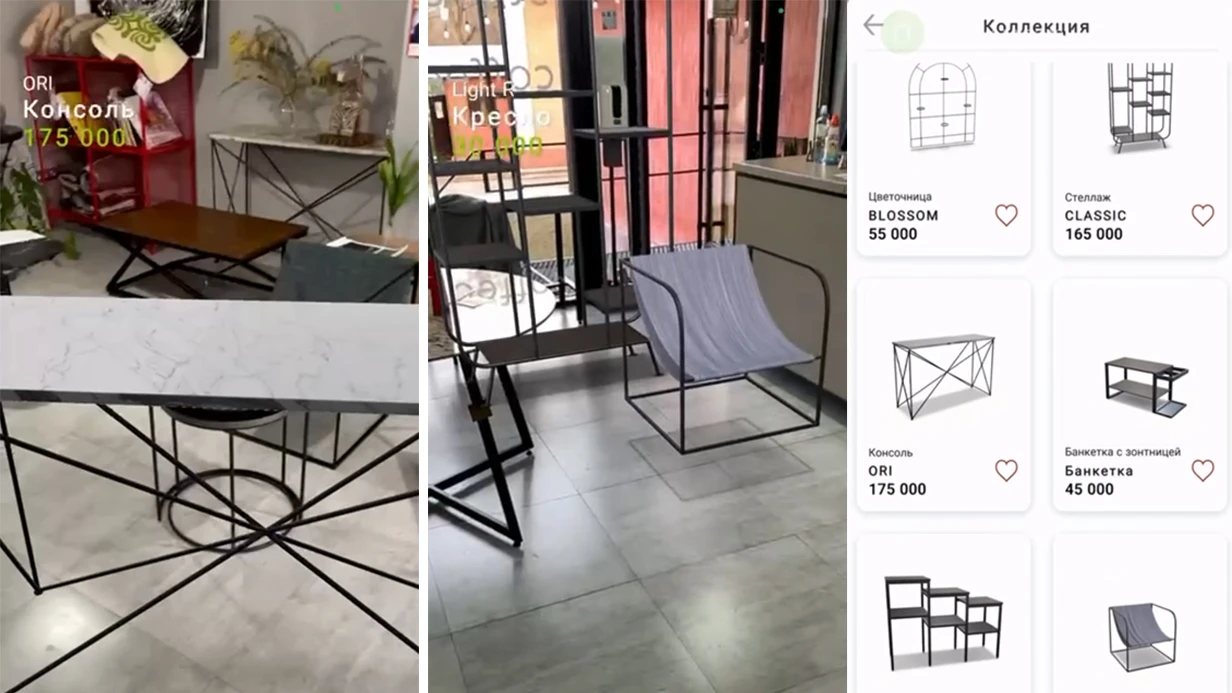
WebAR for furniture solves this problem. The client opens a link on their phone, points the camera at their room—and sees the new sofa, kitchen unit, or wall finishing in real scale. They move objects, change the color of the fronts, and look inside the wardrobe.
This is not a game, but a working approval tool: a person verifies for themselves that the solution fits.
AR visualization of an interior removes the main objections before they even arise. The client relies less on imagination and trusts your taste more. The time to approve the layout is reduced, and the likelihood that the final result will disappoint drops to a minimum. You come not with a promise that "it will be beautiful," but with proof.
We integrate WebAR into your project presentations: the client receives a link before the meeting, studies the interior at home, and arrives ready to decide. You sell not a picture, but confidence.
If you want your upcoming projects approved on the first presentation, we will build a working visualization format for your style and budget.
What WebAR Gives Business: 5 Measurable Benefits
WebAR technology lets a buyer "place" a sofa, wardrobe, or wallpaper in a real room through the smartphone screen.
This removes the main purchase objection—"but how will it look at my place?" This approach is already used by IKEA and other large retailers: it is clear to the client and delivers measurable business results.
1. Increase in Conversion to Order
When a customer sees a product in their own interior, doubts about size and color fade. According to retailer estimates, AR viewing increases the likelihood of purchase by 30–40%. For furniture showrooms and design studios, this means a direct increase in revenue.
2. Engagement and Time on Site
With WebAR, users explore a product 3–5 times longer than with a photo. They move the smartphone, change angles, adjust finishes—each action increases interest and brand recall.
3. Savings on Photo Content
There is no need to shoot every product in a studio: one 3D model is enough. It can be displayed in any colors, materials, and angles, and catalog costs decrease significantly.
4. Loyalty and Repeat Visits
The AR feature "view in my apartment" brings the client back to the site with every new renovation or purchase. This retains the audience and encourages repeat orders.
5. Brand Recognition and Viral Reach
An unusual experience makes people want to record a video and share it with friends. Every trial becomes a free brand mention, and engaged users bring new customers without an ad budget.
All these benefits work without installing apps: the client opens a link in the browser and, within seconds, is already "trying on" your product. We create such solutions for business needs—from a local showroom to a nationwide chain. Contact us to test a pilot on your catalog and see the numbers.
WebAR Formats for Presenting Interior Design to a Client
A client rarely buys an interior from a picture. Even a static image doesn't let you feel the room's scale, the direction of light, or the texture of materials.
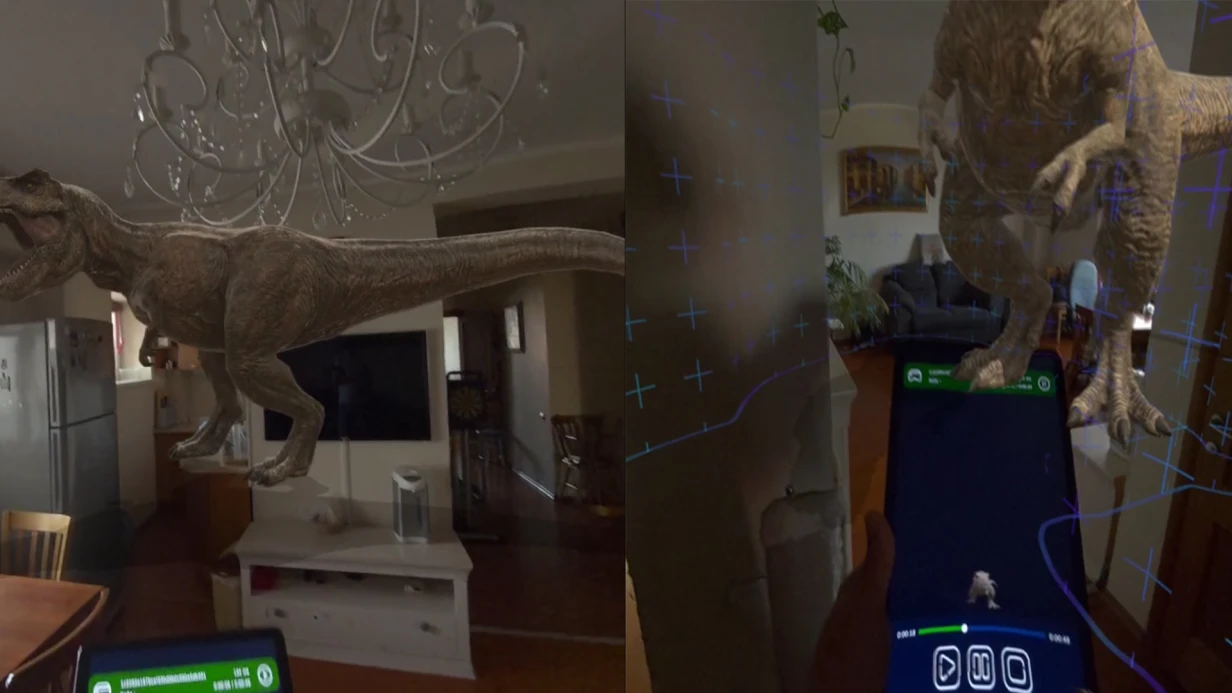
WebAR moves the project into real space: a person points their smartphone camera at their room and sees how the future design—furniture, finishes, lighting—will look there. This works without installing apps, via a link or QR code.
For presenting interior design, we use two formats. They solve different tasks: one helps sell a specific project, the second turns a catalog into an interactive tool that generates inquiries without a manager's involvement.
| Format | Who it's for | What it gives the service client |
|---|---|---|
| Project presentation | Designers, studios, architects | Speeds up project approval, increases trust, reduces the number of revisions after delivery |
| Interactive catalog | Furniture showrooms, showrooms, studios with high client flow | Attracts attention to the catalog, increases time on site, boosts the number of inquiries without a manager's involvement |
Which Format Should You Choose?
If you have one project and one client, a presentation is enough. You show different layouts, change materials in real time, and find the best option together.
If you need to sell many solutions without personal involvement, choose the catalog. It works through a link, in social media, or on a website, and every client "tries on" the interior independently.
The formats can be combined: the catalog as a show window to attract, the presentation for the final deal. We will help determine what fits your exact task and develop WebAR so it delivers results.
Working Stages: From Brief to Launching Your AR Project
So that an AR project for your interior solves business problems rather than being just an impressive demo, we structure the work according to a transparent scheme.
You always see which stage the project is at, what you will get at the end, and by what date the result will be ready.
-
Brief and immersion in the task. We discuss the goals: showing furniture in a real room, increasing showroom conversion, or keeping a visitor engaged at the booth. We capture the use scenario and success criteria that are clear to you and your team.
-
Concept and plan. We propose an AR format: virtual try-on of interior items, furniture arrangement, or showroom navigation. We agree on timelines and stages—you know in advance when the milestone checkpoints will be.
-
Design and prototype. We create visual solutions: how AR looks on the screen, which interface elements help the buyer make a decision. We show an interactive mockup before development starts—so you see the product in advance, not "at the finish."
-
Approval and final specification. You make edits, we lock down the final version. No surprises at the next stages: everything that is approved goes into the final version.
-
Development and testing. We build the AR application and test its stability on different devices. For you, this means visitors won't encounter freezes at the most important moment—during a presentation or at peak traffic.
-
Launch and support. We deploy the project, brief your team, and stay in touch after launch. If refinements are needed after the first few days, we quickly implement changes.
This approach helps deliver projects on time and achieve measurable results: more visitor time with the product, more inquiries, and higher engagement at events.
What Is Included in an AR Project Delivery for Business
Every AR project is not just an "app," but a ready-made tool that must solve a specific business task: showing a product in the interior, increasing inquiry conversion, or holding visitors' attention.
That's why we assemble the delivery as a complete product with a scenario, visuals, and support, rather than handing over a "raw demo."
To help you evaluate the scope of work and the result, here is the full project composition:
- AR scenario. We define exactly how the user interacts with the object: placed a sofa in the room, changed the upholstery, viewed it in motion. We write out the logic, screens, and actions before launch.
- Design concept and 3D model. We adapt the visual style to your brand and interior. Textures, lighting, scale—everything looks natural, not like a "game picture."
- Interactive prototype. Before development starts, you see how the project works and make edits. This eliminates the "we made the wrong thing" situation and extra budget iterations.
- Integration with a website or social media. AR runs where the client already is: in a product card, in a catalog, or via a QR code in advertising. There is no need to install separate apps.
- A clear instruction and staff training. Managers and consultants will be able to explain to customers how to use AR and demonstrate its capabilities in person.
- Technical support and maintenance. We make sure the project runs stably, help with updates and refinements for new business tasks.
The final delivery is a closed loop: from idea to a working tool that your clients start using from the first touch of the screen. You get not just technology, but a business-friendly result that is easy to integrate into current sales processes.
Case Study: How a Furniture Brand Doubled Conversion to Inquiries
Furniture buyers choose blindly: a sofa looks good in the showroom, but it's unclear whether it will fit in the living room. Doubts delay the decision, clients go to competitors or postpone the purchase.
We encountered this in a project for the furniture showroom chain Uyutny Dom—and solved the problem with WebAR.
The client didn't need to install an app: we added AR viewing directly to the catalog on the website. It's enough to point a smartphone camera at a marker or select a product in the catalog—and the sofa, wardrobe, or kitchen unit appears in the buyer's room at real size.
The client immediately sees how the furniture matches their interior and whether it fits in scale and color.
The result was many times above expectations. In the first three months after launch, the number of inquiries from the catalog doubled—conversion rose from 4.8% to 9.6%.
Buyers also started making decisions faster: the average time from first view to inquiry decreased by almost a third. Returns also decreased—people saw the product in their space before the purchase, not after.
For the business, this means steady growth without expanding showrooms or increasing the sales staff. Sales go through the same website, but now every visit is no longer "just browsing"—the numbers speak for themselves.
Why It Worked
WebAR breaks the main objection in the furniture industry: "what if it doesn't fit." When a buyer sees an item in their own apartment, the fear of making a mistake disappears, and they move on to ordering.
Additionally, such a tool increases trust in the brand—the company looks more modern and reliable compared to competitors with ordinary static catalogs.
What the Client Got
- Double growth in conversion to inquiries in the first months.
- Faster deal cycle and fewer returns.
- AR working on any smartphone without installing apps.
- A ready-made tool for ad campaigns and social media: clients share videos of furniture try-ons, providing additional reach.
This case is not an exception but a rule: when a buyer sees a product in their context, sales grow. We will help you repeat the same result for your catalog.
Answers to Questions Before Starting a Project
Before launching a WebAR project for interior design, clients typically have several common questions. They concern device compatibility, development timelines, cost, data security, and content updates.
Below are honest answers—so you understand what happens at each stage and what to expect from the result.
How will AR work on different devices and browsers?
We create WebAR solutions that launch directly in a smartphone or tablet browser. Visitors don't need to download anything—just open a link. The technology supports most modern iOS and Android devices, so you don't lose your audience. If needed, we test scenarios on the target models used by your clients.
How much does WebAR development cost?
The cost depends on the complexity of the scenarios, the number of virtual objects, and the timelines. We establish a cost estimate at the start and do not change it during the work. The price includes design, development, testing, and integration with your website or catalog. The final amount changes only if you change the initial requirements.
What are the development timelines for a project?
A typical WebAR project for interior design takes 2-4 weeks. The timeline is affected by the complexity of the 3D models, the number of scenarios, and the need for integration with your system.
We show a calendar plan before the start so you can see the key stages and milestone checkpoints. If necessary, we speed up the launch by highlighting the most important functionality in the first phase.
How is security and data protection ensured?
Running an AR scenario does not require registration or the collection of personal data. We only receive anonymized visit statistics and use them for analytics. Hosting is on secure servers with restricted access, and information is not shared with third parties. If required, we are ready to sign a confidentiality agreement.
How do I update content after launch?
You get a control panel where you can change 3D models, texts, prices, and visual settings without involving a developer. Updates are published immediately and are visible to users.
This is convenient when you need to quickly change promotions, add new products, or adjust the catalog. Technical support is included for the initial period; after that, you work independently.
Ready to Discuss Your Project? Get a Cost Estimate in 1 Day
To discuss your project and order an AR solution for interior design, no lengthy approvals are needed. Just leave your contact details—we will call you back within one business day, clarify the task, and prepare a plan along with a cost estimate.
How the Work Will Proceed
- You submit a request via the form on the site or a messenger.
- A manager contacts you, clarifies the goals and audience.
- We analyze the space, use scenarios, and technical requirements.
- Within one day, we send an implementation plan and a cost estimate—with the scope of work and timelines.
- You make edits, we lock in the budget, and start development.
- We show intermediate results at every stage—you control the process.
What You Get With the Cost Estimate
- An analysis of your task and the optimal AR format—for a catalog, showroom, or website.
- A detailed list of work so you understand what you're paying for.
- A project schedule with key milestones—when the first results will appear.
- A clear technical description without complex jargon.
- A fixed cost after the scope is approved.
- Recommendations for integration with your website or app.
The main thing is that after the first contact, you will have concrete figures and timelines in hand. To get a cost estimate, simply leave your contacts: phone or email.
We do not share them with third parties and do not push our services—we will prepare an option that suits your business specifically.
How to Choose the Right WebAR Format for Your Task?
Start by answering the question "why do you need AR"—everything else depends on it. If you need to show a product in the client's interior, let the buyer "try on" the product before purchase, or bring static print advertising to life, WebAR works perfectly.
It doesn't require installing an app: the user opens a link, points the camera, and sees the object in their environment. This is the shortest path to product demonstration, so the format is best suited for quick promotions, catalogs, and promo websites.
The selection criteria come down to three questions: who is your audience, how complex is the scenario, and whether constant access to the function is needed. If clients come from different devices, messengers, and social media, WebAR removes the entry barrier.
If a person will regularly use your tool—for example, a kitchen configurator or finish selector on a website—it's worth considering a full-fledged mobile application with augmented reality.
Remember: WebAR gives a quick result here and now, while apps offer in-depth development and repeat visits.
For interior design, the difference is visible in practice: one client wants to "see how this sofa will fit in the living room"—that's a one-time task, solved by WebAR.
Another plans to explore dozens of furniture and finish options over several months—here, native AR with project saving and synchronization between devices is more effective.
We help you decide on the format before development starts: we analyze the scenario, audience, and goal, then choose a tool that will deliver a measurable result—growth in conversion, fewer returns, or more time on site.
If you aren't sure which option fits your task, send us a description—we'll advise you within one business day and offer a solution that will pay off.