

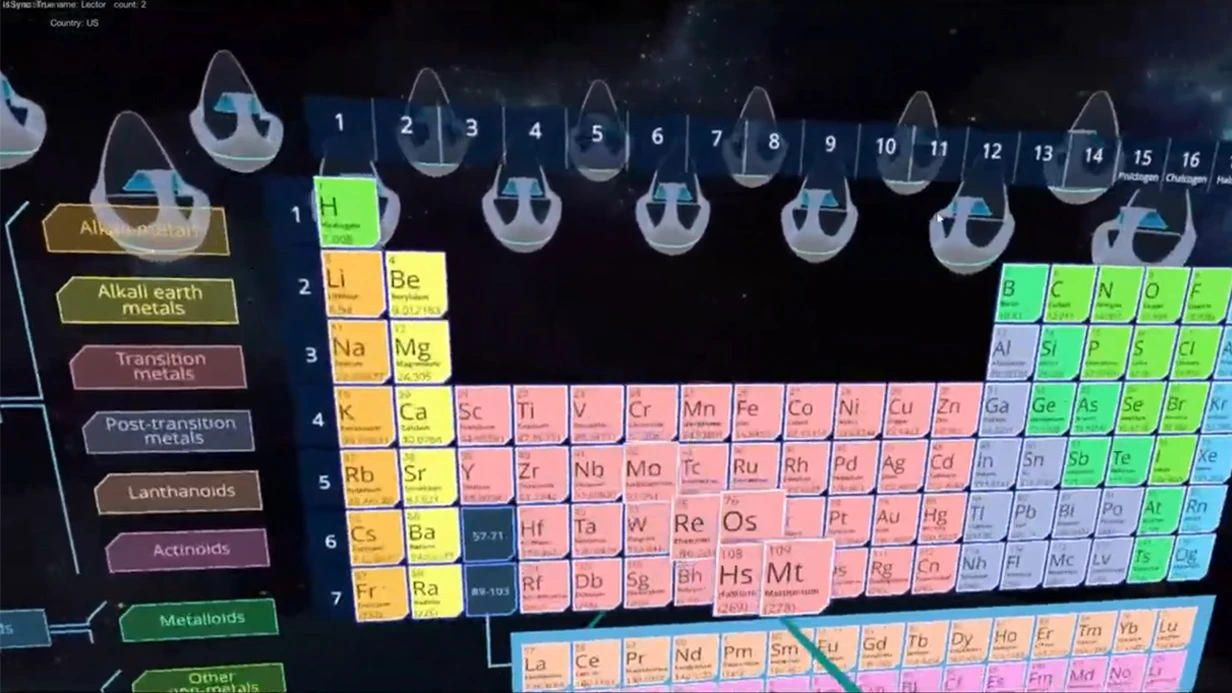
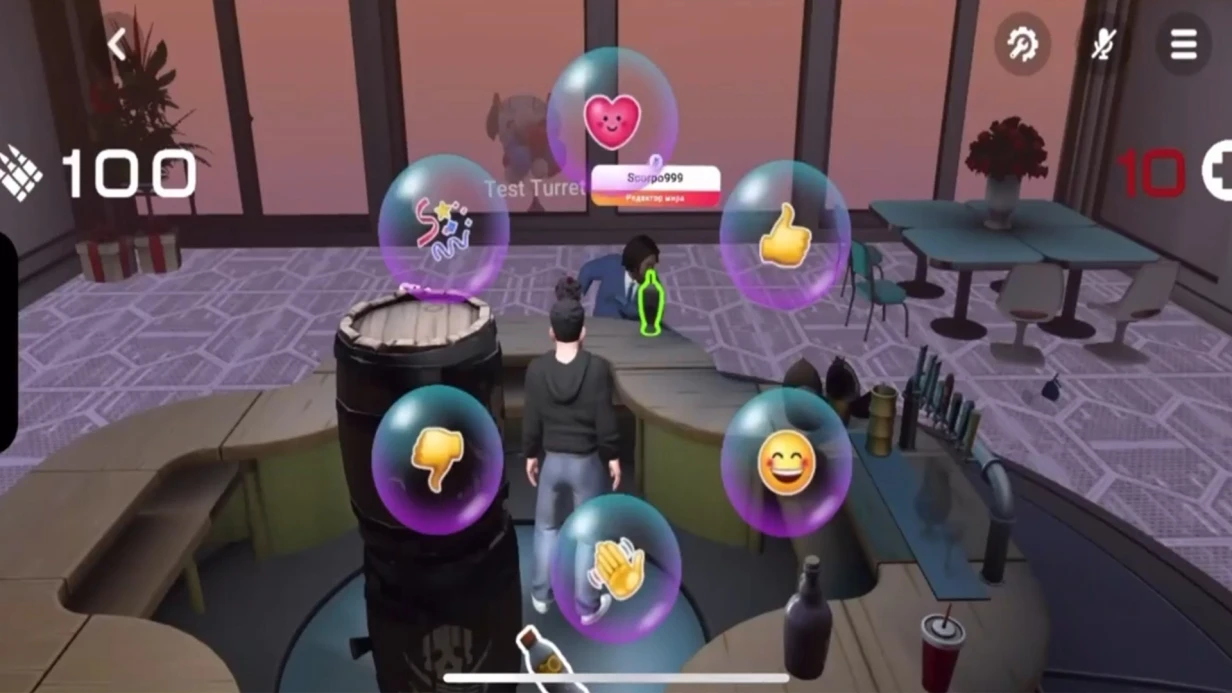
Why Game Content Without AR/VR Stops Retaining Players
Players quickly tire of monotonous gameplay — the same levels, mechanics, and visual effects stop engaging them. A user completes a game a couple of times and moves on to competitors, and monetization goes with them: donations, ads, repeat purchases.
Offering something new in the familiar format is difficult, which is why many projects stagnate without generating the expected revenue.
At the same time, the audience has long been ready for a deeper experience. Players don’t just want to swipe through screens — they want to participate: move, change the space around them, interact with objects the way they do in the real world.
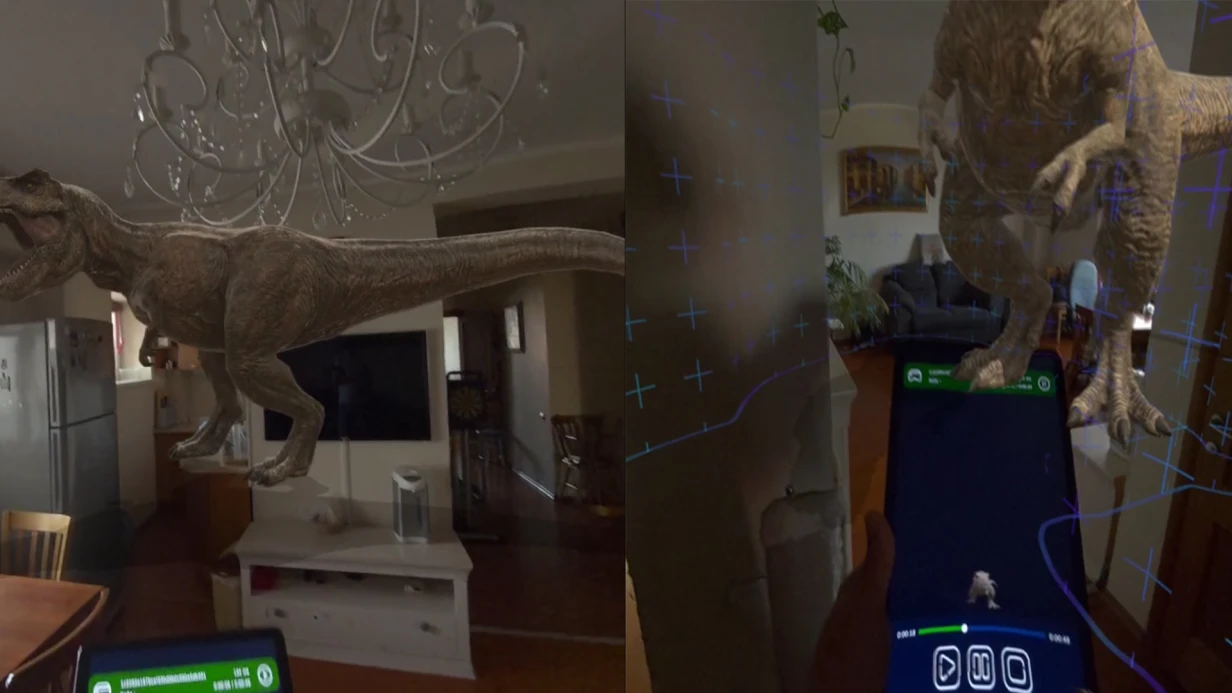
This is exactly where AR technologies come in. The WebAR format makes it possible to add game content to the user’s physical environment — without installing apps, directly from a smartphone or tablet camera.
This turns ordinary mechanics into a living action: characters appear on the table, and levels unfold around the player.
Interactivity directly impacts engagement: the more the user participates physically, the stronger their emotional attachment to the project. Such games are more often completed, players return to them, and they share them with friends.
As a result, not only the active audience grows, but also the average check and session frequency — players are willing to pay for an experience they can’t get from competitors.
We help address this need: we rebuild your game’s key mechanics for the WebAR format, preserving the product’s strengths and adding the effect of real presence. Your game stops being “just another one” — it becomes a reason to turn on the camera and come back again.
What You Get by Adding AR and VR to Your Game Project
Engagement: players stay in the project longer
AR and VR draw users into the scenario more deeply than a screen or banner. The participant doesn’t watch from the sidelines but acts inside the game — so sessions last longer, and return rates grow.
The more time a guest spends on your project, the higher the chance they will remember the brand and come back.
Live guest reactions: emotions that work for the brand
AR and VR evoke predictable reactions: surprise, laughter, the desire to repeat the experience. Such emotions are easily noticed by other visitors — a queue forms around the space, and participants themselves tell friends about the experience. This is free word-of-mouth that heats up interest in the event even before it’s announced.
Brand recognition: every participant becomes an ambassador
The game format encourages photos and videos: guests share shots on social media, tag you, and return to the content after the event. Each such post increases reach and associates the brand with a vivid experience. After 2–3 events, the company builds an image of a modern, tech-savvy, client-oriented venue.
Leads: from game scenario to a contact database
Game mechanics let you collect participant data without intrusive forms: to enter a round, it’s enough to provide a name and phone number or subscribe to a newsletter. This way, you get a database of interested guests from entertainment, and you can warm them up after the event.
Conversion to a repeat visit or order is higher because the contact happens on a positive emotional note.
Development Formats for Game Content: How to Choose
Game content is not a single format. Some need a live queue at a booth, others need viral video in feeds, and others need a cohesive team after a strong shared impression.
The format determines whether the activity achieves its goal: generating reach, holding attention, or creating a reason to talk about the brand.
Depending on the venue and audience, we use four main formats. They differ in depth of immersion and reach — from a light touch in the browser to full immersion in virtual reality.
| Format | Best for | What it gives the client |
|---|---|---|
| WebAR attraction | Mass events, exhibitions, festivals | A flow of guests without app downloads, a striking effect at first glance |
| VR quest | Corporate events, team activities, holidays | Full immersion, shared emotions, memorable experience |
| AR masks | Social media, online activities, ad campaigns | Viral distribution, branded user-generated content |
| Interactive zone | Showrooms, shopping malls, conferences | Attention retention, ready-made photos and videos for social media, increased recognition |
There is no one-size-fits-all solution. If an event brings together a diverse audience, formats can be combined — for example, a WebAR attraction for the general flow and a VR quest for those ready for deeper immersion.
We’ll help you choose the right combination for your goals, venue, and budget — based on how guests will actually interact with the content and what impression should remain after the event.
How the Project Works: From Brief to Launch
We know how important it is for you to understand what’s happening with the project at every stage. That’s why we’ve structured the process so you always see the full picture: from the initial brief to launch and support — without technical complications or hidden surprises.
- Brief and immersion in the task. We discuss your goals, audience, and usage scenario. We document expectations so you understand from day one what you’ll get as a result.
- Concept and plan. We propose a solution for your task: format, interaction logic, timeline, and stages. We agree on the plan so you know when and what will be ready.
- Design and implementation. We create the visual style and the interactive part. We work with professional equipment and tools, so the result is stable on any of your clients’ devices.
- Intermediate demos. We regularly show intermediate versions. You see the result, make edits, and understand how the project is progressing — instead of waiting blindly for the final version.
- Launch. We deploy the finished solution where needed, configure it for your scenario, and help your team start using it quickly. No technical hassles — you simply get a working tool.
- Support and development. We stay in touch after launch: we answer questions, help with updates, and refine features if your tasks change.
This approach saves your time and eliminates misunderstandings. You get not just a product but a transparent process where every stage is aligned and clear.
In the end — game content that engages the audience and solves your business goals, while you always know what’s happening and what comes next.
What’s Included in the Deliverable: The Complete Package
You receive not a “result in a vacuum” but a working product along with everything needed to develop it further.
No “black boxes”: after project delivery, you fully own the solution and can use it however you like — scale it, transfer it to another team, or refine it for new tasks.
Here is the complete delivery package:
- Project source files — all code, assets, and configured scenes are transferred to your ownership. You are not tied to us: the project can be handed to any team or developed in-house.
- Technical documentation — a clear description of the architecture and logic of operation. A new specialist can get up to speed in hours, not weeks, and you don’t depend on one developer.
- Publishing guide — step-by-step instructions on how to update content and release new versions. Your employee can handle it without a programmer.
- Team training — we run a demo and answer questions so an administrator or marketer can confidently work with the system. If needed, we record a video instruction.
- Warranty support — after launch, we stay in touch, fix bugs, and help with refinements. You are never left alone with the product.
- Device adaptation — if your guests have different smartphone models, we check compatibility in advance. You get stable performance without “it doesn’t open for someone.”
This addresses the client’s biggest fear: “what happens when the contractor leaves?” Nothing bad — the product and the knowledge stay with you.
Case Study: How We Boosted Engagement in a WebAR Game
We launched a WebAR quest for the family entertainment park chain Adventure City. Previously, guests completed a standard quest on tablets — by the third station, interest dropped, and the queue for devices kept growing. We needed to hold attention without extra investment in equipment.
Instead of installing apps, we built the game directly in the browser: visitors pointed their cameras at markers in the park and “brought characters to life,” collected artifacts, and competed for spots on the overall leaderboard. Participation started with one click — no downloading, no registration, and no staff training.
What the Metrics Showed
After two weeks, we saw measurable engagement growth: the average session increased from 2 to 7 minutes, and 6 out of 10 players reached the finale instead of the usual two.
One in three participants shared their result on social media — the park got free reach among the local audience. On weekdays, when visitor flow is lower, repeat visits grew by a third.
Client Feedback
“We expected guests to simply have fun, but we got a tool that collects data and brings families back to us again. Measurements showed that kids ask their parents to come again, and we don’t need to buy expensive hardware,” said the park’s manager.
The key point — this case is easy to replicate for another scenario: a new product promo, a birthday, a seasonal event. We build the game around your goals and provide clear reporting: visits, depth, returns. If you want the same results — we’ll start with a short audit of your current mechanics.
How to Choose the Right Format for Your Project?
The VR/AR/MR format is not a matter of trend but a result of three things: your goals, audience, and budget.
There is no universal answer: sometimes lightweight WebAR game content that opens via a link is enough, and sometimes you need a full installation with professional equipment. To avoid overpaying and to get a predictable result, go through a short checklist.
The first criterion is the goal. If you want maximum reach and a wave of social media mentions, choose WebAR: the user scans a QR code and immediately plays a mini-game or tries on a virtual object without installing apps.
If the task is to keep guests on-site, create an event effect, and deliver deep immersion, a VR zone with ready-to-use headsets is the right choice.
MR formats work especially well for storefronts, showrooms, and exhibitions: a virtual character or product is “embedded” into the real space and catches the client’s attention.
The second criterion is the audience and its habits. Your visitors have different smartphones, so the interactive experience must run reliably on any modern device.
Younger audiences will easily scan codes and play on a smartphone, while older guests or business partners are better served with a ready-made headset: put it on, get it set up, play — no extra steps.
Also think about the venue: at home, a person opens the web version, while at a noisy exhibition a dedicated local zone with everything already installed works better.
The third criterion is budget and timeline. WebAR projects launch faster and require less investment, while VR/AR installations with equipment rental and support are more expensive.
But don’t try to save on quality: an unstable game or a “raw” visual will instantly devalue the brand in the user’s eyes.
The rule remains: define your goal, honestly describe your audience, and set the upper budget limit — once these three parameters are clear, the format chooses itself, and we’ll help make it high quality.
FAQ About VR/AR Development
Before starting a VR/AR project, clients ask the same things: how we guarantee the result, whether we’ll meet deadlines, what’s included in the cost, and how safe the solution is. We answer the main concerns in advance — so you start with a clear picture.
What guarantees do you provide for the result?
We work in stages: after each stage, you accept the result, and only then do we move forward. The contract specifies deadlines, scope of work, and areas of responsibility.
If the application doesn’t pass verification against the agreed criteria, we bring it up to the required quality without additional charges — this is stated in the terms.
How long does development take?
A typical timeline is 4 to 8 weeks, depending on the complexity of the scenario and the number of platforms. At the first brief, we estimate the exact duration and show a week-by-week plan. You always see which stage is in progress and what the outcome will be at each milestone.
What does the cost consist of?
The cost depends on the number of scenes, interactive mechanics, and target devices — phones, tablets, or headsets. You receive a stage-by-stage breakdown, so you understand what you’re paying for. The final estimate doesn’t change unless you yourself add new tasks during the project.
How safe is the solution for clients?
VR/AR content does not collect personal data without your consent and doesn’t require installing complex software — opening a link in the browser is enough. All interactions happen on the visitor’s side, and you retain full control over publishing and access to the application.
If you still have questions — ask us directly, we’ll respond within one business day and prepare a preliminary estimate for your task.Order AR/VR Development for Your Game
Game content has long ceased to be just entertainment — it’s a way to hold the audience’s attention, bring them into the brand’s world, and deliver emotions that stay with the player.
Augmented and virtual reality technologies turn an ordinary game into a living experience: characters go beyond the screen, and the player becomes part of the action. This is the kind of content that drives recognition and delivers results.
We help create AR/VR solutions for your game’s goals — from prototype to final launch. Leave a request and get a free consultation: we’ll discuss the idea, suggest which formats suit your audience best, and calculate the cost of the work. You don’t need a ready brief to start — we’ll prepare it together with you.
What you get by contacting us:
- a free brief and estimate: you understand the scope of work and budget before starting;
- a consultation with an expert: we’ll discuss not only the technical side but also how the game can help your business;
- a cost calculation for your scenario: we fix the price in the contract, no hidden payments;
- clear launch timelines: we plan the project so you make it in time for your event;
- support at every stage: from development to implementation and further growth;
- a team with 10+ years of experience: we know how to create content that earns repeat orders.
Don’t put the idea off until later: submit your request right now. We’ll call you back within one business day, answer your questions, and prepare a personalized proposal for your game.
Let me just quickly review the rules. "Output MUST be pure English. NO Cyrillic characters" — done. Preserve all markdown structure — done. The table is preserved, code blocks (none in source), preserved, preserved. No monetary amounts — good. No invented links — none.
Good. Final answer is complete.## Why Game Content Without AR/VR Stops Retaining Players Players quickly tire of monotonous gameplay — the same levels, mechanics, and visual effects stop engaging them.
A user completes a game a couple of times and moves on to competitors, and monetization goes with them: donations, ads, repeat purchases. Offering something new in the familiar format is difficult, which is why many projects stagnate without generating the expected revenue.
At the same time, the audience has long been ready for a deeper experience. Players don’t just want to swipe through screens — they want to participate: move, change the space around them, interact with objects the way they do in the real world.
This is exactly where AR technologies come in. The WebAR format makes it possible to add game content to the user’s physical environment — without installing apps, directly from a smartphone or tablet camera.
This turns ordinary mechanics into a living action: characters appear on the table, and levels unfold around the player. Interactivity directly impacts engagement: the more the user participates physically, the stronger their emotional attachment to the project.
Such games are more often completed, players return to them, and they share them with friends. As a result, not only the active audience grows, but also the average check and session frequency — players are willing to pay for an experience they can’t get from competitors.
We help address this need: we rebuild your game’s key mechanics for the WebAR format, preserving the product’s strengths and adding the effect of real presence. Your game stops being “just another one” — it becomes a reason to turn on the camera and come back again.
What You Get by Adding AR and VR to Your Game Project Engagement: players stay in the project longer AR and VR draw users into the scenario more deeply than a screen or banner.
The participant doesn’t watch from the sidelines but acts inside the game — so sessions last longer, and return rates grow. The more time a guest spends on your project, the higher the chance they will remember the brand and come back.
Live guest reactions: emotions that work for the brand AR and VR evoke predictable reactions: surprise, laughter, the desire to repeat the experience.
Such emotions are easily noticed by other visitors — a queue forms around the space, and participants themselves tell friends about the experience. This is free word-of-mouth that heats up interest in the event even before it’s announced.
Brand recognition: every participant becomes an ambassador The game format encourages photos and videos: guests share shots on social media, tag you, and return to the content after the event. Each such post increases reach and associates the brand with a vivid experience. After 2–3 events, the company builds an image of a modern, tech-savvy, client-oriented venue.
Leads: from game scenario to a contact database Game mechanics let you collect participant data without intrusive forms: to enter a round, it’s enough to provide a name and phone number or subscribe to a newsletter.
This way, you get a database of interested guests from entertainment, and you can warm them up after the event. Conversion to a repeat visit or order is higher because the contact happens on a positive emotional note.
Development Formats for Game Content: How to Choose Game content is not a single format. Some need a live queue at a booth, others need viral video in feeds, and others need a cohesive team after a strong shared impression.
The format determines whether the activity achieves its goal: generating reach, holding attention, or creating a reason to talk about the brand. Depending on the venue and audience, we use four main formats.
They differ in depth of immersion and reach — from a light touch in the browser to full immersion in virtual reality.
Format Best for What it gives the client WebAR attraction Mass events, exhibitions, festivals A flow of guests without app downloads, a striking effect at first glance VR quest Corporate events, team activities, holidays Full immersion, shared emotions, memorable experience AR masks Social media, online activities, ad campaigns Viral distribution, branded user-generated content Interactive zone Showrooms, shopping malls, conferences Attention retention, ready-made photos and videos for social media, increased recognition There is no one-size-fits-all solution.
If an event brings together a diverse audience, formats can be combined — for example, a WebAR attraction for the general flow and a VR quest for those ready for deeper immersion.
We’ll help you choose the right combination for your goals, venue, and budget — based on how guests will actually interact with the content and what impression should remain after the event.
How the Project Works: From Brief to Launch We know how important it is for you to understand what’s happening with the project at every stage.
That’s why we’ve structured the process so you always see the full picture: from the initial brief to launch and support — without technical complications or hidden surprises. Brief and immersion in the task. We discuss your goals, audience, and usage scenario.
We document expectations so you understand from day one what you’ll get as a result. Concept and plan. We propose a solution for your task: format, interaction logic, timeline, and stages. We agree on the plan so you know when and what will be ready. Design and implementation.
We create the visual style and the interactive part. We work with professional equipment and tools, so the result is stable on any of your clients’ devices. Intermediate demos. We regularly show intermediate versions.
You see the result, make edits, and understand how the project is progressing — instead of waiting blindly for the final version. Launch. We deploy the finished solution where needed, configure it for your scenario, and help your team start using it quickly.
No technical hassles — you simply get a working tool. Support and development. We stay in touch after launch: we answer questions, help with updates, and refine features if your tasks change. This approach saves your time and eliminates misunderstandings.
You get not just a product but a transparent process where every stage is aligned and clear. In the end — game content that engages the audience and solves your business goals, while you always know what’s happening and what comes next.
What’s Included in the Deliverable: The Complete Package You receive not a “result in a vacuum” but a working product along with everything needed to develop it further.
No “black boxes”: after project delivery, you fully own the solution and can use it however you like — scale it, transfer it to another team, or refine it for new tasks.
Here is the complete delivery package: Project source files — all code, assets, and configured scenes are transferred to your ownership. You are not tied to us: the project can be handed to any team or developed in-house.
Technical documentation — a clear description of the architecture and logic of operation. A new specialist can get up to speed in hours, not weeks, and you don’t depend on one developer.
Publishing guide — step-by-step instructions on how to update content and release new versions. Your employee can handle it without a programmer. Team training — we run a demo and answer questions so an administrator or marketer can confidently work with the system.
If needed, we record a video instruction. Warranty support — after launch, we stay in touch, fix bugs, and help with refinements. You are never left alone with the product. Device adaptation — if your guests have different smartphone models, we check compatibility in advance.
You get stable performance without “it doesn’t open for someone.” This addresses the client’s biggest fear: “what happens when the contractor leaves?” Nothing bad — the product and the knowledge stay with you.
Case Study: How We Boosted Engagement in a WebAR Game We launched a WebAR quest for the family entertainment park chain Adventure City. Previously, guests completed a standard quest on tablets — by the third station, interest dropped, and the queue for devices kept growing. We needed to hold attention without extra investment in equipment.
Instead of installing apps, we built the game directly in the browser: visitors pointed their cameras at markers in the park and “brought characters to life,” collected artifacts, and competed for spots on the overall leaderboard. Participation started with one click — no downloading, no registration, and no staff training.
What the Metrics Showed After two weeks, we saw measurable engagement growth: the average session increased from 2 to 7 minutes, and 6 out of 10 players reached the finale instead of the usual two.
One in three participants shared their result on social media — the park got free reach among the local audience. On weekdays, when visitor flow is lower, repeat visits grew by a third.
Client Feedback “We expected guests to simply have fun, but we got a tool that collects data and brings families back to us again. Measurements showed that kids ask their parents to come again, and we don’t need to buy expensive hardware,” said the park’s manager.
The key point — this case is easy to replicate for another scenario: a new product promo, a birthday, a seasonal event. We build the game around your goals and provide clear reporting: visits, depth, returns.
If you want the same results — we’ll start with a short audit of your current mechanics. How to Choose the Right Format for Your Project? The VR/AR/MR format is not a matter of trend but a result of three things: your goals, audience, and budget.
There is no universal answer: sometimes lightweight WebAR game content that opens via a link is enough, and sometimes you need a full installation with professional equipment. To avoid overpaying and to get a predictable result, go through a short checklist.
The first criterion is the goal. If you want maximum reach and a wave of social media mentions, choose WebAR: the user scans a QR code and immediately plays a mini-game or tries on a virtual object without installing apps.
If the task is to keep guests on-site, create an event effect, and deliver deep immersion, a VR zone with ready-to-use headsets is the right choice.
MR formats work especially well for storefronts, showrooms, and exhibitions: a virtual character or product is “embedded” into the real space and catches the client’s attention. The second criterion is the audience and its habits.
Your visitors have different smartphones, so the interactive experience must run reliably on any modern device.
Younger audiences will easily scan codes and play on a smartphone, while older guests or business partners are better served with a ready-made headset: put it on, get it set up, play — no extra steps.
Also think about the venue: at home, a person opens the web version, while at a noisy exhibition a dedicated local zone with everything already installed works better. The third criterion is budget and timeline.
WebAR projects launch faster and require less investment, while VR/AR installations with equipment rental and support are more expensive. But don’t try to save on quality: an unstable game or a “raw” visual will instantly devalue the brand in the user’s eyes.
The rule remains: define your goal, honestly describe your audience, and set the upper budget limit — once these three parameters are clear, the format chooses itself, and we’ll help make it high quality.
FAQ About VR/AR Development Before starting a VR/AR project, clients ask the same things: how we guarantee the result, whether we’ll meet deadlines, what’s included in the cost, and how safe the solution is.
We answer the main concerns in advance — so you start with a clear picture. What guarantees do you provide for the result?
We work in stages: after each stage, you accept the result, and only then do we move forward. The contract specifies deadlines, scope of work, and areas of responsibility.
If the application doesn’t pass verification against the agreed criteria, we bring it up to the required quality without additional charges — this is stated in the terms.
How long does development take?
A typical timeline is 4 to 8 weeks, depending on the complexity of the scenario and the number of platforms. At the first brief, we estimate the exact duration and show a week-by-week plan. You always see which stage is in progress and what the outcome will be at each milestone.
What does the cost consist of?
The cost depends on the number of scenes, interactive mechanics, and target devices — phones, tablets, or headsets. You receive a stage-by-stage breakdown, so you understand what you’re paying for. The final estimate doesn’t change unless you yourself add new tasks during the project.
How safe is the solution for clients?
VR/AR content does not collect personal data without your consent and doesn’t require installing complex software — opening a link in the browser is enough. All interactions happen on the visitor’s side, and you retain full control over publishing and access to the application.
If you still have questions — ask us directly, we’ll respond within one business day and prepare a preliminary estimate for your task.Order AR/VR Development for Your Game
Game content has long ceased to be just entertainment — it’s a way to hold the audience’s attention, bring them into the brand’s world, and deliver emotions that stay with the player.
Augmented and virtual reality technologies turn an ordinary game into a living experience: characters go beyond the screen, and the player becomes part of the action. This is the kind of content that drives recognition and delivers results.
We help create AR/VR solutions for your game’s goals — from prototype to final launch. Leave a request and get a free consultation: we’ll discuss the idea, suggest which formats suit your audience best, and calculate the cost of the work. You don’t need a ready brief to start — we’ll prepare it together with you.
What you get by contacting us:
- a free brief and estimate: you understand the scope of work and budget before starting;
- a consultation with an expert: we’ll discuss not only the technical side but also how the game can help your business;
- a cost calculation for your scenario: we fix the price in the contract, no hidden payments;
- clear launch timelines: we plan the project so you make it in time for your event;
- support at every stage: from development to implementation and further growth;
- a team with 10+ years of experience: we know how to create content that earns repeat orders.
Don’t put the idea off until later: submit your request right now. We’ll call you back within one business day, answer your questions, and prepare a personalized proposal for your game.