

Guests forget your marketing event the very next day
A standard marketing event follows the formula "come — look — forget." A day later, guests recall only vague impressions, and after a week they're unlikely to name your brand among the participants.
Investments in the venue, catering, and show program create a short-term spike but don't build lasting memory or a reason to come back.
Yet it's emotions that determine what people talk about after the event. Audience engagement isn't a "nice bonus" — it's the core mechanism that turns a one-time meeting into a memorable brand experience.
If a guest remains a spectator rather than a participant, the event delivers no return: no repeat mentions, no viral reach, no desire to come again.
The problem is compounded by audiences being saturated with standard formats. Ordinary presentations, photo booths, and merch giveaways don't grab attention.
To stand out, an event needs to surprise and engage at the same time — that's when the "brand = vivid experience" association is born, and guests carry it with them.
We solve this pain point with WebAR mechanics that turn a guest's smartphone into a tool for interacting with your product: the person searches, activates, and creates content themselves rather than merely watching a screen. This shifts the impression from passive to active, anchoring it at the level of personal action.
The benefits a brand gets from WebAR activation
Guests at an event no longer want to simply watch presentations. They want an experience worth sharing. A WebAR activation from our team turns the event into a live occasion for photos, videos, and conversations.
Guest engagement: emotions that work for the brand
An AR mask or interactive scene holds a guest's attention for 1-2 minutes — enough time to not only be impressed but also create content for their social media. Engagement grows not through force but through genuine interest.
Social media reach: every guest becomes a media channel
When a participant shares the AR effect with followers, the brand gets organic reach without paying for it. A single successful clip can gather several times more views than the official post about the event.
Event leads: from interest to contact info
WebAR requires no app installation — lowering the barrier to action. A built-in form or offer lets you collect guest contacts at the peak moment of interest, and after the event you have a hot list for follow-up campaigns.
Brand recognition: remembered through experience
An association with an unusual format sticks stronger than a logo on a badge. Guests will tell colleagues and friends about the event, and the brand stays in memory as the creator of a vivid impression.
Importantly, all benefits work simultaneously — emotion fuels reach, reach generates leads, leads strengthen recognition. A single WebAR activation delivers results at every level of the funnel.
WebAR formats for different marketing event goals
Every marketing event has its own goals: to interest guests, show the product in action, collect contacts, or generate a stream of social media posts. There's no universal mechanic — so we match the WebAR format to a specific goal and venue.
Below is a table of four basic activation types that cover most event-marketing tasks. For each one, we show which scenario it fits and what result it delivers to the client.
| AR Format | Suitable event type | What it delivers to the client |
|---|---|---|
| AR mask or filter | Parties, premium ceremonies, concerts | Guests take photos and post results on social media — the brand gains reach and mentions without an ad budget |
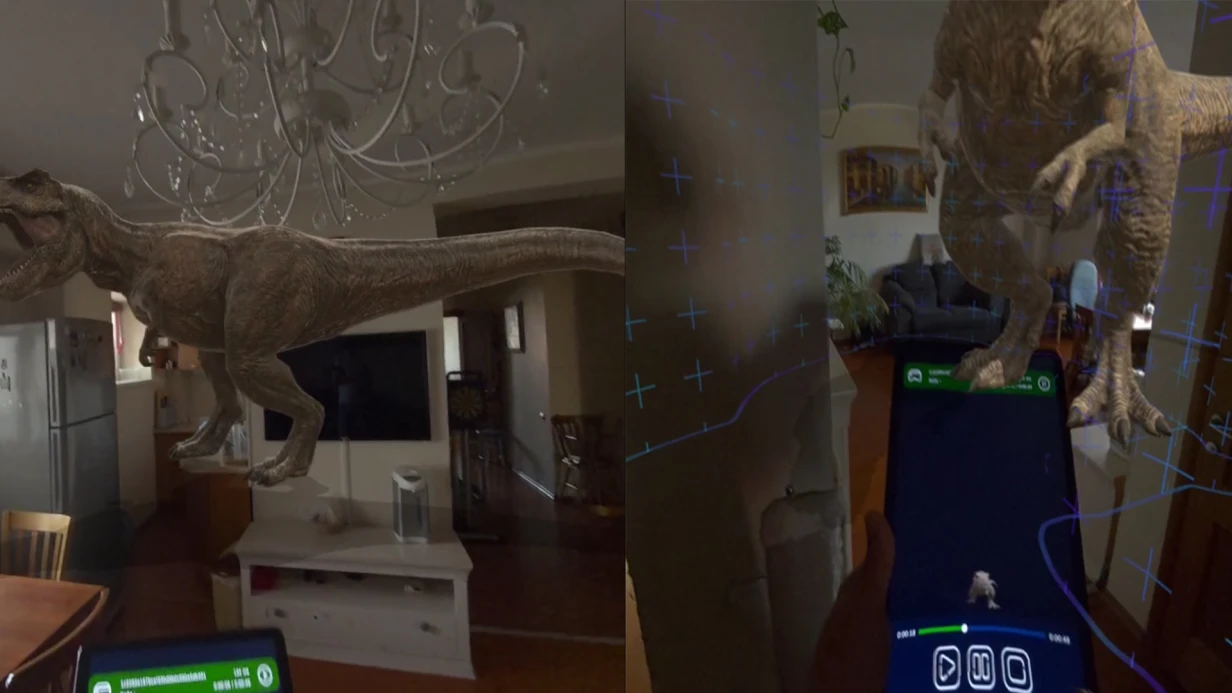
| AR showcase for a product | Exhibitions, new-product presentations, showrooms | Displays the product in detail at true scale — the booth draws more attention with no need to ship physical samples |
| AR quest | Large forums, corporate events, festivals | Turns the venue into a game, increases guest dwell time, and engages visitors across all activity zones |
| AR postcard | Events with welcome boxes or as an outbound mailer | Adds an emotional layer to a gift and remains a "living" reminder of the brand after the event |
The table is a starting point. During the consultation, we account for venue size, guest count, and event goals to choose an engagement mechanic that delivers maximum results.
Stages of launching WebAR activation at an event
When the event is two or three weeks away and you need to deliver an activation that truly sticks — you want to understand exactly how the work will unfold.
We structure the process so you don't have to dive into technical details: you get clear stages, approval checkpoints, and readiness by the event date.
Below is a step-by-step plan for a turnkey WebAR activation launch. No "magic" involved: just a transparent sequence where each stage addresses a specific event task and requires no technical knowledge from you.
-
Brief and concept approval. We clarify what matters for your event: reach, engagement, lead collection, or creating a wow effect. The output is a validated concept and a clear understanding of how the activation helps achieve the event goal.
-
Work plan and scenario. We set timelines, approval checkpoints, and review stages. You see exactly when and what needs to be approved to hit the deadline. All changes are made before development starts — no surprises at the end.
-
Development and build. We assemble the interactive experience: scan to see the effect, interact to get the result. You receive a preliminary version to test in a real-world scenario — is it convenient for guests, is it clear, does it work on the target devices?
-
Final testing before the event. We test the activation under conditions as close to real as possible: different smartphone models, varying lighting, internet speed. Our goal is that the guest faces zero technical obstacles at the most crucial moment.
-
Launch on event day and support. On the day, we're available via chat or in person. If something goes off-plan, we fix it quickly without your involvement. You handle guests and the program — the technical side is on us.
-
Analytics and results. After the event, we present results: how many people activated, how many completed the target action, what share of guests shared their experience. These numbers help assess effectiveness and decide whether to use the activation again.
In the end, you get not just a finished WebAR activation but a predictable process with clear timelines and well-defined responsibility. Your task is to define the event goal — we then walk through all stages ourselves and deliver results on time.
What's included in the package: from idea to reach report
The deliverables aren't a single file but a complete package covering every task of the marketing event — from concept to reach metrics. You receive materials you can immediately hand off to your team, contractors, or management.
- Creative concept: description of the idea, scenario, and visual style, aligned with your brand and event goals.
- Turnkey AR mechanic: the guest points the camera at a marker and sees the effect — no app installation or training required.
- Staff instructions: a short guide for administrators and hosts on how to assist guests and handle common situations.
- Announcement materials: ready-made videos and copy for email campaigns, social media, and partner channels to build an audience in advance.
- Analytical reach report: unique user count, repeat launches, peak activity time, and publication numbers.
- Usage rights: we formalize the rights to the content and mechanics so you can reuse them in future campaigns.
Each item is delivered within the agreed timeline and in a convenient format — by email and via cloud, with no dependence on a specific specialist.
After launch, we stay available to help interpret the report: which zones performed best, where guests lingered longest, and what to strengthen for the next event.
Case study: how a WebAR activation doubled booth dwell time
Visitors walk past ordinary booths in 10-15 seconds — even with an interesting product, holding attention at an exhibition is difficult.
Vector Bank came to us with exactly this challenge: they needed not just to tell people about a new service but to collect contacts from interested clients and be remembered.
We proposed a WebAR activation: a person points their smartphone camera at a poster and sees a volumetric visualization of the service in real time. No apps or installs — everything works from the first screen tap.
A line quickly formed at the booth: guests waited their turn to "bring the image to life" and take a photo.
The result exceeded expectations. Average visitor time at the booth grew from 1-2 minutes to 5-7 — enough for bank staff to not only present the product but also discuss terms.
Over the two event days, the activation collected over 450 contacts — three times more than at the previous exhibition with a classic booth.
The bank received not only a base of potential clients but also a ready-made scenario for future events. The WebAR activation was adapted for regional forums and is still in use — the repeat order became the best proof of its effectiveness for us.
The key takeaway: WebAR turns a booth from a place for handing out brochures into a point of attraction that drives results. While competitors hand out business cards, you're collecting contacts and building a dialogue with the client — before the sales conversation even begins.
How to choose the right WebAR format for your task
Start not with the AR format but with the guest's task: should they take a photo and post it, try on a product, or get a promo code for taking part in a game?
That immediately makes it clear which format delivers maximum value for a limited event budget — that's the first selection criterion. Don't chase flashy graphics if your audience values speed and simplicity.
The second criterion is the event scenario. Open venues with heavy foot traffic call for fast formats: AR masks, photo filters, or banner markers scanned in seconds.
Intimate gatherings suit interactive 3D showcases and virtual showrooms — guests linger for 2-3 minutes and have time to explore the details.
The event budget defines the depth: you can launch one format and expand it after the first results, adding quest levels or new AR objects.
The third criterion is measurability. A good format shows up in numbers: activation count, interaction time, website visits after the event. These metrics let you assess the return and justify budgets for future events.
If you don't know what to look at, ask the vendor for examples of similar projects and their business metrics — our team, for instance, always shares such case studies rather than just technical specs.
We help shape the concept before development starts: we analyze the audience, goals, and scenario, match the format to the budget, and propose a solution that delivers maximum reach.
In 10+ years, we've seen a modest mask generate hundreds of brand mentions and a virtual showroom pay for itself through a repeat order. That's the right kind of choice: a format's cost is justified by its business result.
Gather the inputs: guest count, event goal, and an approximate budget — that's enough for a short consultation to propose the right format and plan development for your marketing scenario.
Frequently asked questions and concerns before launching WebAR
Before launching WebAR, organizers most often worry about the same things: what if something goes wrong on site — guests can't start the experience, the internet fails, and the result turns out "unpredictable." These doubts are natural: you're responsible for the event, and any technical glitch is visible to everyone.
That's why we structure the process to eliminate risks as early as the preparation stage, so on event day you deal with guests rather than tech.
Below are answers to the questions we hear at every brief.
What if WebAR doesn't load for some guests?
We test the experience in advance on different phone models and connection speeds. A day before the event, we check the venue in person and prepare a lightweight version: if connectivity is unstable, the guest gets a simplified but still impressive format. A technical specialist is available on event day and can resolve any issue in a couple of minutes.
Do guests need internet? Won't that be a problem?
An internet connection is indeed needed for the first launch — just as for any link or QR code. But we optimize the experience so loading takes just a few seconds even on a congested network, and data usage stays minimal. Most guests are already online, so no extra steps are required from them.
Won't guests struggle to figure out how to use WebAR?
Everything is designed to be as simple as possible: the guest points the camera at a QR code or marker — and immediately sees the result. No installs, registrations, or instructions.
We test the experience with people of different ages and advise on how to place prompts so even the least tech-savvy guest gets it in seconds.
How safe is what guests do in the camera?
We don't collect personal data unless necessary. If statistics matter for the report, they remain anonymized — you'll see reach and activity but can't link them to a specific person. The experience can be configured so the guest enters nothing at all and remains anonymous.
This preparation is what makes the result predictable: you know in advance how the experience will perform on site, how long it takes for a guest, and what to do in a force-majeure situation. All that's left is to enjoy the emotions and reach.Discuss a WebAR activation for your event
Do you already have an idea, or are you just asking to "make it interesting"? In either case, we start with a free consultation — we'll break down the event goals, audience, and scenario, and identify where WebAR will amplify the experience.
In 15-20 minutes, you'll understand which format fits: a mask, a quest, a showcase, or interactive print.
We work remotely and take on turnkey projects: from concept to launch. If the event is 2-3 weeks away, we'll propose the optimal solution with a realistic timeline. If you're planning ahead, we'll show how the activation works before, during, and after the event to boost reach.
What you get after reaching out:
- Cost estimate for your format and scale — with clear stages and no hidden conditions.
- Demo access to similar projects — see how it feels on your own smartphone.
- Scenario and metrics consultation: what to measure — activation count, interaction time, viral reach.
- Recommendations for integrating into the program: how to weave the activation into the welcome, coffee break, or evening segment.
- A commercial proposal within a couple of days and a brief for kickoff — a clear plan with defined responsibilities.
Submit a request for development — we'll respond within one business day and schedule a quick call if needed. After the conversation, you'll receive not just general words but a concrete solution tailored to your event. Let's discuss your task — we'll create an event people remember and talk about.