

Why an Advertising Campaign Doesn’t Engage the Audience Without WebAR
Every day, users see hundreds of ads: banners, videos, posts. The brain automatically filters them out — this is called banner blindness. Advertising without engagement turns into background noise, and clicking it becomes a rare accident. As a result, even a well-planned advertising campaign doesn’t deliver the expected response.
The problem is that classical advertising is a monologue. The brand speaks, and the user passively watches. Without participation, there is no emotion; without emotion, there is no memorability — which means the campaign doesn’t pay off.
The budget goes to impressions that don’t lead to action — not to purchase, not to an inquiry, not even to a conscious choice of the brand.
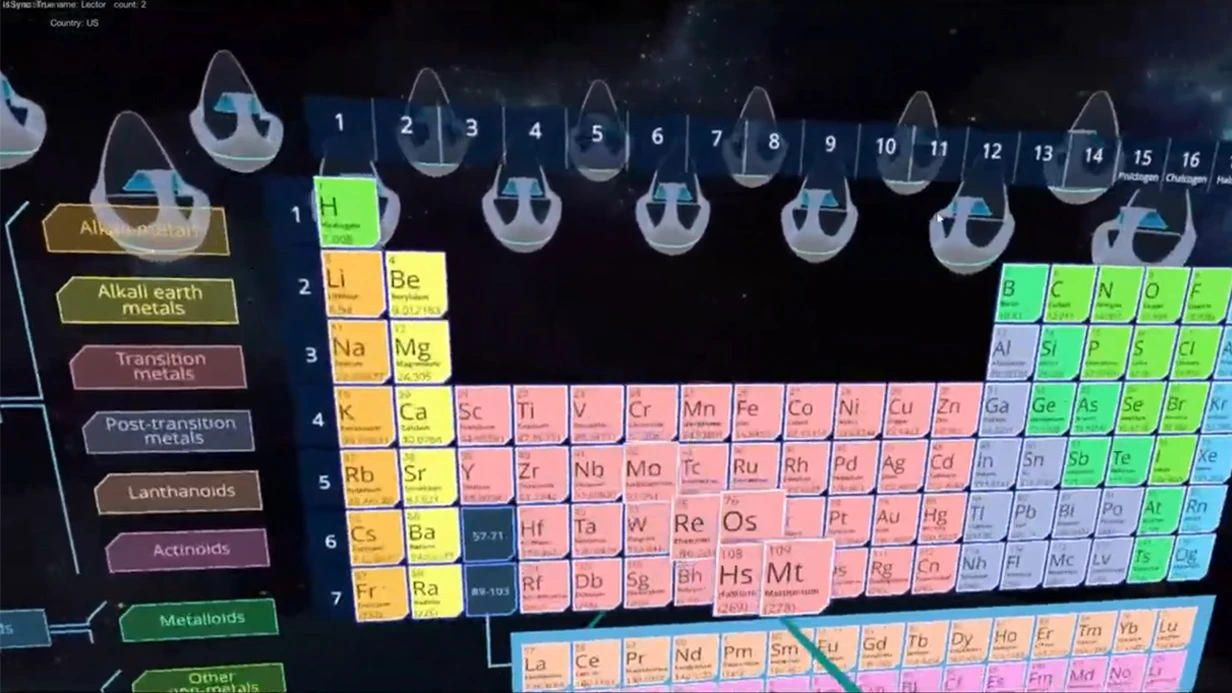
WebAR turns this logic around. The user doesn’t watch the ad — they play with it: spinning a 3D product model, “trying on” an item, unlocking hidden content through the smartphone camera.
This is interactive advertising — a person voluntarily spends time with the brand, and the vivid impression of the experience stays for a long time.
Interactivity solves the problem ordinary formats can’t handle: it holds attention for several minutes instead of the couple of seconds it takes to scroll past an ad. Participants willingly share their impressions on social media, giving the brand free reach.
Conversion grows because the person has already made a step toward the brand — they’ve touched the product in augmented reality.
We create WebAR for advertising campaigns that measurably work. Tell us about your challenge — we’ll show you how to turn indifferent viewing into engaged action.
What WebAR Brings to Your Brand and Sales
A client remembers a brand only when they get an unexpected experience. Regular banners and videos are glanced over, whereas augmented reality draws a person into a game or product try-on.
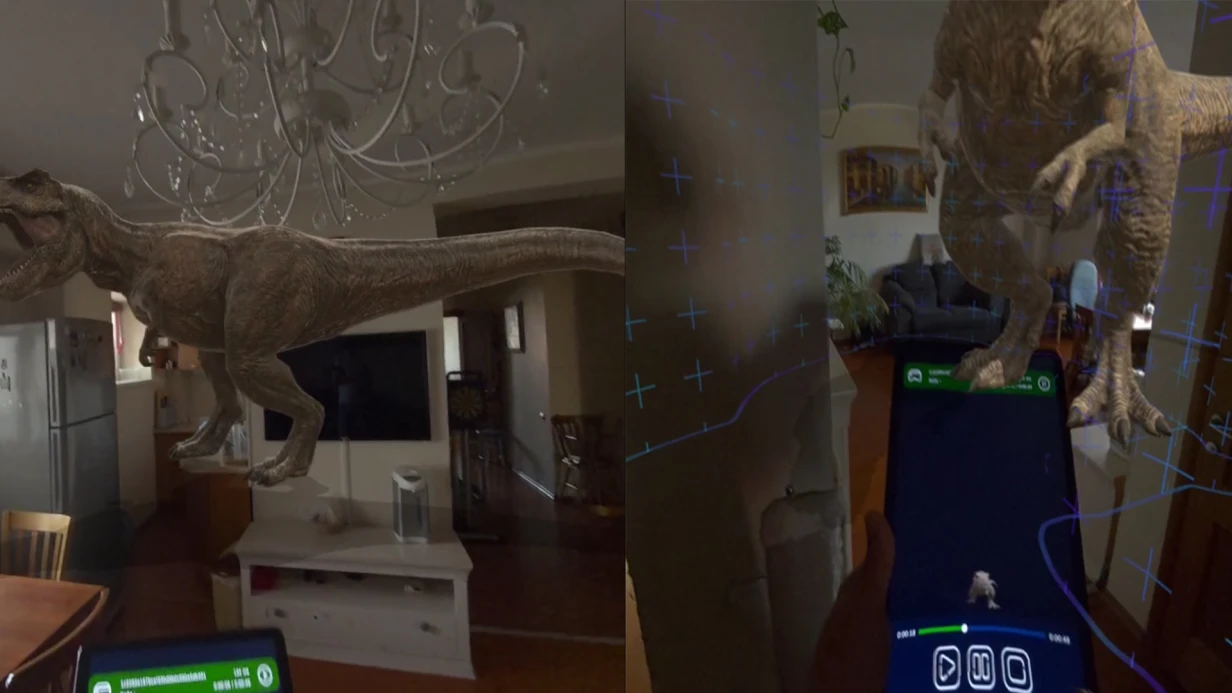
The user themselves points the camera at a sticker or QR code and sees the product “come alive” right in their hands. This interaction stays in memory and creates a desire to share with friends.
Because WebAR runs in the browser, participation takes less than a minute and requires no app installation. This greatly expands reach: the link can be embedded in a post, packaging, a subway ad layout, or a printed catalog.
Every campaign launch becomes a viral trigger — users record videos and publish Stories, so brand mentions grow without paying extra for advertising.
The main value for sales is lead generation. At the end of the scenario, you can offer the person a discount or subscription in exchange for their contacts, and the data goes straight into your CRM.
Even a simple augmented-reality quiz delivers a double effect: it entertains the audience and collects warm segments for email campaigns.
WebAR’s value for the brand isn’t limited to a one-time spike of interest. Repeated runs of the mechanics boost brand awareness and product loyalty, while analytics reveal which incentives worked best.
We help you set up the campaign from idea to result and, already at the briefing stage, show how specific mechanics will affect reach and the number of contacts.
Choosing the WebAR Format for Your Advertising Campaign
For an advertising campaign to work, you need to choose a WebAR format that matches the user scenario. Web interactivity requires no app installation — a person opens the link, points the camera, and gets a 3D effect.
But it is the right format that determines whether this will be fleeting interest or engaged action with the brand.
Below is a table of the basic formats we use in advertising campaigns. It helps clients quickly figure out which option will deliver the desired result.
| WebAR Format | When to Use | What the Client Gets |
|---|---|---|
| QR showcase | Posters, packaging, signage | Instant transition from offline to 3D interactive: the person scans the code and sees a 3D object |
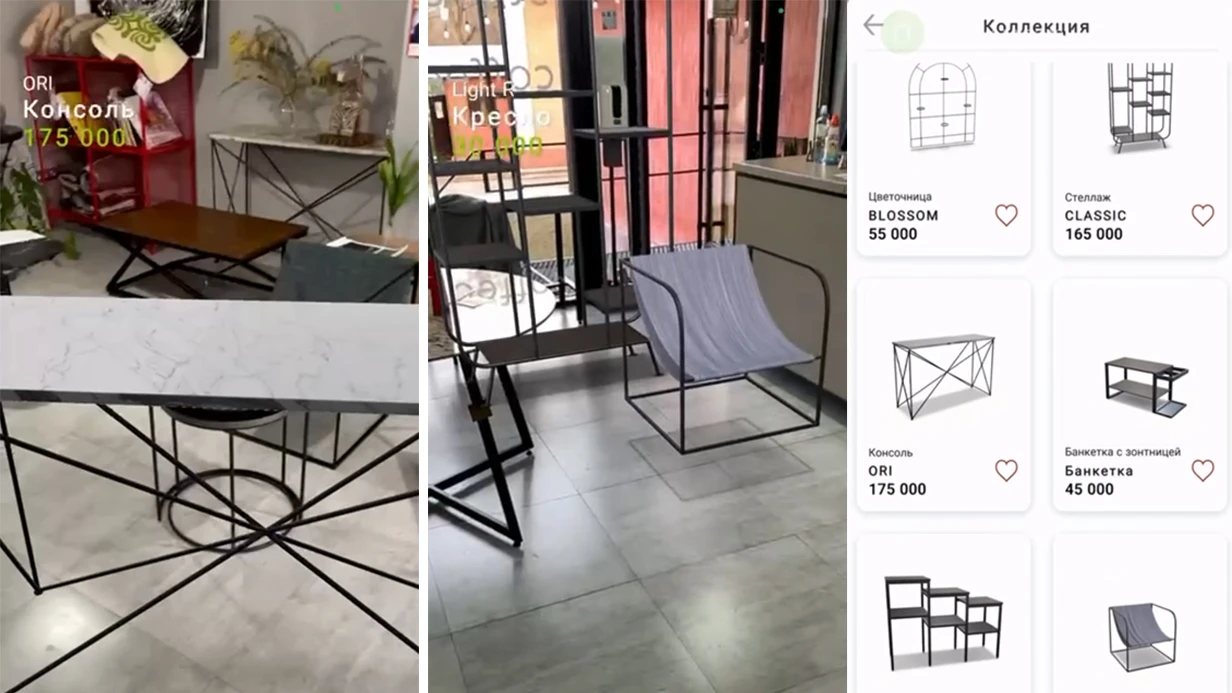
| Horizontal surface anchoring | Product demonstration (furniture, appliances, cars) | The user places a virtual object in their space and evaluates size and details |
| Mask and lens series | Social media campaigns, offline events | Viral reach: guests take photos, share them, and tag the brand |
| Markerless free placement | Point of sale, storefronts, outdoor advertising | The object appears around or next to the person anywhere — no QR code needed |
| Living images | Catalogs, magazines, brochures | Printed materials come alive: a photo or illustration turns into a 3D scene with animation |
Combining formats expands reach: the same product can be shown both on social media and on offline media. We select the scenario based on the specific campaign goal — whether it’s launching a new product, increasing awareness, or collecting requests.
The client gets not just a “spectacular image” but a measurable tool: number of launches, duration of interaction, and share of completed actions.
How WebAR Development Works for Your Business
We’ve structured the process so you see results at every stage instead of waiting to see “how it goes.” You don’t need to understand technical details — we handle everything from idea to launch and offer clear steps with definite timelines.
- Brief and goal setting. We discuss the advertising campaign goals, audience profile, and desired customer action. We define success criteria — this is the basis for all subsequent steps.
- Concept and timeline estimate. We propose a WebAR mechanic that solves your specific task — whether it’s a virtual fitting, interactive catalog, or giveaway. We approve the cost estimate and deadlines before work begins.
- Design prototype. We show how the user interacts with your AR experience: screens, animations, texts. You see the future result right away and can make changes before development.
- Development and testing. We build the solution on a professional platform and test it on various devices and browsers. For you, one thing matters — it will work reliably for your customers.
- Launch and integration. We host the WebAR on your page or connect a QR code to printed materials. We set up analytics so you can see the number of launches, conversion, and other campaign metrics.
- Support and optimization. After launch, we monitor the metrics and suggest improvements when needed — changing texts, simplifying the scenario, adding new elements.
A standard project takes 2–4 weeks depending on the complexity of the scenario. In the end, you get not just “technology” but a ready-made tool for a measurable advertising campaign result — with transparent stages and clear deadlines.
What Is Included in a WebAR Project Delivery
When you order a WebAR project for an advertising campaign, it’s important to understand exactly what you’ll receive in the end — not just an “AR effect” but a ready-made promotion tool that can be immediately launched and measured.
We structure the delivery so you don’t have to negotiate with contractors, order additional services, or deal with technical details.
Here is a checklist of what is included in a WebAR project delivery:
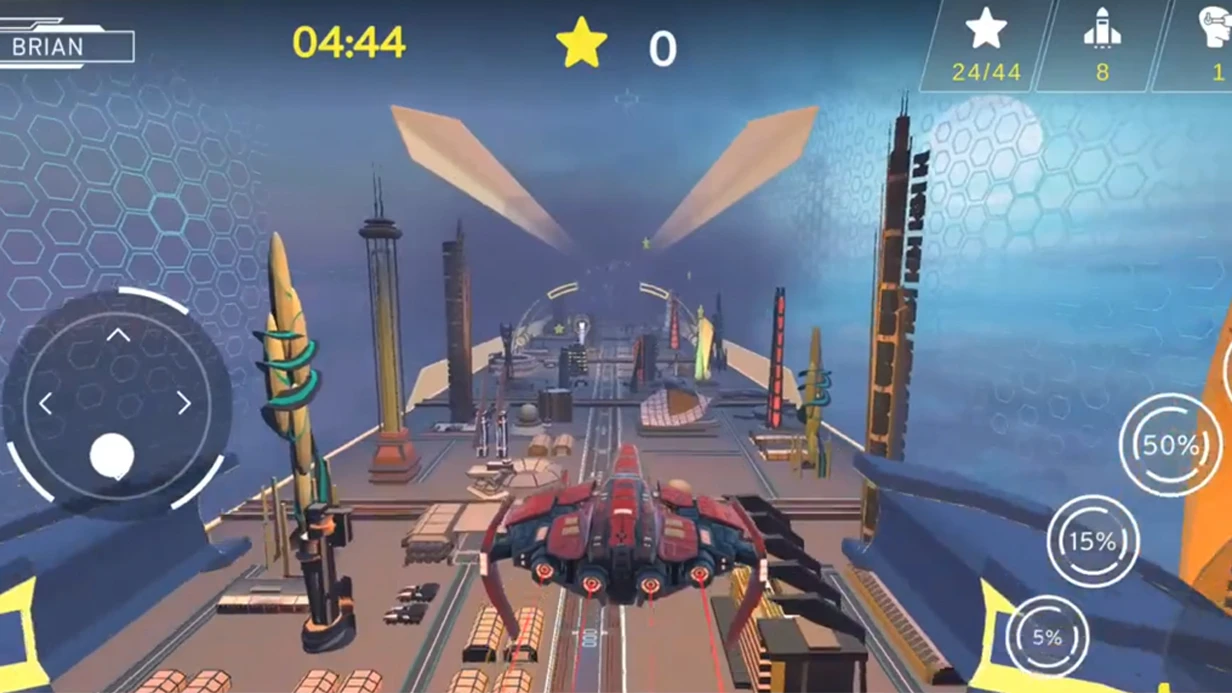
- Working AR scenario — an interactive 3D object, animation, or game that opens on a phone via a link or QR code. This is the core of the campaign — the reason users engage with the brand.
- Link and QR code for launch — ready-made materials for placement on packaging, in Stories, on banners, or in email campaigns. No app installation: the user simply points the camera and enters your AR world.
- Scenario customization for the campaign goal — a mechanic that leads to the objective: collecting contacts, directing to a website, publishing photos on social media, or a game quest with prizes. You know in advance what action the user will take.
- Content management panel — self-service editing of texts, images, links, and settings without a developer. Useful if the promotion’s terms, addresses, or deadlines change.
- Launch instructions — simple steps for your team: where to place the QR code, how to add a website link, how to track activity. No programming, just clear actions.
- Campaign analytics — data on number of launches, unique users, interaction time, and completed target actions. You see not “spent budget” but concrete reach and engagement numbers.
- Support during the promotion — we monitor the project, quickly fix any nuances, and respond to your team if questions arise. The campaign runs without pauses or technical glitches.
- Final report — a summary of results with conclusions and recommendations for future activities. This is a ready-made basis for reporting to management or the client.
The entire delivery is provided through a convenient dashboard: files, access, instructions, and analytics — all in one place. You get not just a one-off development but a manageable advertising-campaign tool that is clear to your team and measurable by results.
Case Study: How WebAR Boosted Reach and Leads
Advertising campaigns win not through media-plan reach but through engagement. For the coffee chain Roast&Co, we developed a WebAR solution that turned ordinary cups into interactive scenes: when pointing the camera, guests saw an animation and received a personalized offer.
It worked like a magnet — an extra incentive not only to buy a drink but also to share the bright moment.
We chose the WebAR format to remove the app-download barrier: everything opens in the smartphone browser via a QR code on the packaging. Participation takes less than a minute, so the campaign works equally well for active urban users and family audiences.
Over six weeks, the WebAR experience was activated 1.2 million times. The average interaction duration reached 40 seconds — long enough for the brand to be remembered.
The conversion into submitted requests was 14%, and 23% of participants shared photos and videos on social media, generating additional free reach.
The chain’s marketing director noted: «We expected a spike of interest, but we got an entire channel with customer contacts. The cost per lead turned out to be half that of other tools, so WebAR is already included in our next advertising campaigns.»
This case shows that WebAR is not a decoration but a working mechanism for growing reach and leads. If you’d like a comparable result for your brand, let’s discuss your challenge during a consultation.
Which WebAR Format Fits Your Task?
Before ordering WebAR, it’s worth understanding: what business task lies behind the campaign. The format depends on it — one thing is to gather maximum mentions on social media, another is to clearly show a product or keep a visitor at the booth for 5 minutes.
If the main goal is viral reach and awareness, AR masks and filters are suitable: the user tries on the effect, takes a photo or video, and shares it with friends. This is light, fast interactive content that launches via a link or QR code without app installation. It is especially effective for mass-market brands and events where emotion matters.
When you need to introduce a client to the product’s characteristics — shape, color, details — choose a 3D object in augmented reality. The visitor “places” the virtual product in their own space, examines it from all sides, and makes a more confident decision. This format works well for furniture, appliances, clothing, and the automotive industry.
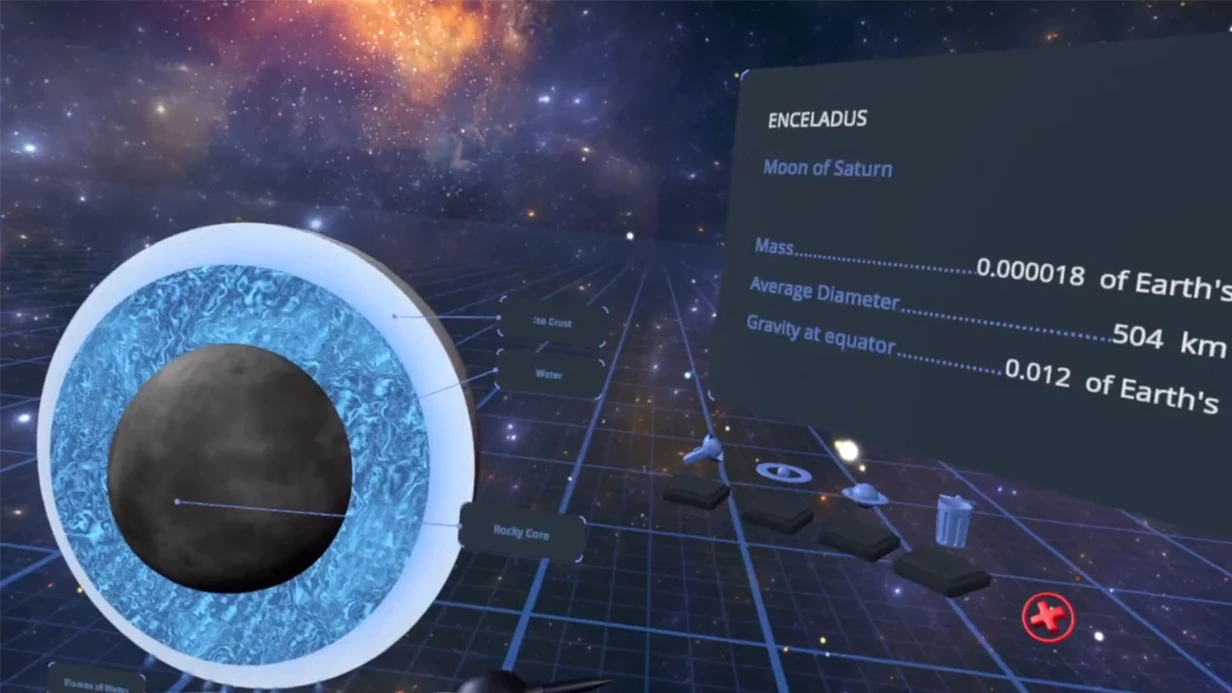
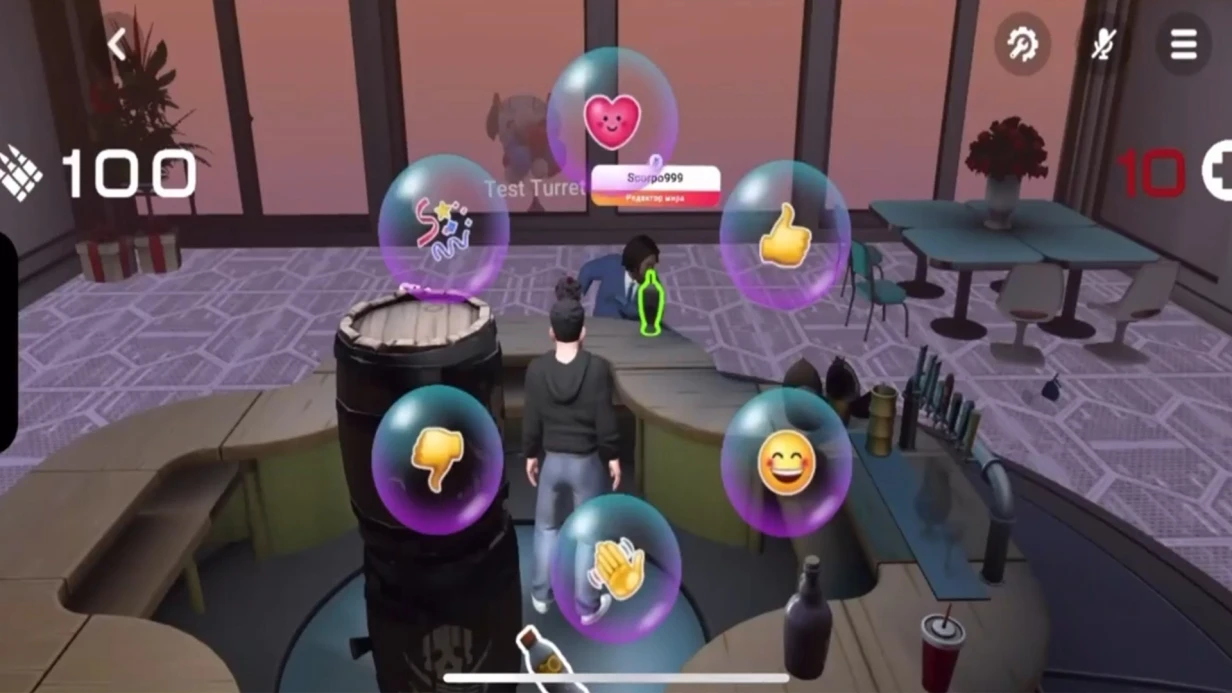
If the task is to get people involved in a game or to educate them, use interactive scenarios: AR quests, virtual fitting rooms, or “living” packaging. They create a dialogue with the brand and give you more time to communicate with the audience. This pays off when the competition is not for views but for memorability.
You don’t have to guess right the first time. We help you choose a format for your funnel: we analyze where the user encounters WebAR and suggest an option that solves exactly your task — from a simple filter to a multi-stage campaign. Start with a short consultation, and you’ll get a format that works.
Frequently Asked Questions About WebAR for Advertising
Before launching an advertising campaign with WebAR, clients ask the same questions. They usually concern reliability, device compatibility, and who will support the project after launch. We answer the key ones — briefly and in terms of results.
Does WebAR work reliably on different devices?
Yes. WebAR runs through the smartphone’s regular browser — there’s no need to install an app. We test scenarios on most popular iOS and Android models, so the user opens the link and enters the ad experience with the first tap.
If part of the audience uses older devices, we plan a simplified version of the scenario in advance. The campaign won’t lose reach: every participant will get a result even if their phone doesn’t support all the effects.
Who is responsible if something goes wrong during the campaign?
We are. During the campaign, a personal manager is assigned to you, and the technical team monitors server load and launch stability. If users complain en masse, we respond within a few hours.
All creation and support work is documented in the contract. You get a guarantee that the integrations work and the ability to quickly make changes without losing the momentum of the advertising campaign.
How quickly can a WebAR campaign be launched?
It depends on the complexity of the scenario. Simple mechanics — such as a mask or virtual fitting — can be launched within one or two weeks after the brief. Full-fledged interactive stories with gamification take longer, but we agree on timelines and stages in advance.
At the start, you receive a test link: you can evaluate the user journey and make changes before the campaign goes into mass traffic.
Thus, WebAR for advertising is not an experiment but a manageable tool with a clear scope of responsibility. If you have questions about your scenario, send a brief and we’ll propose a solution tailored to your tasks.Launch Your WebAR Project and Get Results
You already know that WebAR amplifies an advertising campaign: it engages the audience and creates a reason to share the experience. But to make the project beneficial, it must be launched properly — from task definition to publication. We walk this path with you and handle all the technical details.
It all starts with a simple step:
- You submit a request for a WebAR project — we get back to you within one business day.
- We hold a free consultation: we analyze your task, audience, and expected result.
- We prepare the concept and a transparent cost estimate — we fix timelines and budget with no hidden surcharges.
- We develop the scenario and design, fitting WebAR into your brand’s style.
- We test the project on different devices so the launch runs without glitches or delays.
- We launch the campaign and support you during the first days, helping you respond quickly to user activity.
On average, launch takes 2–3 weeks — that’s enough to integrate WebAR into an ongoing advertising campaign and get results.
Book a consultation. We’ll discuss your task, advise on which format will work, and offer a solution that pays off. Leave a request — and within a day you’ll have a launch plan.