

Simulation of a scientific experiment — an effective way to learn
Every second course or training loses the battle for the audience's attention. The reason is not weak instructors, but the format: text and slides talk about a phenomenon but do not let people experience it.
Simulation of a scientific experiment changes this — students and employees do not just listen; they see the process with their own eyes and become part of it.
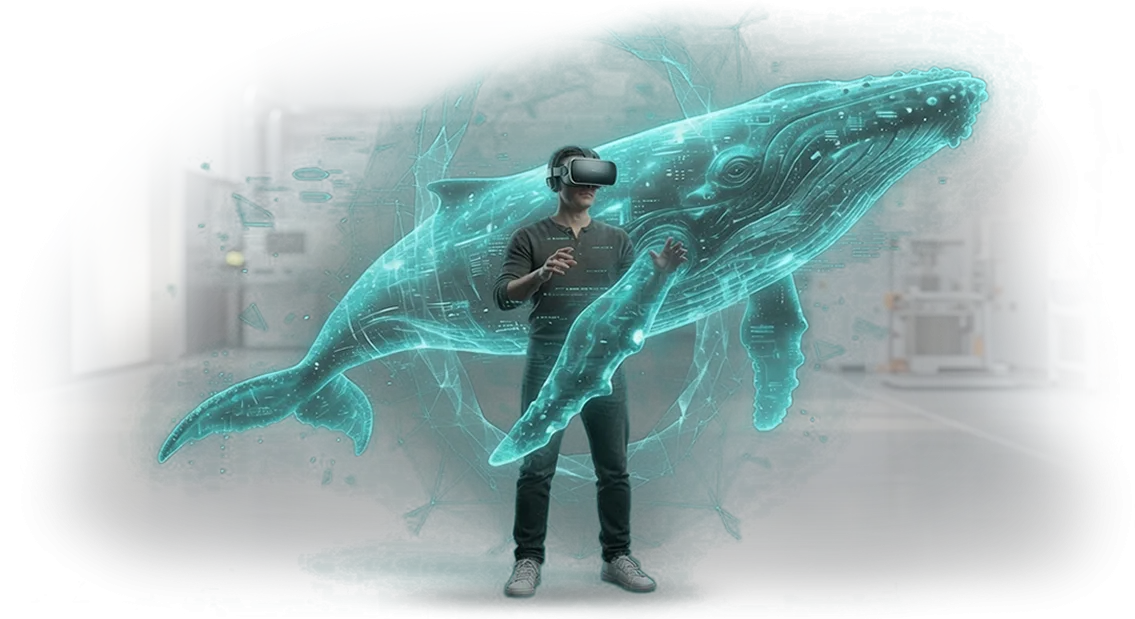
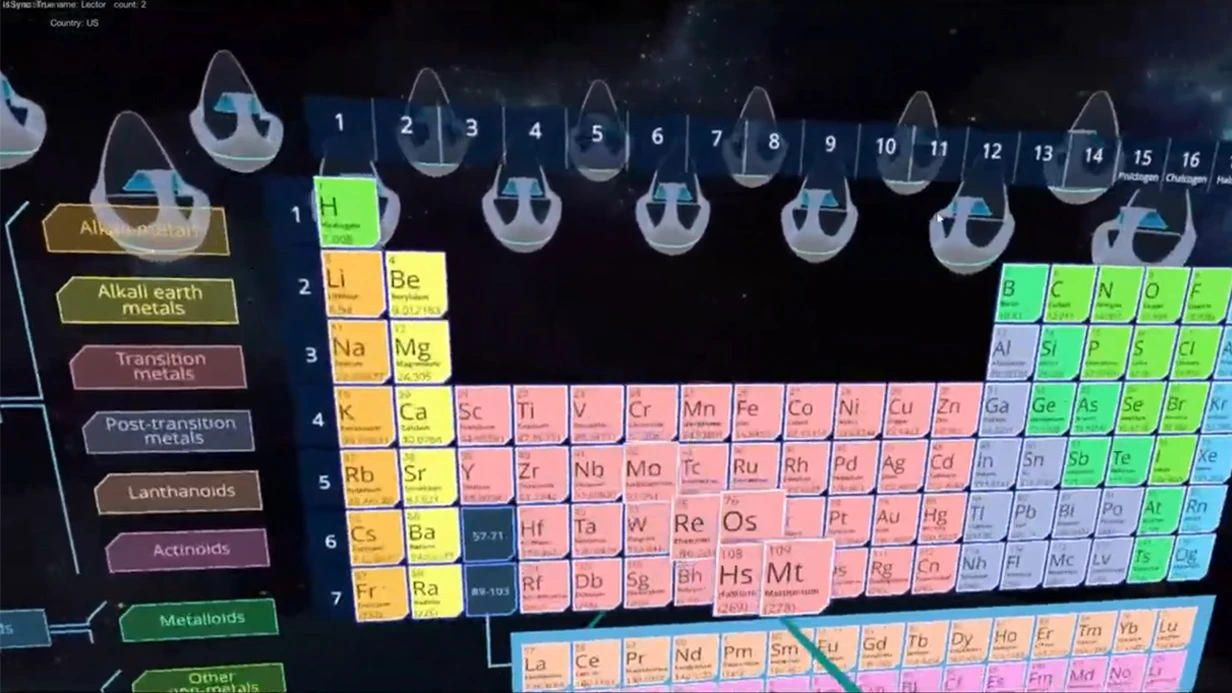
VR/AR for education turns abstract formulas into visual scenarios. You can examine a chemical reaction, the operation of a complex mechanism, or a physical process in detail, without waiting for a laboratory facility and without risking equipment.
Engagement in such learning grows naturally: a person acts inside the experiment rather than observing from the outside.
For businesses, this means faster staff training and fewer mistakes on real sites. An employee first practices actions in a safe digital environment and then transfers the skill into practice.
The client gets a predictable learning outcome, saves team time, and reduces the cost of organizing repeated courses.
The same approach strengthens commercial educational programs and marketing activities: a visitor remembers the brand through personal experience, not through a presentation.
Our scientific experiment simulation solutions already help clients hold the audience's attention and get measurable results from the educational format. We cover this need completely — from idea and scenario to turnkey launch.
What benefits a company gets from VR/AR applications
VR/AR applications have long ceased to be a toy — they are a working tool for solving business problems. As the practice of our team shows, companies that implement such solutions get measurable results in four key areas.
- Increased brand awareness. The immersive format attracts attention and is memorable. Users willingly share their impressions on social media, which provides additional organic reach — without advertising costs.
- Increased conversion. An interactive simulation helps explain the value of a product or service faster. A visitor does not just read but tries it themselves — so the decision is made more easily, and the share of inquiries grows.
- Savings on materials. A scientific experiment simulation does not require real reagents or equipment. The digital model works without resource consumption and risks — this reduces the budget and speeds up launch.
- Media attention. An unusual format becomes a news peg. Journalists are more willing to write about tech projects, which gives free publications and strengthens the image of an innovative company.
By implementing a VR/AR solution, you get not just a beautiful demonstration but a whole set of business effects. We will help turn your idea into a working product that pays off through increased awareness, conversion, and savings.
Development formats: choose the one for your task
Obviously, different tasks require different formats. For example, a scientific experiment simulation can take place in a virtual laboratory, on top of a real stand, or directly in the visitor's browser.
This determines how deeply a participant becomes immersed in the process, what equipment they will need, and how many people can be reached.
Below is a table with typical scenarios so you can quickly determine which format is closer to your task.
| Format | Who it suits | What the client gets |
|---|---|---|
| VR | Practicing complex actions, staff training, spectacular demo zones at exhibitions | Full immersion in a virtual environment, scenario practice without risk and material consumption |
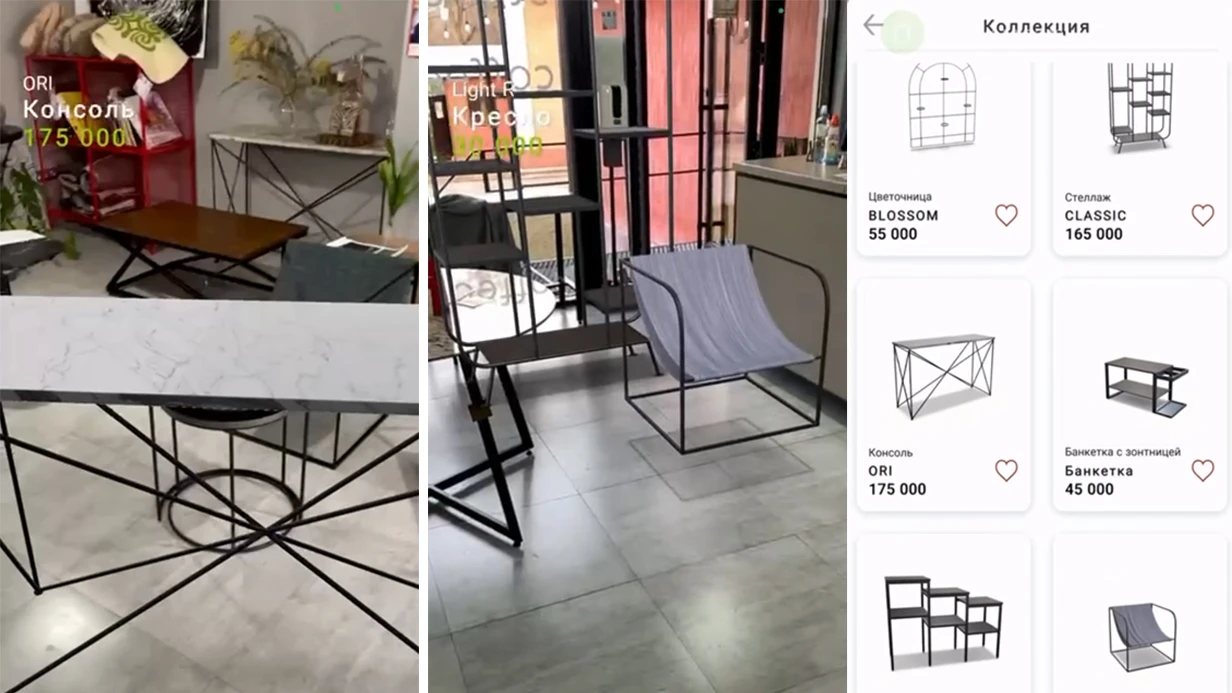
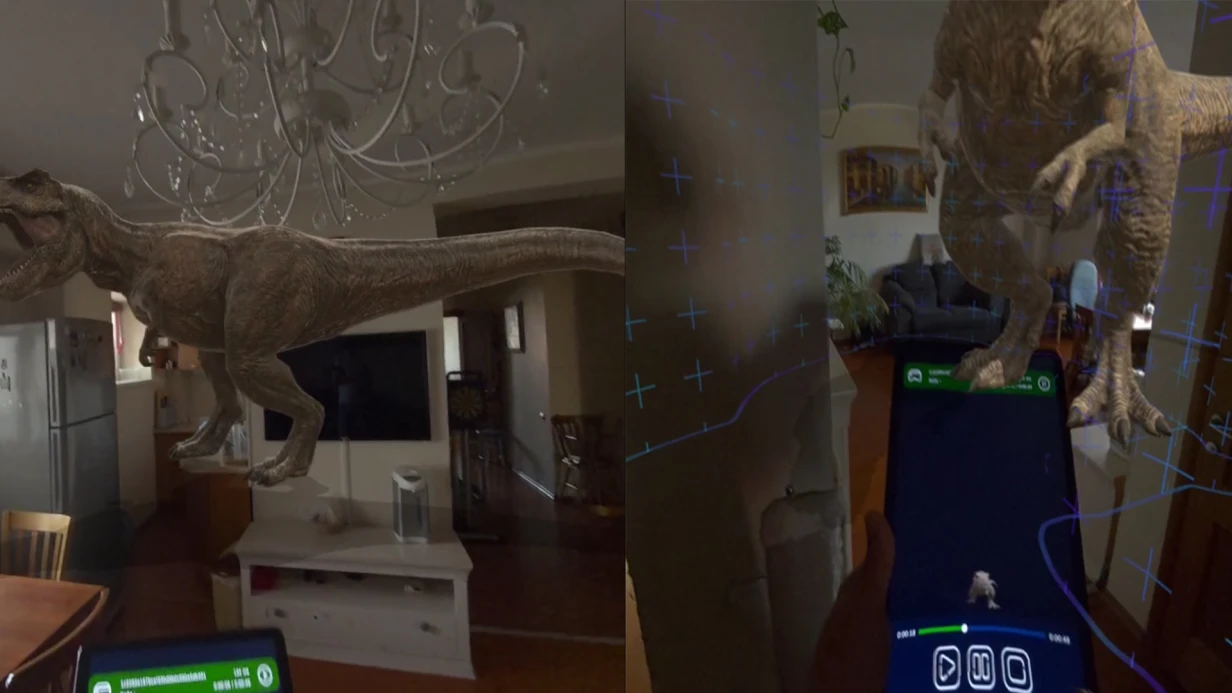
| AR | Working with real equipment, assembly, repair, on-site instructions | Hints and virtual layers directly on top of a real object, fewer errors |
| MR | Prototype presentations, collaborative work, hybrid experiments | Combination of physical space and virtual models — you can “touch” data and processes |
| WebAR | Mass campaigns, landing pages, online learning, quick access from a phone | Launch directly from the browser via a link or QR code, without installing apps and long loading |
How to choose? If your goal is the widest possible reach, WebAR gives a quick start without barriers. If deep learning and realistic practice matter, VR will handle it better. And when you need to combine physical objects with digital data, AR and MR will be the most convenient.
We will help determine the format for your audience and budget: we will advise which task VR will cover, where AR is enough, and where WebAR is the most beneficial — and we will develop a scientific experiment simulation that delivers a measurable result.
Project stages: from brief to launch
We work on a project like on a scientific experiment: we check every stage, record the result, and show you intermediate outcomes. No “black boxes” and hidden delays — you always know what stage the project is at and what happens next.
A transparent process allows you to adjust the task in time, not after launch, when changes are expensive.
Development stages: from brief to launch
- Brief and immersion. You tell us about the task: which experiment we are simulating, for whom, and what results the business needs. We ask clarifying questions and record success criteria — what should happen after launch.
- Concept and plan. Based on the brief, we propose a simulation scenario, visual style, and WebAR technical format. We show how the interaction will work and create a calendar plan with checkpoints.
- Approval. You receive the concept, scenario mockup, and plan for approval. We make edits until the result matches your expectations — this is recorded in the process.
- Prototype development. We build a working simulation prototype: the scenario core, visualization, interaction logic. You see an intermediate version and understand how the experiment will look.
- Testing and refinement. We check the scenario on different devices, fix errors, and clarify details. The result is a final version ready for use.
- Launch and integration. We place the simulation on your page and configure access for your use case: event, training, client demonstration. Everything works immediately after opening the link.
- Support and development. We stay in touch after launch: we help with edits, update content, and add new simulation elements if the business needs them.
Each step ends with an agreed result, so you always understand what you are paying for and what you will get next week. The process takes from two weeks to two months depending on scenario complexity — the exact timeframe is recorded in the plan after the brief.
What is included in the delivery of a ready-made solution
When purchasing the development of a scientific experiment simulation, you expect to receive not “files in an archive” but a ready-made working tool for your team.
We assemble the project as a single whole: from source materials to the moment when your employees independently launch the experiment and get a result.
Here is what is included in the delivery:
- Source materials and project files. All resources, mockups, and experiment logic remain with you. You are not dependent on the contractor and can develop the project with your own team or involve any other vendors.
- Ready-made launch and operation instructions. A clear document without technical jargon: how to prepare the room, turn on the equipment, launch the simulation, and quickly fix common issues.
- Staff training. We conduct a practical session with your employees. They learn to work with the experiment scenario, change input data, and control the course of the demonstration. There is no need to hire a separate administrator — any specialist can handle it after a single training.
- Official technical support. A dedicated engineer is available during working hours. If something goes wrong on an important day, you get prompt assistance so that the event or lesson runs without failures.
- Updates and improvements on request. We support the project: we help adapt the scenario to a new audience, update experiment data, or add additional demonstration modes.
The delivery package is designed so that within 1-2 days after handover, you can conduct simulations independently. You get a predictable result, protection from downtime, and confidence that the experiment will go flawlessly even with minimal staff preparation.
Case study: how we developed a virtual laboratory for a university
When the university approached us, students were doing physics lab work on outdated equipment. Some experiments were dangerous or too expensive for mass access, so practice turned into a teacher's demonstration.
A solution was needed that would give every student their own hands-on experience with the installation — without limitations of audience and budget.
We developed a virtual laboratory for Applied University: a series of VR/AR scenarios that replicate the course of a real scientific experiment. The student performs actions, sees the installation's reaction, and gets data for analysis.
The teacher sees the group's progress in a personal account and spends less time on the introductory part.
Project metrics
Over two semesters, the simulation was launched more than 7,000 times. The average grade in the laboratory course increased by 18%, and the share of students who passed the exam on the first attempt grew from 71% to 89%.
Teachers noted that class preparation takes half the time — there is no need to set up physical installations for each group.
The university continued the collaboration: based on the first laboratory, we created additional scenarios for related disciplines. This confirms that the solution works not as a one-time event but as a systematic learning tool.
What this means for your project
Our experience in educational VR/AR projects allows us to apply this scheme to business tasks: from employee training simulators to interactive exhibition stands. We use professional equipment and a proven methodology, so the result is predictable.
Which scientific experiments can be simulated?
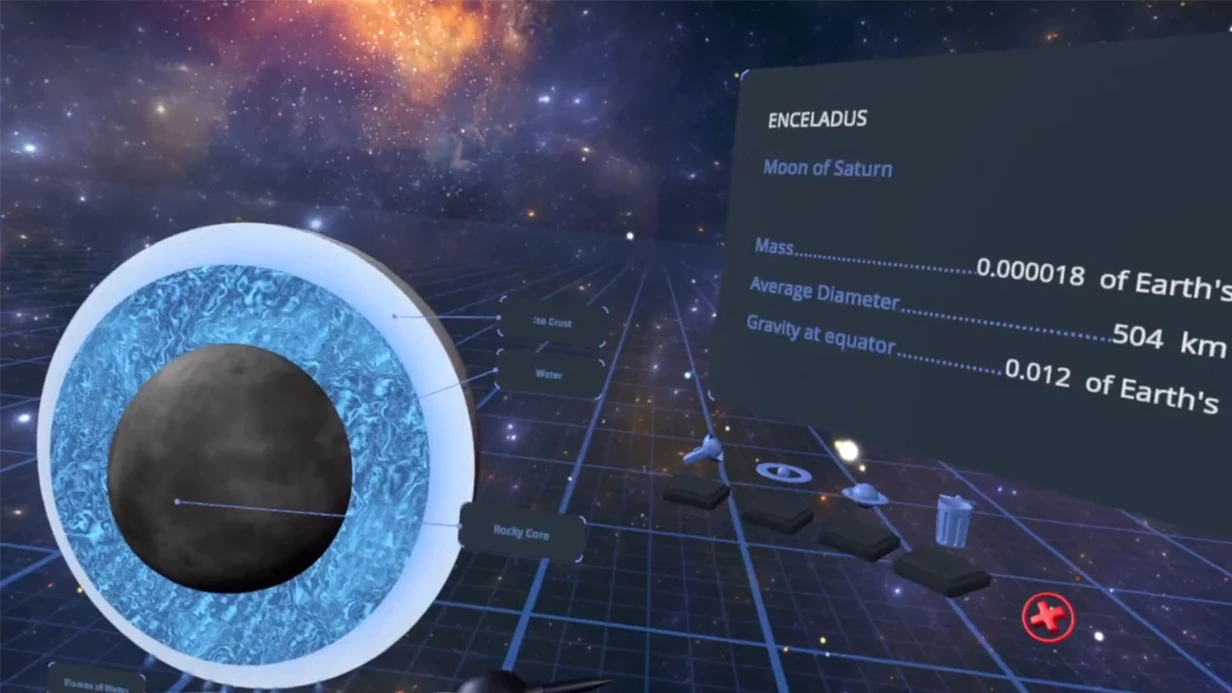
A virtual laboratory covers almost the entire range of tasks that require visibility and practice. You can simulate what is expensive, dangerous, or simply impossible to show in a classroom in reality: from planetary motion to molecular interactions.
Physics is the most in-demand area. Mechanics, optics, electricity, thermodynamics — all of this easily turns into interactive scenarios where users change parameters themselves and see the result.
Chemistry makes it possible to conduct experiments with aggressive reagents without risk to students or the room: mixing substances, observing reactions, studying the structure of materials.
Biology opens up even more opportunities: from human anatomy to ecosystems. A virtual experiment allows you to look inside an organism and conduct research that in reality requires expensive equipment.
Engineering disciplines benefit from modeling structures and mechanisms — you can assemble a unit, test it under loads, and refine it without creating a single physical prototype.
For the client, this is not just technology but a way to reduce spending on equipment, reagents, and safety. The same scenario can be run for hundreds of students anywhere, without limitations of time or material resources.
That is why scientific experiment simulation is becoming the standard of modern education — from school laboratory work to corporate staff training.
We develop virtual laboratories for your task: we choose realistic scenarios, add gamification, and result tracking. You get a ready-made tool that integrates into the learning process or a product presentation. Tell us which experiment you need — we will show how it will look in VR/AR.
Frequently asked questions about VR/AR/MR solution development
Any project starts with doubts: how long development will take, how to integrate AR/VR into current processes, and whether you will have to change familiar tools. We answer common questions — so you see the result before you even start.
How long will VR/AR solution development take?
A prototype for testing an idea — 2-4 weeks, a full solution — from one and a half to three months. We give the exact timeframe after the brief and record it in the contract.
How much does development cost?
The cost depends on the format and complexity. At the start, we evaluate the task for free and offer 2-3 options for your budget — with no hidden payments.
Is it hard to integrate the solution into current processes?
Integration does not stop operations: we connect to the tools you already use and train employees in a couple of days. For WebAR formats, no special equipment is needed — users open the scenario from a smartphone via a link.
Is the solution compatible with our equipment?
We work on professional devices proven in business tasks. If you already have hardware, we will check compatibility at the start and choose the optimal option without unnecessary costs.
At our team, over 10 years we have gone from prototypes to solutions that people use every day. Leave a request — we will show examples from your industry and advise on timeframe and budget.Order development and get results within 4 weeks
After your request, we do not make you wait. Within the first working day, we contact you, clarify the details, and schedule a meeting with an engineer — this is necessary so you get an accurate cost calculation, not a rough estimate.
The engineer will ask the right questions that you might not have considered and propose a solution that really fits your task and budget.
What you get immediately after your request:
- Preliminary calculation of cost and timeframe — before signing the contract.
- A meeting with an engineer who will understand the specifics of your experiment.
- A commercial proposal with a fixed price — no extra charges along the way.
- A personal manager: one contact who solves all issues.
- A clear work plan with dates and stages.
- A guarantee on the result and support after launch.
The project itself takes four weeks — this is a realistic timeframe for a scientific experiment simulation in WebAR.
The first week goes to design and scenario approval with you, the second to developing the logic and interface, the third to assembly and integration, and the fourth to testing and final launch.
This schedule is achieved through a fine-tuned process and ready-made assets, not through working under crunch.
You get a product that can be used within a month in the learning process, at an exhibition, or for a research presentation. No surprises in timeframe or budget: everything we promise is recorded in the contract.
Leave a request on this page — and we will prepare a cost calculation and commercial proposal for your task. It is free and imposes no obligation.