

Why Pharmaceutical Production Loses Orders Without VR
Customers of pharmaceutical plants increasingly demand proof of quality, not just certificates. If employees are trained using outdated instructions and videos, the likelihood of errors grows, and with it the risk of missed deliveries and fines.
The client goes to whoever works faster and safer, while the plant is left with underutilized capacity and reputational losses.
The main problem is not even the training itself, but its speed and control. While a new employee spends weeks mastering the technological process on paper, the product batch waits, and the customer gets nervous.
Plus, every mistake in the clean zone is a risk of violating regulations, which auditors will later record as a serious non-conformance.
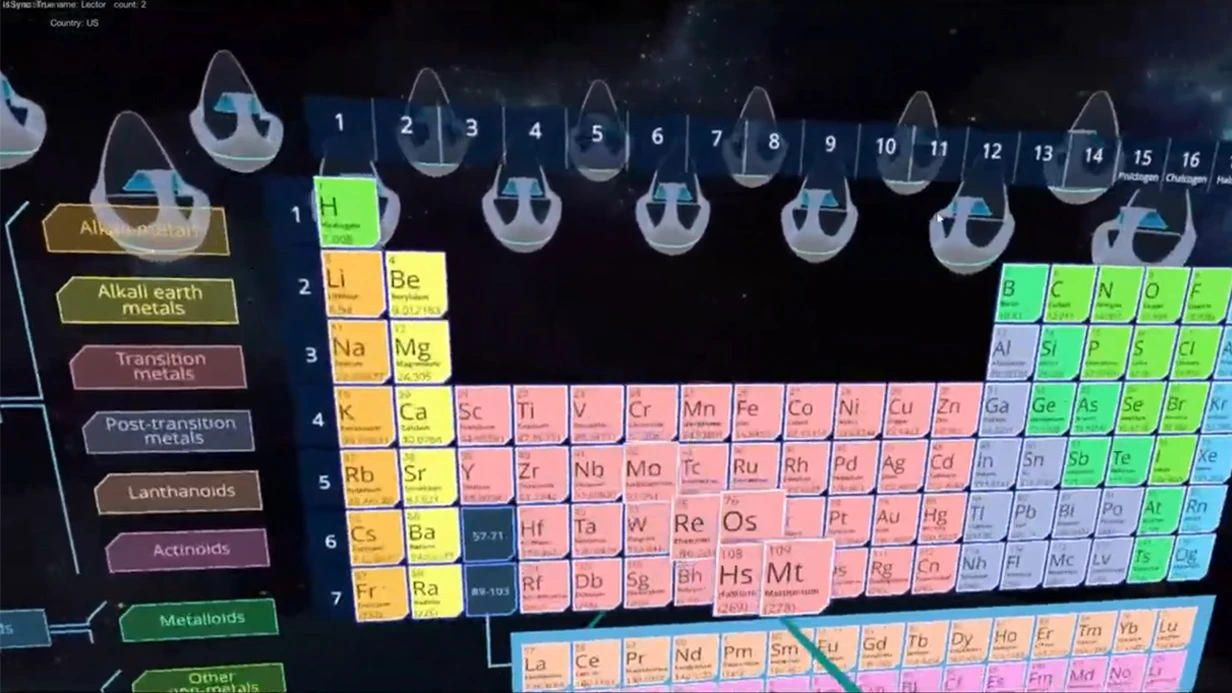
The solution is our team implementing WebVR simulators for pharmaceutical production. An employee practices operations on equipment in a virtual environment until they become automatic, with no risk to a real batch.
Such training takes significantly less time, and the result is immediately visible: fewer errors, stable quality, and a confident position in front of the customer. We address these pain points by turning training into a competitive advantage for the plant.
What You Get from Implementing VR/AR at Your Enterprise
By implementing VR/AR in pharmaceutical production, you get not just an "innovation for the sake of innovation," but measurable business results. The technology pays for itself by accelerating employee training and reducing costs for real equipment.
Check yourself against this checklist — these are the benefits we capture in every project:
-
Employee training speed. Employees master operations 2-3 times faster than on classic simulators. Training takes place in a safe environment, and the skill transfers to real production without loss of quality.
-
Savings on simulators and consumables. Virtual stands replace expensive equipment that must be purchased, maintained, and updated. A single digital simulator can be used by dozens of specialists simultaneously — without additional costs.
-
Standardization of instruction. Every employee goes through the same training scenario, which eliminates differences in preparation and human factors.
Actions are easily integrated into an ISO 9001 quality management system: the date, result, and progress of each specialist are recorded.
-
Risk and error reduction. Practicing emergency situations in a virtual environment prepares staff for abnormal scenarios without stopping production, defective output, or health risks.
We are a team — we work with pharmaceutical enterprises and design VR/AR solutions to fit your regulations and process flow sheets. We will configure scenarios to your current processes and help integrate training into your quality control system.
VR/AR Solution Formats for Pharmaceutical Production
There is no universal extended reality format for the tasks of pharmaceutical production: operator training, quality control, routine procedures, and equipment demonstration require different tools.
To help you choose a solution for a specific task, we have assembled four basic formats and their practical benefits for your company.
| Format | For whom | What it gives the client |
|---|---|---|
| VR simulators | Line operators, technologists, new personnel | Full immersion in a workshop environment without risk to equipment or people. Practice of emergency and abnormal scenarios that cannot be safely played out in real life. |
| AR instructions | Junior staff, maintenance services, shift workers | Step-by-step prompts directly on real equipment: the operator sees which part to take, where to click, and in what order to proceed. Fewer errors, faster onboarding. |
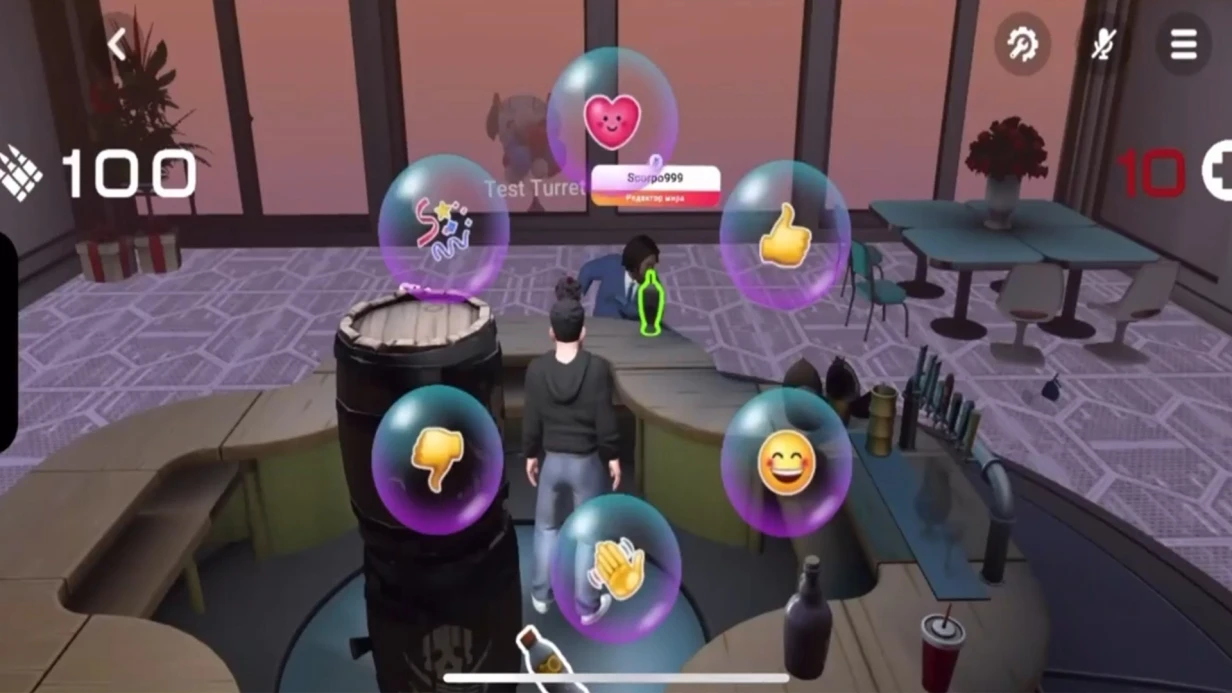
| WebVR simulators | Remote sites, distributed teams, training centers | Training from any device without special headsets or software installation. A single training standard for all branches and educational institutions. |
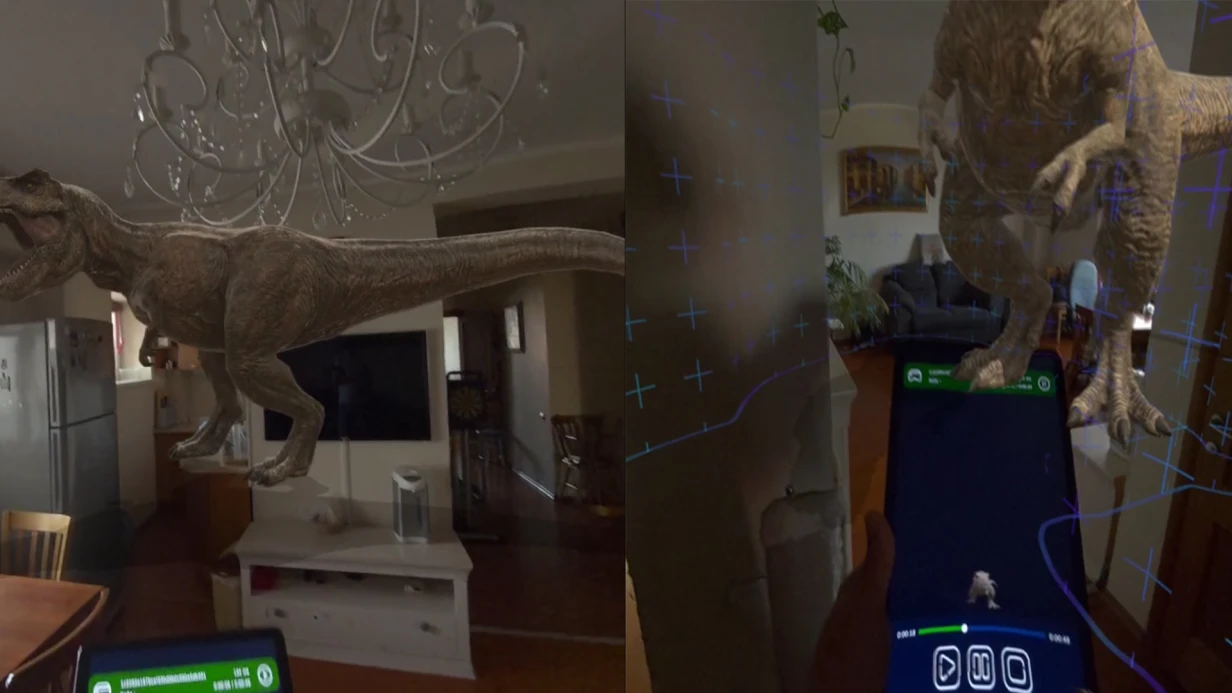
| MR holograms | Engineers, technologists, quality department | Overlay of digital data (schematics, indicators, 3D models) onto a real object. See internal processes without opening equipment and compare parameters against the reference in real time. |
The choice of format depends on the result you need: safe training with full immersion — choose VR simulators; reducing workplace errors — AR instructions; scaling training across all branches — WebVR simulators; diagnostics and quality control — MR holograms.
We help you determine the optimal format for your task, budget, and employee skill level — and, if necessary, combine solutions into a single training program. Leave a request — we will put together a demo for your scenario in two weeks.
How a VR Training Project Proceeds from Brief to Launch
Pharmaceutical production operates under strict regulations: an employee error can cost a batch. Therefore, personnel training must be predictable and measurable.
We structure the VR training project as a transparent process with checkpoints — you always know the stage of work and the launch date.
VR Training Development Stages
- VR project brief. We collect which operations and regulations need to be practiced, who will be trained, and which skills are critical. We record goals and knowledge assessment criteria.
- Plan and approval. We prepare a training scenario, the module structure, and checkpoints. You approve the plan: you see the timeline and scope.
- Scenario development. Together with your technologists and quality department, we break down each step: what the employee sees, which errors we catch, and how we test knowledge.
- VR module development. We create interactive scenarios on professional equipment — the result works reliably on your devices.
- Pilot launch. We test the training with a group of employees, collect feedback, and make adjustments before industrial operation.
- VR training launch and support. We deploy the system, set up reports for managers, and train administrators. After launch, we update modules to match new regulations and support the solution.
For you, this is a clear project without a "black box": every week you see what has been done and what decisions are needed from you. You control the process and get the VR training launched exactly on the agreed timeline.
What Is Included in the Delivery Package of a VR Solution
When ordering a VR solution for pharmaceutical production, the main question is what exactly you receive and how to use it. We deliver not a presentation but a working package: ready-made scenarios, models, instructions, and training for your team. Everything you need to launch a training program without constant involvement from developers.
The package covers the full cycle — from employee immersion to system administration:
- VR scenarios for key pharmaceutical production tasks: practicing regulations, safety procedures, equipment operation, and actions in abnormal situations.
- 3D models of equipment and production areas that replicate the customer's real facilities — employees train on an exact copy without stopping the process.
- Interactive instructions and knowledge assessment system: in-training hints, control questions, and a report on each employee's results.
- Source code and full documentation: the solution stays with you and can be refined with us or any other contractor.
- Administrator training: your specialists independently launch scenarios, adjust them, and add new exercises.
- Support and updates during implementation: assistance, quick refinements, and consultations when needed.
- Teaching materials for instructors: how to conduct sessions, assess employees, and integrate VR into the existing training program.
Such a package turns VR from a one-time demonstration into a permanent workforce development tool. Pharmaceutical production employees practice actions without risk to the process, and you retain control over the solution and develop it for new tasks.
Case Study: How Instruction Was Accelerated by 40% at a Pharmaceutical Plant
When a pharmaceutical production facility faced the need to reduce the time for onboarding packaging line operators, standard training no longer provided the required speed. The instruction took almost a week, and staff turnover forced constant repetition of the same cycle.
We proposed a VR simulator that immerses a newcomer in working conditions before their first time on the line.
The client was a large pharmaceutical manufacturer BelPharm. For them, we modeled a virtual packaging area with exact copies of equipment and regulations, including GMP requirements.
The operator practices actions in a safe environment: errors do not lead to batch rejection, but are recorded by the system and reviewed after the session.
What the Implementation Delivered
The results speak for themselves. Instruction time decreased by 40% — from ten work shifts to six. The number of errors during the first independent shifts dropped by almost a third.
Compliance rates for clean zones and operation sequences improved, which is especially important when passing GMP audits.
"New employees go to the line without fear and with an understanding of the process, and we spend less time on retraining," says the production manager. This feedback confirmed that VR teaches not theory but real actions.
Why It Works
In a virtual environment, muscle memory is engaged: a person performs the same movements as in production. The scenario is repeated until it becomes automatic, without consuming materials or risking product.
Pharmaceutical companies also value this format for full GMP compliance in training documentation — the system saves logs of every session.
This case is not a one-off. After the successful launch of the simulator, the client expanded the project to adjacent packaging and quality control areas. If your production facility has similar tasks, we are ready to adapt the solution to your regulations.
How to Choose a VR/AR Format for Your Task?
The correct answer to the question "which format should I choose?" is "it depends on the task." If an employee needs to master a complex sequence of actions and practice it without risk to production, deep VR simulation is suitable.
If the line requires quickly highlighting the next step or showing where the needed component is, AR hints over the real equipment are enough.
And if access must be available to every employee from any device without installing special software, choose WebVR: easy entry and work directly in the browser.
For pharmaceutical production, this distinction is especially important.
A mistake in a clean zone or when starting a line is expensive, so the criteria for choosing a VR format come down not to the "trendiness" of the technology but to three practical questions: how often the task is repeated, how many people perform it, and how critical an error is.
Frequent short operations are better covered by AR scenarios — they do not take the employee away from work and provide a prompt at the moment of action.
Rare but complex processes, such as equipment startup or actions during an abnormal situation, require full immersion and repeated training in VR.
The third criterion is where employees are located and what equipment they have.
If training takes place directly in the workshop, where wearing a headset is inconvenient, or if remote specialists need to be connected, WebVR for the plant becomes the optimal compromise: it provides a 3D model of the equipment, a scenario, and action control, but does not require a special fleet of devices. In fact, you get "virtual reality without an entry threshold."
We help determine the right format for your task: we analyze the process, the frequency of employee interactions, and their skill level. We often start with one pilot scenario in a suitable format and then scale it to the entire line.
As a result, you do not overpay for excessive technology and get a tool that is actually used every day — with a clear outcome and measurable benefit for production.
Frequently Asked Questions About Implementing VR at an Enterprise
When implementing VR in pharmaceutical production, typical concerns arise: is it difficult to train staff, will the technology fit into current processes, how much does it cost, and who will maintain the system. We answer them briefly — so you can make an informed decision.
VR for beginners: is it hard to train employees?
No. Employees learn VR in one day, following prompts in the headset. No retraining is required, and the scenarios mirror real operations — this simplifies entry into the process.
VR compatibility: will it fit into our infrastructure?
Yes. We use WebVR, so the solution works through a browser. No powerful computers or equipment replacement are needed — a standard workstation and a headset are enough.
VR cost: how is it calculated and when will it pay off?
The cost depends on the number of scenarios and workstations. You can start with a pilot project and scale up. Payback is achieved through faster training and reduced defects in production.
Is VR safe for employees?
We use certified headsets and limit session times to prevent fatigue. Occupational safety requirements are met automatically.
Who will maintain the system after launch?
We support the project: we update scenarios when regulations change, add new areas, and advise employees. Remote support does not require expanding your staff.
Order a Demo Version of VR Training for Your Team
The demo version is not for show — it is so you can see with your own eyes how VR training integrates into your production task.
We take a real process from your pharmaceutical workshop or warehouse and show how an employee goes through a training scenario in a virtual environment.
You evaluate not the visuals but the value: the speed of skill acquisition, staff behavior, and readiness for abnormal situations.
After submitting a VR development request, you receive a clear plan, not abstract promises. Everything follows a transparent schedule:
- Request and free VR consultation — we discuss your task, training pain points, number of employees, and production specifics.
- Scenario selection for your case — we determine which process to practice: equipment operation, actions during deviations, or compliance with safety standards.
- Demo build preparation — we adapt a ready-made module or create a quick prototype based on your regulations.
- Demo session for your team — we conduct a demonstration at your site or remotely and let participants try the training themselves.
- Results discussion — we record employee reactions, operation completion times, and the number of errors before and after the training.
- Scale-up proposal — you receive an implementation timeline and a calculation of the load on production processes.
We are not trying to sell you an expensive development on the first day. Our goal is for you to make a decision based on facts.
That is why the demo version will show real capabilities, and the free VR consultation will address questions about integration with your training and enterprise standards.
Ordering a VR demo means getting a working tool for conversations with your internal team and department heads. Fill out the VR development request — we will contact you within one business day, clarify the details, and suggest a convenient time for the demonstration.