

Why Engineering Education Without VR/AR Loses Students
Engineering students leave the profession not because of the difficulty of the subjects, but because of the gap between theory and practice. Lectures and formulas don't show how mechanisms actually work or let students try things hands-on.
By the time of their first industrial internship, the future engineer has already lost motivation—they don't see the connection between equations and real equipment.
Traditional education loses to competitors for attention: modern students are used to interactive content and instant feedback. Laboratory work is limited by schedules, the number of machines, and risks, while seminars turn into formal reading of notes.
Thus engineering education without virtual reality in learning loses the most motivated students—they simply have nowhere to gain practical experience.
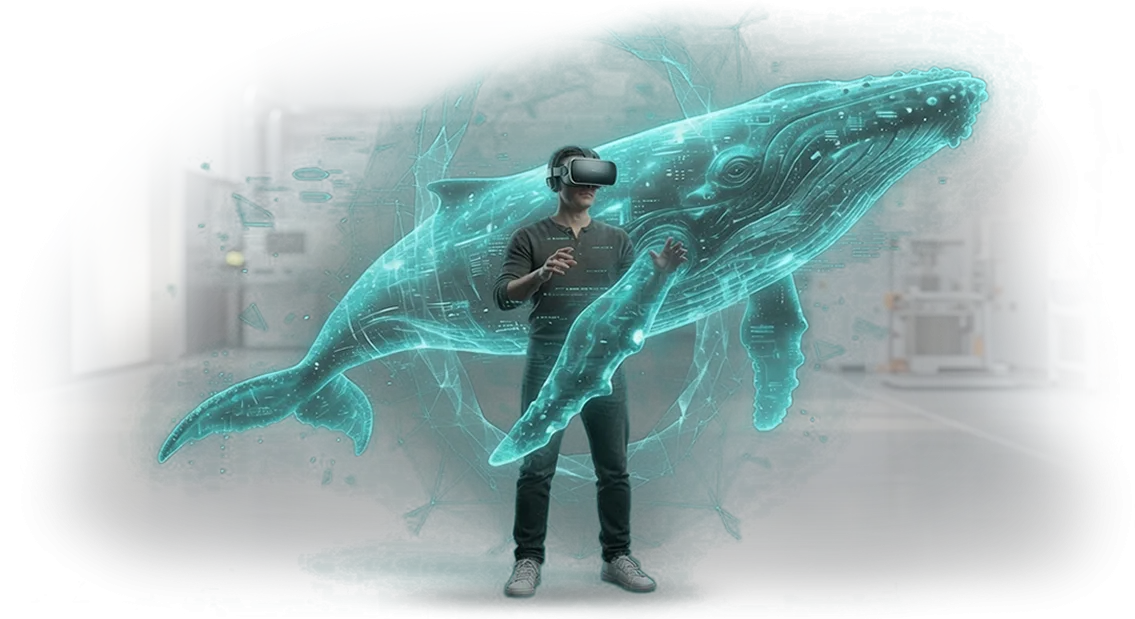
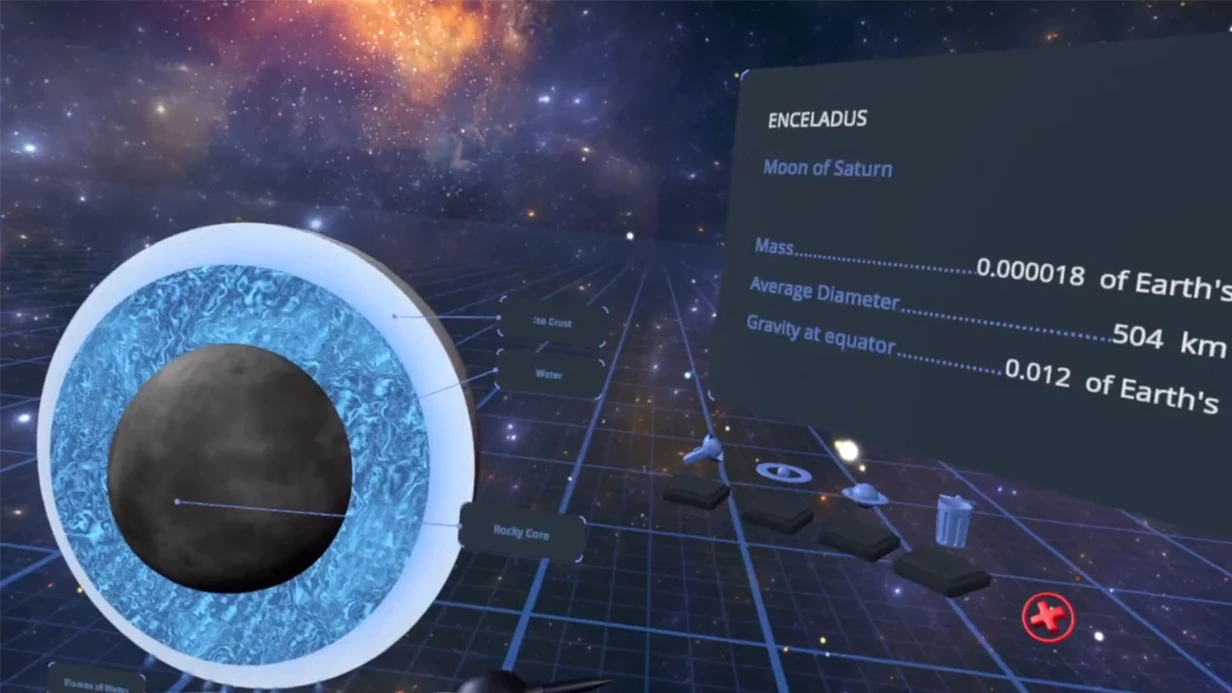
Virtual reality in learning addresses this need: a student can disassemble and assemble components, control a production line, practice emergency situations—all in a safe digital environment.
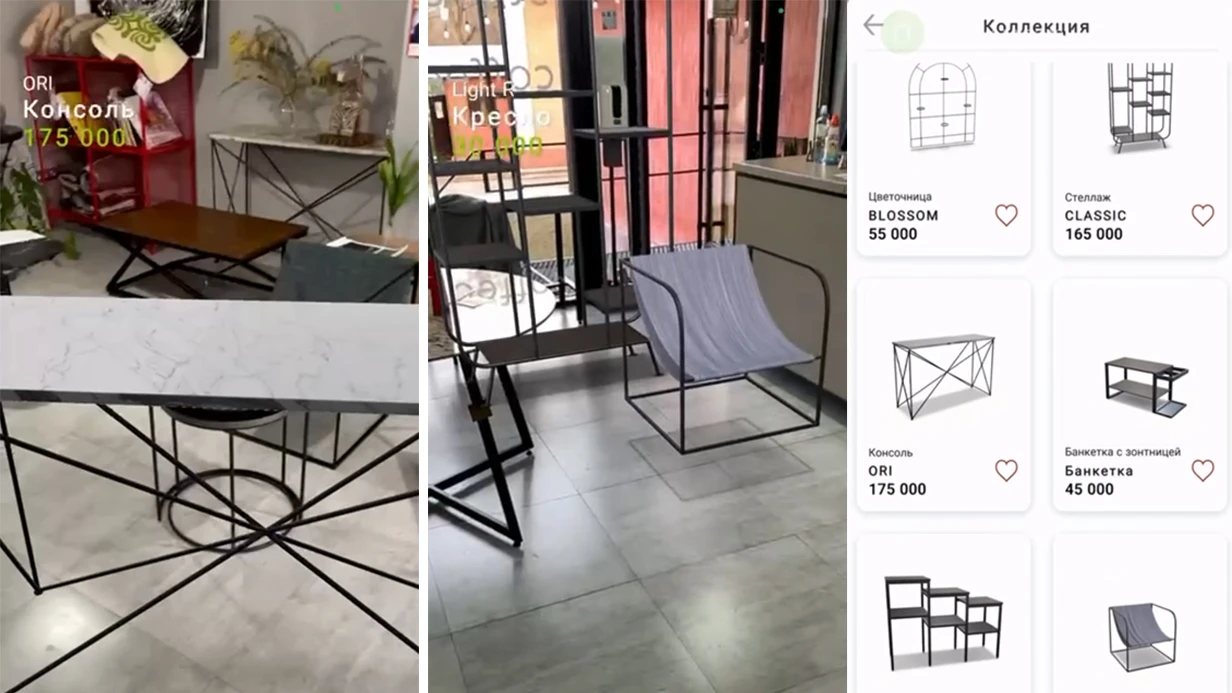
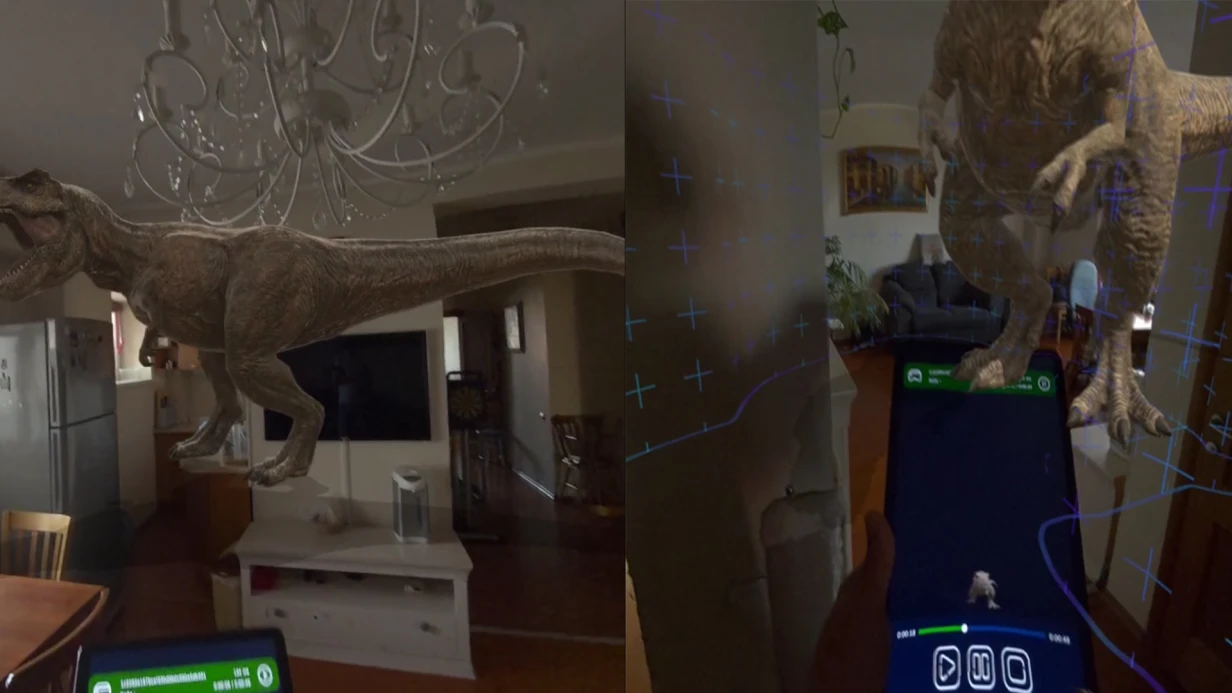
Augmented reality for universities adds digital diagrams and hints directly in the physical space when needed. Interactive engineering simulators provide repeated practice without consuming materials and let each student work at their own pace, which improves material retention.
These technologies have already proven their effect: engagement grows, and the time needed to master a skill is reduced several times over.
That's why we create WebVR solutions for engineering universities: we design interactive simulators adapted to curricula and help integrate them into the educational process.
Our team with ten years of experience handles the entire cycle—from idea to launch—so your students stay in class and gain real competencies.
What You Get from Implementing VR/AR Solutions in the Educational Process
Implementing VR/AR in engineering education is not a one-time purchase but a structured process that delivers measurable results at every stage. We help you go through it step by step: from a pilot launch in one discipline to scaling across all specialized courses.
Already in the first classes, you'll notice the main thing—student engagement. Instead of passively taking notes, they work with 3D models, run virtual experiments, and control the lesson scenario themselves.
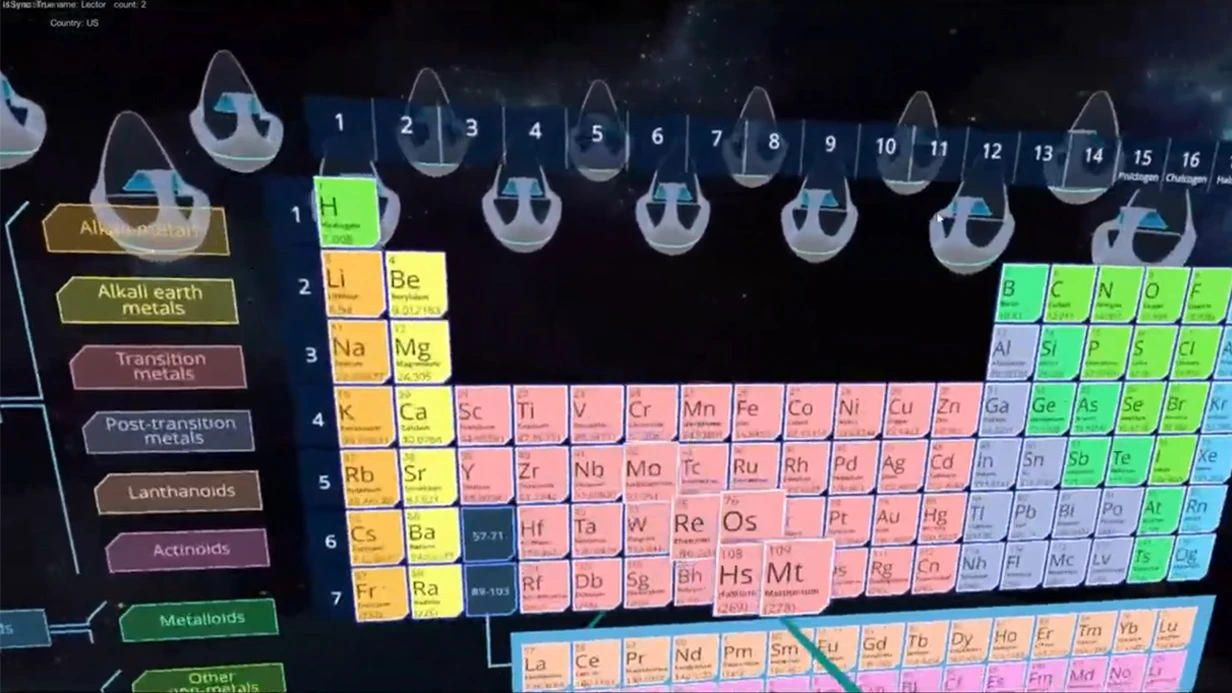
Further, as they get used to the format, the visual clarity of learning unfolds. Complex engineering processes—how mechanisms work, physical phenomena, the structure of components and assemblies—stop being an abstraction.
A student can disassemble and reassemble an object, look inside, change parameters, and immediately see the result. This reduces the time spent explaining topics and deepens understanding, while the instructor gets a tool that works with any audience.
Interactive simulators allow practicing skills without risk and without consuming materials. Moreover, learning is not tied to a classroom: some classes can be held remotely, and students get access to lab work at any time.
This is especially valuable for part-time and distance programs—you expand your reach without losing quality.
As a result, you save resources. No need to purchase expensive equipment and consumables for each student—a virtual lab replaces them with high modeling accuracy.
And thanks to engagement and visualization, academic performance improves and the dropout rate decreases, which directly affects the university's reputation and budget. This approach pays off within the first few months and delivers sustainable results for years to come.
VR/AR Formats for Engineering Education
Engineering education is built on practice, but classic laboratories are expensive, require space, equipment purchases, and strict safety control.
VR and AR remove these limitations: students work with setups that are physically unavailable at the university, and do so without risk to themselves or expensive equipment.
At the same time, there is no one universal format—different tools are needed for large student cohorts, field classes, and in-depth practice.
We use three key formats that cover all engineering training scenarios: from a brief introduction to a topic to full-fledged skill practice. Below is a table to help you quickly determine which format suits your tasks, audience, and technical capabilities.
| Format | For whom | What it gives the client |
|---|---|---|
| Web simulators and virtual laboratories (WebVR) | For large student cohorts, part-time students, distance learning | Access from any device without specialized equipment—students complete lab work in the browser, and the university saves on classrooms and setups |
| Mobile AR applications | For field work, off-site classes, self-study | Overlay virtual diagrams and instructions onto real objects—students see how a mechanism works right on site, improving safety and clarity |
| Stationary VR laboratories | For advanced training, R&D, master's programs, and retraining | Full immersion in a virtual workshop or setup with realistic physics—skill practice without risk or material consumption |
Combining formats gives the university flexibility: the same course can be delivered to a group of a hundred students or to a small research team.
You don't need to build new classrooms or buy dozens of benches—just choose a format for a specific discipline, and we will design it to fit your curriculum and budget.
How VR/AR Project Development Works for Your Educational Organization
We understand that implementing VR/AR in the educational process is not buying a ready-made device, but a sequential project that must fit into your educational programs and schedule.
That's why we designed the process so that at every stage you understand what's happening and can influence the outcome.
Below is a typical VR/AR project development path for an educational institution. It has been tested in dozens of launches and helps avoid missed deadlines and unexpected expenses.
- Brief and task immersion. We hold a meeting with your team: methodologists, instructors, and management. We record the goals—what skills students should acquire, for which specialties, and in what format VR/AR will be used. The result is an understanding of the scope and a preliminary timeline estimate.
- Learning scenario design. Our methodologists and developers turn your curriculum into an interactive scenario. We determine what actions a student will perform in the virtual environment, how results will be assessed, and how the solution will integrate into existing courses.
- Concept and prototype approval. We show you an interactive prototype of the key learning module—you see the interface, logic, and graphics at an early stage. This allows you to make changes before full development begins, when changes are inexpensive and don't shift deadlines.
- VR/AR application development. We build a complete product: learning modules, virtual labs, simulators, and a system of hints and instructions. We work with professional equipment and proven tools—for you, this means stable performance without 'raw' versions.
- Testing with your instructors and students. We conduct a pilot class in a real group. We collect feedback, refine scenarios and interface. We verify that the system doesn't require technical intervention from the instructor and is understandable to all participants.
- Launch and integration into the schedule. We install equipment, configure software on your computers or in the cloud, and train instructors to work with the control panel. You get a ready-to-use tool that can be used as early as next week.
- Technical support and development. After launch, we stay in touch: we update content, add new learning modules, and help with technical issues. If lessons show that something should be changed, we quickly refine the product.
At each stage, you receive clear reporting and make decisions yourself—we simply offer optimal options and warn about risks. This approach makes VR implementation predictable and comfortable for your team.
What's Included in the VR/AR Solution Delivery Package
In engineering education, it's not just about buying VR headsets—it's important that instructors and students start using them as early as next week.
That's why we deliver not scattered files, but a complete package where everything is thought through: from lesson scenarios to technical support.
Here's what's included in the delivery of a VR/AR solution for your educational institution:
- Ready-made lesson scenarios. Courses adapted to your program: from studying how mechanisms work to assembling and disassembling units in a virtual environment. You simply open the lesson and work.
- Library of 3D models. Accurate digital copies of parts, machines, and entire setups. Students rotate, disassemble, and assemble them—something impossible to show on real equipment.
- Methodological materials. Workbooks, tests, assignments for independent work. The instructor doesn't need to come up with anything from scratch—everything is ready to print or upload to the e-learning system.
- Access to the cloud platform. Applications run through a browser, without installing complex software. A computer or tablet is enough—and the virtual lab works.
- Instructor training. Individual and group sessions: how to conduct virtual labs, track student progress, and integrate VR lessons into the schedule. Your staff gain practical skills, not just an instruction manual.
- Technical support and VR content updates. We support the project after launch: we update 3D models, add new scenarios as the curriculum changes, and promptly resolve any issues.
- Knowledge base and instructions. Video tutorials, guides, and checklists for a quick start—so even a new instructor can confidently conduct a class in a virtual environment.
This package removes the main pain point for educational institutions—when equipment is purchased but not used due to implementation complexity. You get a working turnkey system, not a set of technical parts.
Case Study: How a VR Laboratory Improved Academic Performance at a Technical University
Most engineering students learn from abstract diagrams and formulas. It's hard for them to understand how a material behaves under load or why a part fails until they see the process in person.
This leads to knowledge gaps, declining interest in the subject, and employer dissatisfaction with the level of graduate training.
For the technical university, we proposed a solution—a VR laboratory integrated directly into the curriculum. Specialists at our team designed a set of virtual simulators for mechanics and materials science: students load beams, select alloys, and test structures for strength.
Everything happens in a safe environment, without expensive equipment or consuming physical samples.
Implementation took one semester. Instructors mastered the lab in a couple of training sessions, and students began using the simulators even for self-study—this was immediately felt in practical classes.
What Changed After Launch
Academic performance in key courses increased by 30%. Attendance noticeably increased: students are more willing to go to the virtual lab than to a regular lecture. Instructors note that complex topics are now explained once, not repeated from class to class.
For the university, this is not just numbers in grade books. VR simulators don't break, don't require material purchases, and are easy to update for new learning tasks. There are already plans to expand the lab to other faculties—from strength of materials to electronics.
This format pays off through improved learning quality and reduced costs for real benches, while students gain practical experience that will truly be useful in their work.
How to Choose the Optimal VR/AR Format for Your Course Goals?
Customers most often ask: which format should we choose—web, mobile AR, or a full VR laboratory? The answer depends on the course goals and audience.
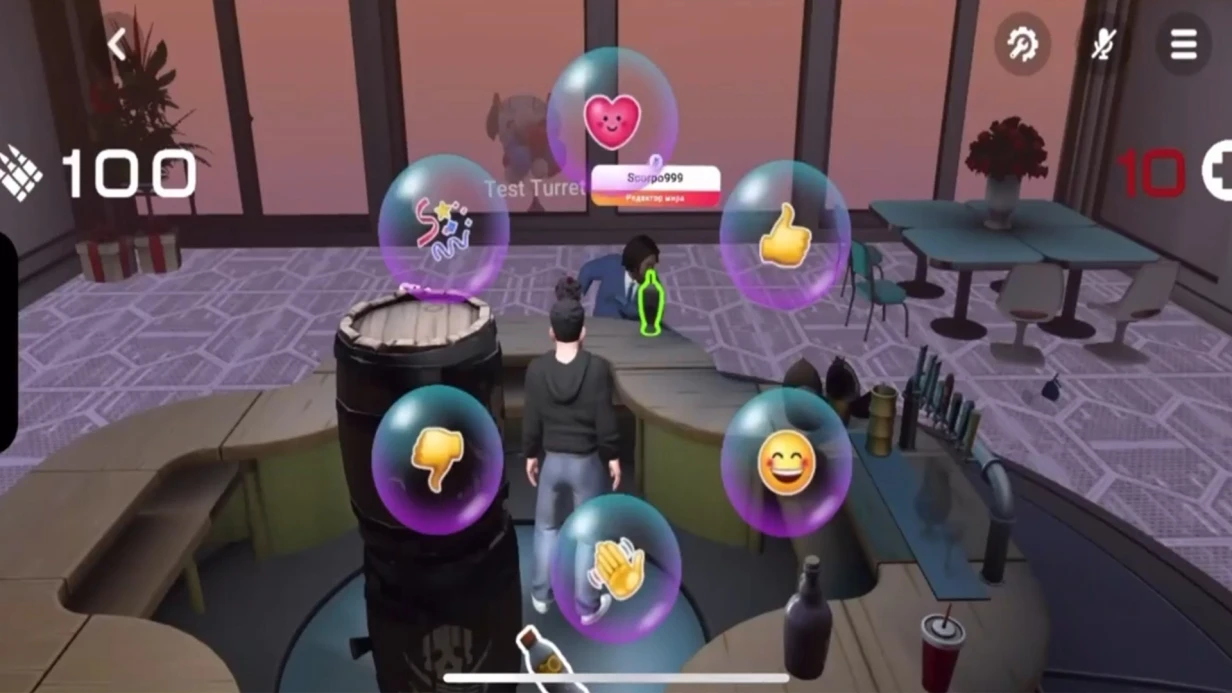
For one class, it's enough to show students 3D models; for another, to let them interact with mechanisms; and for a third, to organize collaborative work in a virtual space.
Therefore, in engineering education, what matters is not a trendy device, but how well the tool helps achieve learning outcomes.
Choosing a VR format starts with the question of where students study. If remotely and from different devices, a web version is suitable: it opens in a browser, requires no installation, and provides access to models and tests.
If the classroom is equipped with tablets and you need to supplement real benches with digital layers—that's AR consultation and mobile scenarios. And for full immersion when assembling units or working with hazardous processes, a full VR laboratory is chosen. Such virtual laboratories allow practice without risk or wasting materials.
To make the solution selection effective, we consider the number of students, class frequency, and equipment. Based on this data, we propose a specific format—from a web solution to an immersive laboratory—and show how it integrates into the course.
The first step is a short consultation where we review your scenarios and answer which option will deliver maximum effect with reasonable investment.
In the end, you get a working tool that increases engagement and simplifies knowledge assessment. If you're unsure which format suits your course, describe your task—we'll offer the optimal solution.
Answers to Frequently Asked Questions About VR/AR Development and Implementation
Implementing VR/AR in engineering education usually raises the same questions: how much it costs, how quickly it pays off, and how difficult it is to integrate into current processes.
We answer honestly, based on experience from dozens of implemented projects in universities and corporate training centers.
Below are the five most frequent questions. If yours isn't on the list, write to us—we'll discuss your case separately.
How much does VR/AR development for engineering education cost?
The cost varies from a simple lab work simulator to a full virtual environment for an entire course. We always select a solution to fit your budget: you can start with one WebVR module and gradually expand functionality.
The main thing is that you pay for results, not for the number of lines of code: we show initial versions before full development begins.
We fix the cost estimate in the contract after the brief and prototyping stage. Therefore, the final price doesn't change during the process.
What are the timelines for implementing VR/AR in the educational process?
A prototype of one scenario is ready within two to three weeks—already at this stage you see how the technology works on your program. Full implementation with integration into the schedule, LMS, and instructor training takes from one to three months depending on the scope.
We don't stretch timelines: each stage is tied to a clear date and a specific intermediate result.
Does VR/AR integrate with our learning management system (LMS)?
Yes. WebVR solutions transmit test results and student activity to your LMS via a standard API—this works with Moodle, Canvas, and other platforms. Grades automatically enter the gradebook; the instructor doesn't need to manually transfer data.
If your institution doesn't have an LMS yet—no problem. We'll design a scenario where results are stored in a personal account and can be exported in any convenient format.
What are the technical requirements for equipment?
For WebVR, a regular computer or laptop with a modern browser is enough—the interface works even without a VR headset. If you plan to use VR headsets, popular mid-range models will work; we'll help you choose compatible devices and test them on your computer fleet.
No special server architecture is needed: our solution is hosted in the cloud and accessible to students from anywhere, including distance learning.
Can instructors start working with VR/AR right away without special training?
Yes, the interface is designed so that a student figures it out in a couple of minutes, and the instructor manages scenarios through a familiar panel with a calendar and group list.
We conduct a short webinar with your instructors and provide clear instructions—this takes no more than one day.
In addition, during the first year you receive priority support: we answer instructors' questions and quickly fix any feedback on scenarios.
Request a Consultation on VR/AR for Your Educational Institution
Every educational institution faces the same challenge: how to make engineering disciplines more visual, engage students, and not inflate the budget.
VR/AR solve it, but only when the technology is integrated into the educational process meaningfully, not just for the sake of 'effect'.
We help you choose a format for your specialties, audience, and educational outcomes, based on experience from real implementations in universities and colleges.
To get a concrete plan, leave a request for a consultation. Within two business days, we will prepare an individual proposal: a set of VR/AR modules for your disciplines, a transparent cost estimate, and a description of what will change in learning.
You won't have to dig into technical details—we'll translate them into the language of learning goals and budget.
What you get after the consultation:
- Order a VR project with a clear technical specification and implementation stages.
- Analysis of your program: which topics benefit from virtual lab work and which from augmented reality.
- Individual proposal on formats: from individual simulators to a full course for an entire group.
- Cost estimate tailored to your scale—taking into account the number of students, classrooms, and implementation timelines.
- Equipment recommendations: only what's actually needed, without overpaying.
- Post-launch support: instructor training and technical support for the entire period of operation.
We work on the professional engine Unity—this guarantees stable performance on any VR headsets and quick adaptation to your tasks. Thanks to this, you get not just a prototype, but a reliable solution that is used in classes from day one.
Don't put off implementation: the earlier you leave a consultation request, the sooner students will start mastering engineering skills in a format they truly find interesting. Write to us—and we'll take the first step toward modern engineering education at your institution.