

Customers Are Leaving for Competitors: Corporate Training Isn’t Working
Corporate training is no longer delivering results just when businesses need to quickly adapt employees to new products and service standards.
Lectures, presentations, and test assignments are seen as a formality: knowledge doesn’t stick, and after a week employees return to their usual habits.
As a result, mistakes recur, customers receive inconsistent levels of service, and they go where they are served more confidently.
Lower employee engagement means direct losses: it takes longer to reach target metrics, disputes with customers become more frequent, and staff turnover increases. A company spends budget on training but sees no change in the quality of work or in revenue.
Managers understand the problem but cannot solve it with old tools — an approach is needed that involves employees in the process and makes training part of their daily practice.
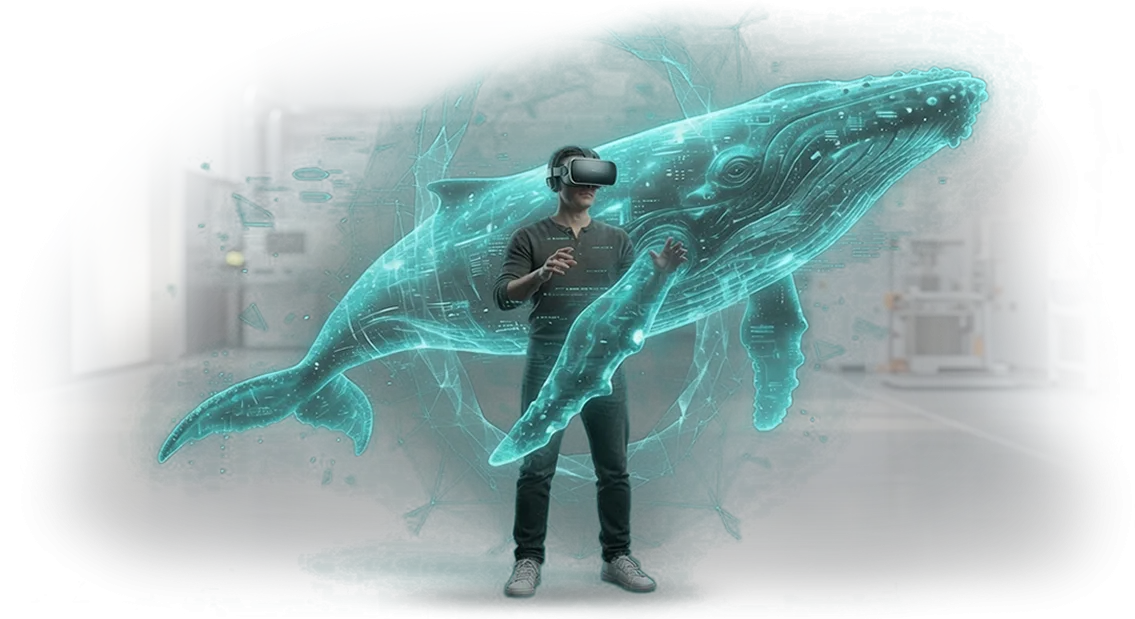
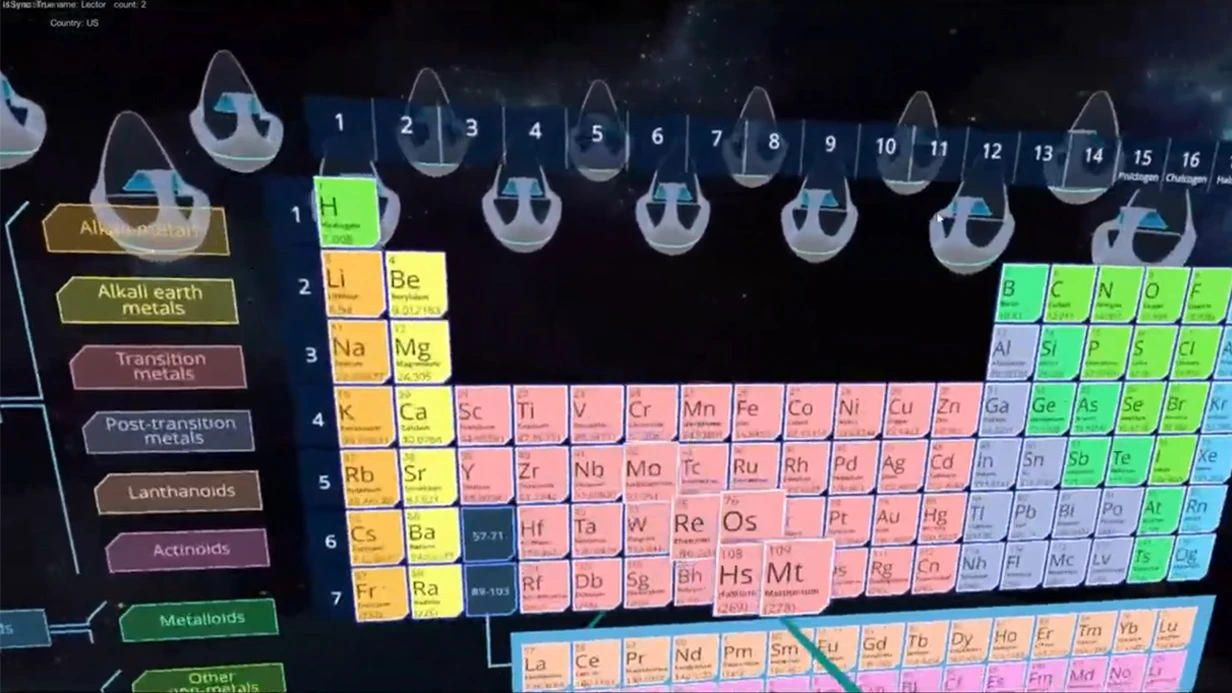
We meet this need with corporate training in virtual reality. An employee enters realistic work scenarios where they must act, make decisions, and correct mistakes — this builds skills, not just memorization of information.
This format multiplies training effectiveness: material is learned through experience, not by reading manuals.
For business, this means a measurable result: faster onboarding for new hires, fewer errors in customer interactions, and a consistent level of service regardless of employee experience.
Engaged employees stay with the company longer, and customers feel the difference and come back. Virtual reality is not a toy but a working tool that transforms training from an expense into an investment in service quality and customer retention.
What You Get from VR/AR Training: Engagement, Retention, Coverage
Traditional training is often done just for show: employees listen but don’t engage, and within a week they forget most of the material. VR/AR training moves the process into a practical realm — a person doesn’t just watch a screen but acts within a training scenario. This changes how staff view training and directly affects business results.
We have been creating virtual simulators for companies across various industries for over 10 years. Below are the key benefits for the client.
Engagement in Training
A boring lecture or presentation doesn’t hold attention. In a virtual environment, the employee controls the process themselves: makes decisions, sees consequences, experiences emotions.
This sparks interest and excitement — people complete the training instead of putting it off “for later.”
An engaged employee learns skills faster and takes satisfaction from the process. As a result, training program completion rates are higher and turnover is lower during the onboarding phase.
Retention of Material
Information that a person experiences firsthand is remembered many times better than text or video. In VR, a person works with their hands, makes mistakes, and corrects them — the brain forms stable connections. After a month, an employee will recall the sequence of actions faster than after standard testing.
For business, this means fewer errors on the job, quicker onboarding for new employees, and lower costs for retraining.
Training Content
We create scenarios for your needs: from new-hire onboarding to practicing non-standard situations. The content immerses the employee in a realistic environment — with interfaces, equipment, and dialogues they will encounter in real work.
At the same time, the whole process is safe: the cost of an error in the virtual world is a few seconds, not an accident or a lost deal.
Ready-made modules are easy to update, add new inputs to, and adapt to different roles. A simulator built once works for years and scales to new branches without losing quality.
Staff Coverage
If you have multiple offices, warehouses, or regional teams, VR/AR training eliminates the problem of travel. Employees complete the same programs from their workplace or from the head office, and results are visible in a single reporting system. You get equally prepared staff even if teams are thousands of kilometers apart.
With broad coverage, travel expenses and the time spent organizing training are reduced. Management sees objective indicators of each employee’s progress rather than formal assessments.
Formats of Corporate Training in VR/AR: Choose Based on the Task
Each business training challenge requires its own format. One company needs to practice actions in a hazardous environment, another needs to train employees to work with equipment right at the workplace, and another needs to combine digital instructions with real objects. We select the format to fit your goal, not the other way around.
Here’s a guide to what to choose for a specific task.
| Format | Who it’s for and what tasks it addresses | What it gives the client |
|---|---|---|
| Virtual reality (VR) | Full immersion in a simulated environment: training for emergency responses, practicing complex processes, drills without risk to people or equipment | Safe training without stopping production, rapid skill practice to automatism, high employee engagement |
| Augmented reality (AR) | Overlaying digital prompts onto real objects: on-the-job instruction, assembly, equipment maintenance, new-hire onboarding | Shorter time to job proficiency, fewer errors when performing operations, training without interrupting work |
| Mixed reality (MR) | Interaction between real and virtual objects: team drills, complex scenarios involving equipment and people | Team interaction practice, realistic scenarios without spending on physical inventory, flexible adaptation to your processes |
We help you choose a format based on your tasks and budget. We run demos on your scenarios so you can see the result before launching the full project.
How We Create VR/AR Training: From Brief to Launch
Corporate VR/AR training is a task where simply “building an app” is not enough. It’s important that the program actually develops skills, fits into workflows, and is convenient for employees.
We’ve structured the process so that at every stage you understand what’s happening and what result you’ll get — from the initial brief to launch and ongoing support.
- Brief and immersion in the task. We gather your requirements, study the specifics of your business and audience. We determine which skills need to be developed and how to measure training outcomes.
- Scenario and methodology design. We develop the course structure: which situations we simulate, how we build prompts and feedback. We prepare a methodology that fits into your training program.
- Concept approval. We show you the scenario, visual examples, and interaction flow before development begins. We make adjustments so the final product exactly matches your expectations.
- VR/AR program development. We create the application, interfaces, and 3D content. We work on professional equipment — this guarantees stable operation without failures at the most critical moment.
- Testing on real devices. We check usability, scenario correctness, and compatibility with your device fleet. We eliminate any defects before launch.
- Launch and team training. We install the program, set up workstations, and train your instructors so they can confidently run sessions without our help.
- Support and evolution. We stay in touch: update content, analyze employee results, and improve the program based on your requests.
This approach is especially important when implementing VR in corporate training: you get not just a product but a manageable process that is easy to scale.
We’ve refined every stage over 10 years, so you know what’s happening at any moment of the project and what comes next. Project approval happens in a format that is convenient for you — without lengthy sign-offs or technical jargon.
What Is Included in the Delivery: A Complete Kit for Launch
When you order a VR solution, it’s important to see the full delivery picture in advance.
We deliver not just a “raw” project but a complete corporate training system: an application with a clear interface, a set of training materials, and everything needed for self-sufficient launch.
Here’s what you get in the end:
- Ready-to-use training application. Scenarios tailored to your tasks: from new-hire onboarding to handling emergency situations. The interface is intuitive for an employee putting on a headset for the first time.
- Methodological materials. A trainer’s guide, lesson scenarios, and recommendations for evaluating results. Your specialists will be able to conduct training without bringing in external experts.
- User instructions. Short guides: how to put on the headset, how to interact with objects, what to do at the start of a session. Initial sessions run smoothly, without stress or unnecessary questions.
- Administrator training. We cover how to upload new modules, track employee progress, and change settings. System support stays within your team.
- Source files and documentation. The project is not “locked” with the contractor: source materials and technical documentation remain with you, so you can further develop the VR product with any other specialists.
- Support at launch. We help with installation, updates, and integration with your LMS or HR system, so the rollout goes without downtime.
This package addresses the client’s main fear — being left alone with an unfamiliar technology after signing off. You get a working tool, clear documentation, and a trained team that uses it in daily operations.
Case Study: We Increased Training Efficiency by 40% for a Retailer
The retail chain „Premier“ with more than 200 points of sale faced a typical retail pain point: new sales associates reached the sales floor only after a month, and half quit during their probation period.
Mentors were overloaded, and training quality depended on the individual employee’s experience. Management was looking for a way to standardize training and accelerate new hires’ progress to target performance.
We proposed a VR simulator that recreates real store scenarios: customer consultation, handling objections, product display, and cash register operations. Training takes place in a safe environment where a mistake doesn’t cost a customer but still requires the right reaction.
The simulator uses professional equipment, so the visuals and controls don’t distract from the tasks — the employee is fully immersed in the situation.
What We Achieved
The pilot lasted two months and involved 120 new employees. Onboarding time shrank by an average of 40% — from four weeks to two and a half. After just the first week of training, new hires were already handling typical customer questions with confidence.
Sales in pilot stores grew 12% compared with the previous period, and turnover during the probation period fell by half.
They also noted an increase in upselling metrics: employees who completed VR training were more likely to offer additional products.
The chain’s management got a clear evaluation system — every training session ends with an objective result rather than a mentor’s subjective opinion. This made it possible to quickly scale the program to all 200 stores and launch refresher training for current staff.
The case showed that VR in corporate training is not entertainment but a tool that measurably impacts a retailer’s key metrics.
If your goal is to accelerate onboarding, reduce turnover, or increase sales — tell us about your situation, and we’ll select a scenario and calculate the economic impact.
Answering Questions Before the Project Starts
Before a project starts, clients always have questions — that’s normal. We’ve collected answers to the most common ones so you can understand in advance how the work will proceed and what result you’ll get.
Where do we start if we’ve never worked with VR?
We start with a short brief: you describe the task, and we propose a format and scenario. Most clients come without a technical specification — we help create one and handle the entire implementation ourselves.
What equipment will employees use?
We select a solution to fit your device fleet: from standalone headsets to options that only require a smartphone. If you don’t have equipment yet, we’ll help you choose the optimal option for your tasks and budget. Employees don’t need special training — the interface is intuitive.
How will VR training integrate with our learning management system (LMS)?
We integrate with your platform: scenario completion results are transferred to the LMS automatically. Managers and HR see each employee’s progress in a familiar interface, without manual data collection.
How long does development take?
A standard project takes from three weeks to two months, depending on the number of scenarios and the level of detail. At the start, we set milestones and phases so you can plan the training launch without being dependent on the process.
How difficult is it for employees?
The scenario is designed so that employees perform familiar actions — choosing answers, interacting with objects, and going through dialogues. Usually, one short introductory briefing is enough, and the first sessions take place under a trainer’s guidance.
If you have any remaining questions, write to us. We’ll explain how VR training addresses your needs, show example scenarios, and help you estimate the budget before work begins.Ready to Discuss Your Task? Leave a Request
You already see how VR simulators increase employee engagement and reduce training costs. But questions remain: where to start, what it costs, and which format is right for your company? We’re ready to review your task — free of charge and without obligation.
Submit a request for VR training — and we’ll contact you within one business day to clarify your goals and select the optimal solution. Here’s what you get:
- an expert consultation on integrating virtual reality into corporate training;
- a cost and timeline estimate tailored to your case, not average prices from a website;
- a proposal for a pilot project — to test effectiveness with a small group of employees;
- integration options with your learning management system or training portal;
- format recommendations: from interactive simulators to full-scale virtual classrooms.
We work remotely around the world and have helped dozens of companies launch VR training — from short programs for new hires to complex simulators for production processes.
A pilot project lets you evaluate the results in practice and make a decision based on numbers, not promises.
Fill out the form at the bottom of the page or call us — we’ll discuss the details, answer your questions, and prepare a proposal for your specific task. Start with a consultation: it doesn’t obligate you to anything, but it will help you see how VR can strengthen your training.
How to Choose the Right VR/AR Training Format?
The choice between virtual, augmented, and mixed reality often leaves people stumped: it seems the more high-tech, the better. In practice, everything comes down to the specific training task — and the right format saves both budget and employee time.
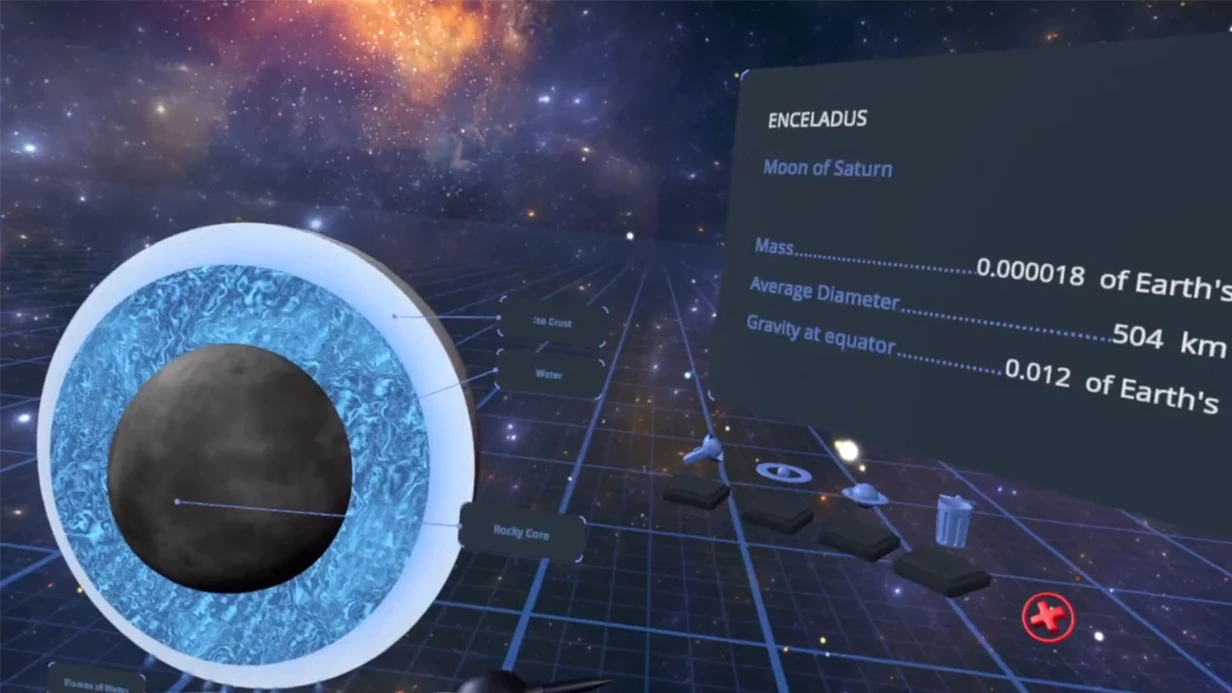
Virtual reality is suitable when you need to completely isolate a person from the real world: practicing emergency situations, actions on hazardous equipment, and developing negotiation and service skills.
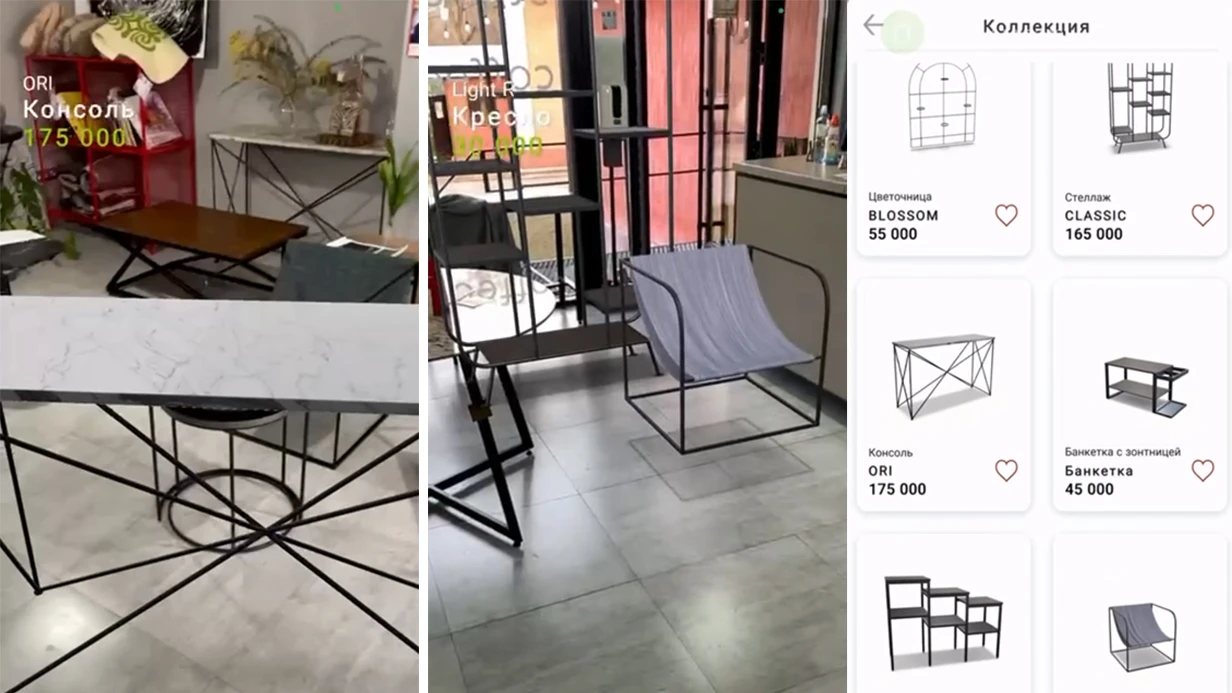
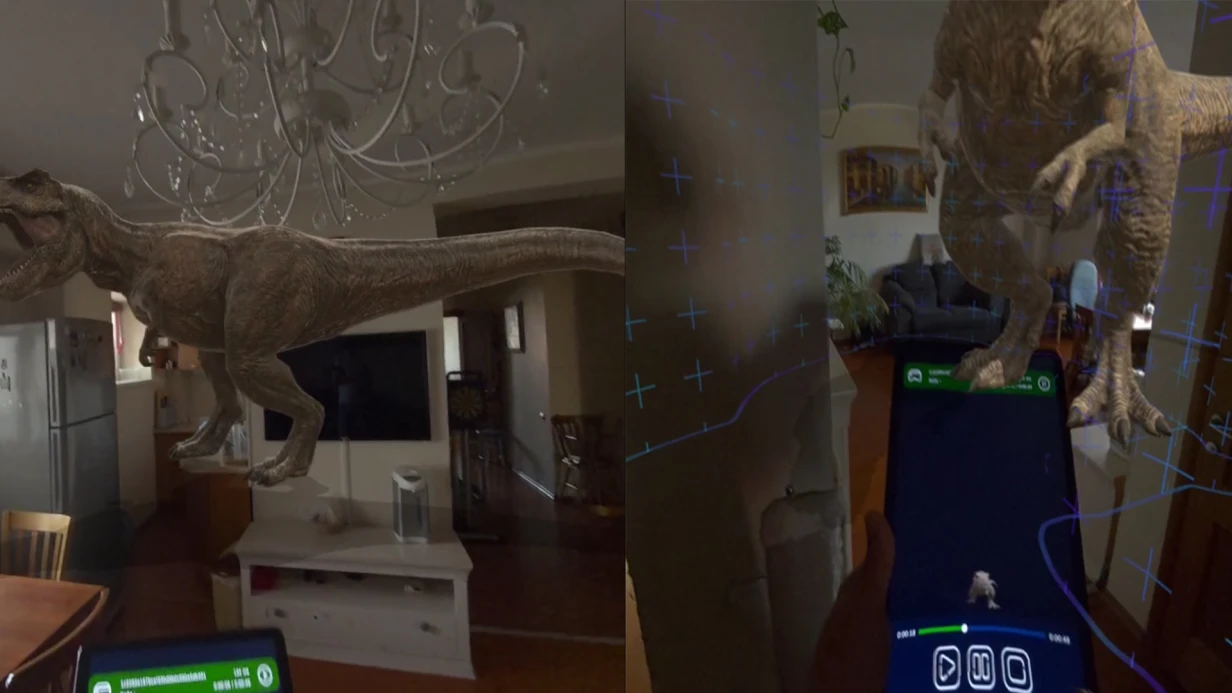
Augmented reality works differently — it overlays prompts onto real objects, helping the employee right here and now: an assembly diagram, a diagnostic checklist, equipment setup steps. Mixed reality combines both approaches, letting virtual objects interact with physical space.
The main selection criterion is the end goal. If you need to practice a rare or dangerous scenario in a safe environment, choose VR. If you need to reduce errors in the workplace without interrupting the process, AR is more effective.
If training involves team interaction with real objects and virtual data at the same time, consider MR.
Also consider audience reach and the launch scenario: how many employees need training, whether they work remotely or in one office, and whether there is a dedicated space for the training.
For mass, short training, lightweight AR scenarios on smartphones are better; for in-depth simulators, use VR headsets with full immersion.
We help you select a format for your tasks: we analyze goals, audience, and constraints, test prototypes, and propose a solution that delivers measurable results — fast progression to the required skill level and fewer errors. Describe your task, and we’ll show you which option will pay off faster.