

Are clients leaving due to shipping failures? VR solution for a logistics center
When a logistics center loses orders, the problem is rarely in logistics itself — more often in people and processes.
A picker mixed up item codes, a warehouse worker could not find goods on an unfamiliar rack layout, a new employee spent half a shift instead of the required minutes.
Each such failure turns into a missed shipping deadline, which means — an unhappy wholesale client, penalties, and lost repeat orders.
At the same time, classic training does not help: briefings provide theory, and real practice comes only on the line, when a mistake costs money. High staff turnover makes the situation worse — just as one group is trained, another arrives, and failures repeat. A manager is forced to constantly put out fires instead of developing the center.
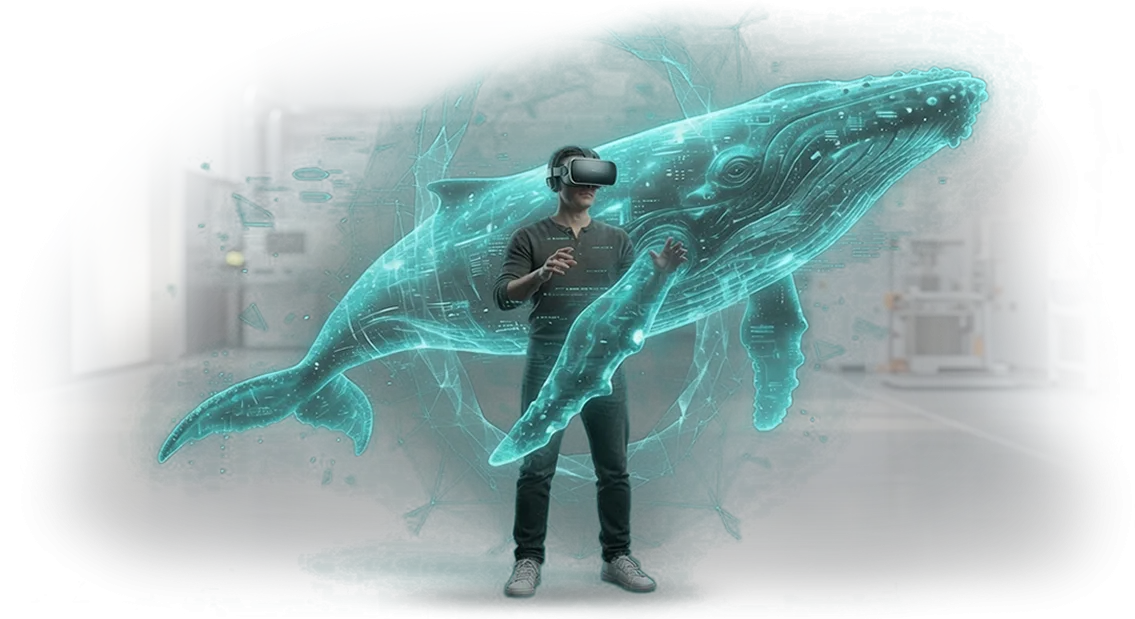
Virtual reality solves exactly this problem. A VR trainer for a logistics center lets an employee practice routes, picking algorithms, and cargo placement in a safe digital space that is practically identical to your warehouse.
A person gains experience before going on the line, so the number of errors in real shipments drops dramatically.
The benefit is obvious: fewer mis-sorts, faster order assembly, and consistently met deadlines. Clients stop leaving, and repeat orders stop being a problem.
We help implement such a solution for your warehouse and your processes — with a guarantee of results and support after launch.
What a VR platform gives a logistics center
For a logistics center manager, implementing virtual reality is not a technology experiment but a tool for managing operational metrics.
Picking accuracy, the speed of onboarding new employees, and process control in every warehouse area directly affect the cost of an order — and it is exactly these tasks that are solved by the VR platforms developed by our team.
Practical value for your business:
- Real-time warehouse control — an up-to-date picture of zone load, goods movement, and staff actions without walking the floor or manual reconciliations.
- Fewer errors — virtual trainers drill skills to the point of automation, so picking is more accurate and cargo damage becomes rare.
- Fast training — an employee masters work standards in a safe environment in a few shifts rather than weeks and immediately settles into a full working rhythm.
- Transparent analytics — you see which operations cause delays and can improve the process precisely where needed, instead of relying on verbal reports.
At the same time, there is no need to change warehouse infrastructure: the VR platform runs on professional equipment and integrates easily into existing procedures.
We start with a pilot area — you evaluate the effect on a real flow and only then scale the solution to the entire facility.
In the end, the VR platform delivers measurable results: fewer errors, faster onboarding, greater operational transparency. These improvements translate into lower costs and faster order processing, which means — a stronger position with your clients.
Which VR formats suit your enterprise
The choice of format depends on the task: staff training, shipping control, or warehouse navigation. The technologies complement each other, and there is an optimal solution for each scenario.
Here is what this looks like in practice:
| Format | Tasks it addresses | What the client gets |
|---|---|---|
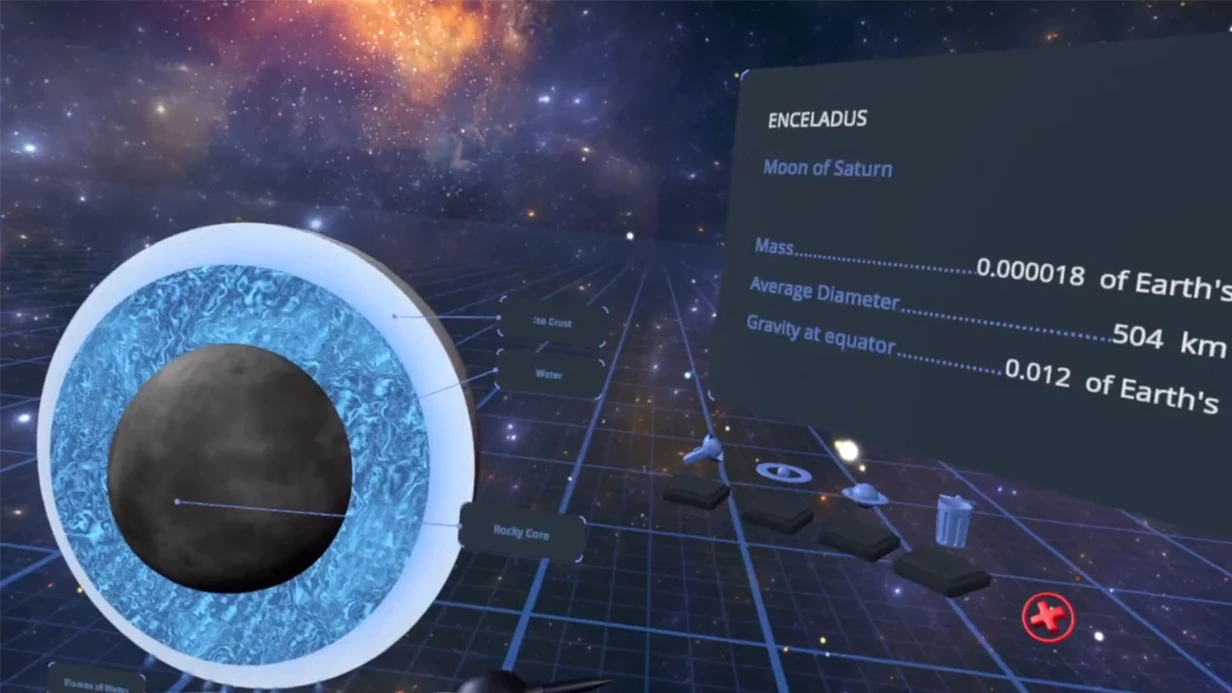
| VR (virtual reality) | Employee training, practicing actions in non-standard situations | Full immersion in a 3D model of the warehouse. A new employee trains without risk to themselves or the cargo |
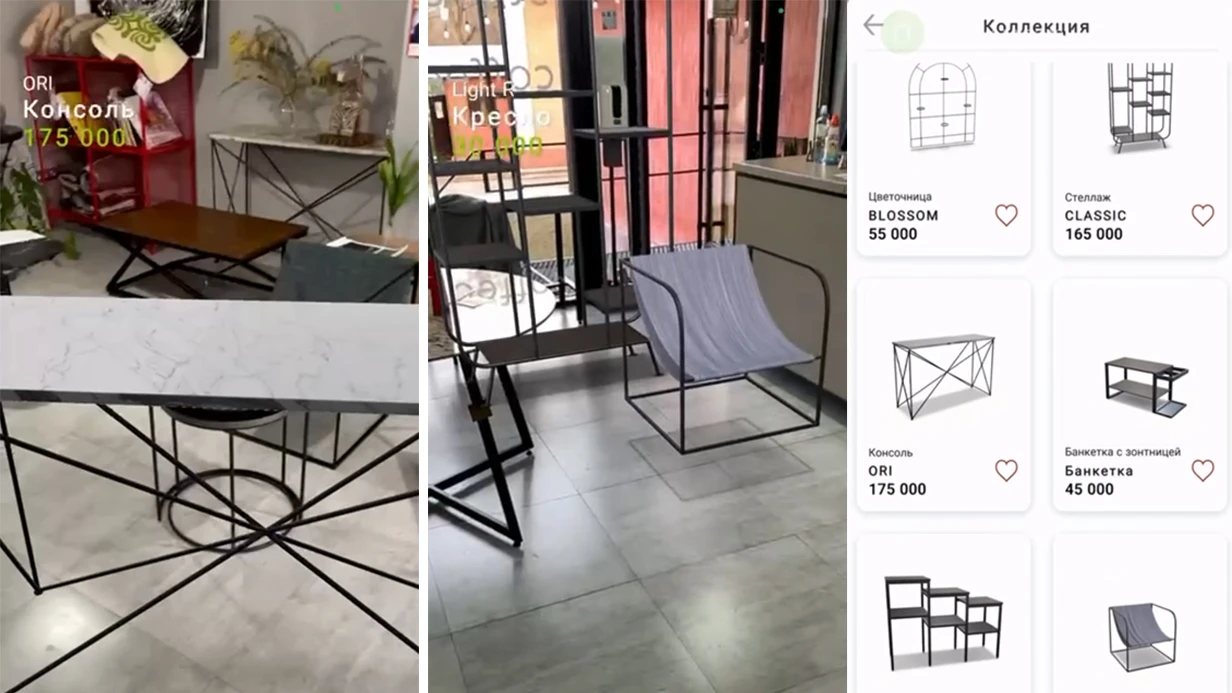
| AR (augmented reality) | Order picking, picking control, navigation for beginners | Hints right on the real racks. Fewer assembly errors, faster staff onboarding |
| MR (mixed reality) | Dispatcher and operator collaboration, remote support | 3D instructions over the real object. A specialist sees the same thing as the line worker and guides them in real time |
Each format solves its own pain point. Virtual trainers reduce time-to-competence and eliminate downtime caused by beginner mistakes. AR for the warehouse reduces the number of incorrect picks and speeds up order processing.
MR for logistics helps mentors monitor several points simultaneously without moving around the facility.
The key is not "technology for technology's sake" but a specific task. We match the format to your process: if you need to quickly train 30 employees to operate a forklift — that is one scenario; if you need to reduce picking losses — that is another.
At the start, we conduct a short audit and show where the effect will be greatest. The result is a clear implementation plan: which format, for which warehouse area, and what business result it will bring in the first month of operation.
How a VR implementation project works
Implementing a VR solution in a logistics center often comes down to questions: how will it affect the shift, how long will it take, and will the launch disrupt operational plans. That is why we structure the project as a sequence of short stages with sign-off at every step.
The client always understands what is happening, sees the interim result, and can make changes before a large amount of work is done. Below are the six steps a VR implementation goes through from briefing to support.
Six stages — from idea to a working VR trainer
- Brief and deep dive into the task. On a call, we review how processes in the logistics center work: which operations you want to cover, who will be the user, and which metrics to improve.
- Audit and implementation plan. We study work scenarios, areas, and staff readiness. We shape a solution with clear timelines and acceptance criteria — everything is recorded in a sign-off document.
- Prototype and approval. We demonstrate on real operations how an employee will work with the VR trainer. You make edits before the main development starts.
- Build and configuration. We create a full-fledged application for your scenario, from the interface to reports for the manager. We test the final version together with you and accept it against a checklist.
- Launch and training. We deploy the system on site and train employees and those who will administer it. You receive instructions and a short operating procedure.
- Support and development. We stay in touch: update scenarios, add new operations, and adapt the solution to changes in the center. If needed, we expand it to other sites.
This approach removes the risk of "building blind": you make an informed decision, and from day one the product works toward the metrics set in the implementation plan. That is a predictable result for a logistics center — without unnecessary iterations or surprises.
What is included in a VR warehouse solution delivery
When ordering a VR solution for a warehouse, it is important to understand exactly what you get in the package. This determines how quickly employees start working with the trainer, who will maintain the equipment, and how the training process is automated.
We have put together a standard delivery package — transparent, without "surprises" or technical jargon. You get not "raw hardware" but a ready-to-use working tool with training and support.
- Training scenarios for your operations — the VR trainer replicates real warehouse tasks: receiving, rack placement, and order picking. An employee practices exactly the actions they perform on shift.
- Ready-made operator interface — clear hints, error control, and action assessment in the virtual environment. A beginner does not need to figure out settings: put on the headset — get instructions and work.
- Installation, setup, and launch at your site — we bring the kit, connect it, and verify everything works. You will not need to assign your own engineer or administrator.
- Training for staff and administrators — we conduct hands-on sessions for operators and prepare your employees for independent work: launching trainers, swapping scenarios, and basic diagnostics.
- Full documentation package — user manual, instructor guide, maintenance procedure, and daily inspection checklist. Everything is written in plain language, without technical details.
- Technical support and maintenance — we answer questions, update content, and help with failures. Most requests are resolved remotely, and in critical situations we take control until full restoration of operation.
This package delivers the main thing — a quick start and confidence that staff will not be left alone with the equipment. Implementation does not require a separate IT department: one responsible employee who trains alongside the operators is enough.
Case study: how our client reduced warehouse losses
For a logistics center, every picking error means lost money, unhappy clients, and extra returns. Training employees on real orders is expensive: they make mistakes and the warehouse runs slower than usual.
We proposed a different approach — training staff in a virtual environment where mistakes have no consequences.
What we did
We developed a web-based trainer for order pickers: an employee puts on a headset, picks goods in a virtual warehouse according to the task, learns to navigate the racks, and checks barcodes. The system itself points out errors and reinforces the correct sequence of actions.
Results after three months of operation at LogistikPro: warehouse losses dropped by 34%, picking errors by 41%, and new employees reach standard speed twice as fast. The trainer paid for itself in the very first quarter.
Client testimonial
"We used to be afraid to hire inexperienced newcomers — there was too much waste. Now they train in virtual reality and come to the real warehouse already prepared. This saved us about two months of work from senior storekeepers who used to do the training."
This case study shows that modern technology works not for its own sake but for concrete business results. If you want to achieve the same numbers — tell us about your task, and we will show how VR/AR can transform your warehouse.
How to choose a VR format for your warehouse tasks?
Let us start with the main point: the choice of VR format is determined not by technology but by the warehouse task.
One thing is to teach employees to work with new equipment, another is to show a client how the warehouse is organized, and a third is to plan a rack rearrangement.
Without a defined business task, any format remains "technology for technology's sake" and will not deliver measurable value.
So first we define the goal. Need to reduce time-to-competence — we use a VR trainer with step-by-step scenarios: an employee practices in a safe environment and comes to the warehouse prepared.
Need to impress an investor or client — we create a virtual warehouse tour: a person moves through a digital copy and sees the scale and logistics.
Need to replan zones — we build an interactive model where rack layouts can be changed and the impact on flows is visible immediately.
The format is determined by the metric you want to improve: training speed, conversion in negotiations, replanning time, or error rate. The depth of development, interface, and degree of immersion depend on this.
Our consultants help prioritize and choose an option that delivers a quick, visible effect rather than just a "wow demo."
To keep the decision safe, start with a short audit: describe the task — we will pick one or two suitable formats and show how they fit into warehouse processes. Within a few days, you will have clarity on direction and budget.
Leave a request on the website — on a call we will review your situation and propose a pilot scenario.
Frequently asked questions about implementing VR in a warehouse
Having doubts before implementing a VR solution in a warehouse is normal. Most often, managers worry about three things: whether the equipment will break, whether employees will figure it out, and when the investment will pay off. We answer these questions directly — no technical details, only what affects your business.
VR trainers for a logistics center are a working tool, not an experiment. We design solutions for real warehouse tasks: from training new employees to practicing order-picking algorithms.
That is why we select equipment with a durability margin for intensive use and make the interface intuitive — training takes no more than half an hour.
What if the equipment breaks down or fails?
We work with professional VR headsets designed for commercial use, not home gaming. They withstand intensive shifts, and if a device fails due to our fault, we replace it under warranty.
Plus, we provide remote support — an engineer connects to the system and resolves the issue without stopping your operations.
Employees won't figure it out — our people have no experience with technology.
This is the most common question, and practice shows that the complexity is overestimated. We set up scenarios so that a person simply puts on the headset and performs familiar actions — picks up goods, places them, and checks labels.
Hints appear right in the field of view, and training takes 15–20 minutes. Within a week, employees use VR on their own without supervisor assistance.
How long until payback and when will results show?
We calculate VR payback in a warehouse based on fewer errors and faster onboarding of newcomers. In typical projects, the payback period is 3–6 months. At the same time, the one-time launch costs are equipment and scenario setup — after that, you simply use the ready-made tool. So you can see the effect right away, we run a pilot on a real task and show before/after numbers.
We understand that an innovation budget requires justification. That is why, before starting, we analyze your processes for free and calculate which operations VR will speed up and where losses will be reduced. If the pilot does not deliver the expected result — we will offer an alternative format or refund funds under the contract. We take the risk on ourselves; all you have to do is test the technology at your warehouse.Contact us — let's discuss your task
Leave a request — and we will contact you at a convenient time. Within the first 15 minutes of the call, we will find out what task your logistics center is solving: employee training, warehouse navigation, visualization of storage zones, or process control. We will immediately offer options and a preliminary estimate.
We have built up experience in similar projects, so we speak the language of business: reduced staff onboarding time, fewer picking errors, and on-site safety. No complex technical details — only clear recommendations and timelines.
After contacting us, you receive:
- Quick response — a manager contacts you within a few hours and agrees on a convenient time.
- Consultation — we review your task and advise which VR/AR solutions suit a logistics center specifically.
- Project estimate — we give timelines and a preliminary cost after clarifying your goals.
- Practice examples — we show how similar solutions worked for other clients.
- Work plan — we describe all stages step by step, from task definition to launch.
- Support — we stay in touch throughout the entire project.
After that, it is simple: you send a request, we hold a consultation, and prepare a project estimate. You do not need to understand the technologies — we will propose the optimal solution and handle the implementation ourselves. Leave a request so we can discuss tomorrow how VR/AR speeds up your logistics center's operations.