

Why an educational game fails to hold students' attention?
Students quickly lose interest in learning material, no matter how much effort is put into presenting it.
Even a well-designed educational game or presentation holds attention for only the first few minutes: the habit of scrolling through a feed or switching to a messenger kicks in. The material goes unnoticed, and learning outcomes satisfy neither teachers nor parents. In the end, preparation time is wasted, and the lesson goal is never achieved.
For business, this is not just sad statistics. Declining student engagement leads to churn: children persuade parents to switch courses, negative reviews appear, and the reputation of a learning center or online school loses value. Even quality content does not help if it doesn't hold attention.
Why does this happen? In classical learning, the student remains an observer. They are shown a picture, asked a question, but not allowed to feel inside the topic.
Without interactive learning, the brain does not create vivid associations — and therefore does not remember the key points.
Modern video games and videos deliver instant emotion, and an educational game must offer an experience of equal strength, otherwise it will lose the competition for attention.
We address this: we turn the learning scenario into an immersive environment where the student acts, explores, and makes decisions.
This interactive format increases engagement, restores interest in the subject, and holds attention throughout the lesson — while giving you measurable results and loyal students.
What VR/AR/MR development brings to your educational project
VR/AR/MR development turns an educational project from "just another course" into an event that is remembered and discussed.
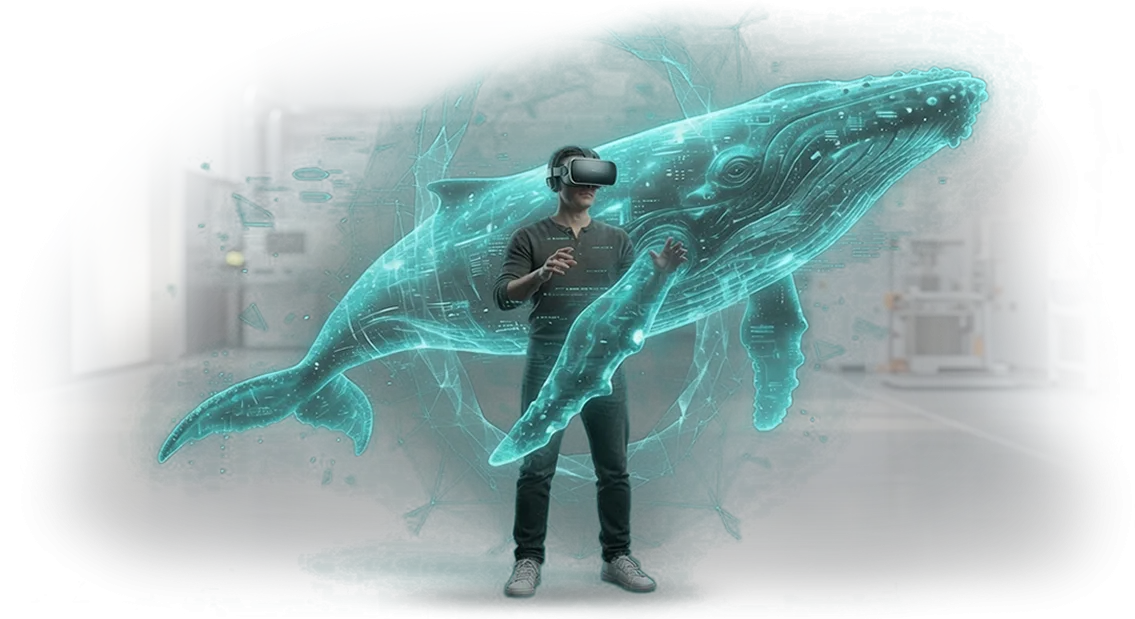
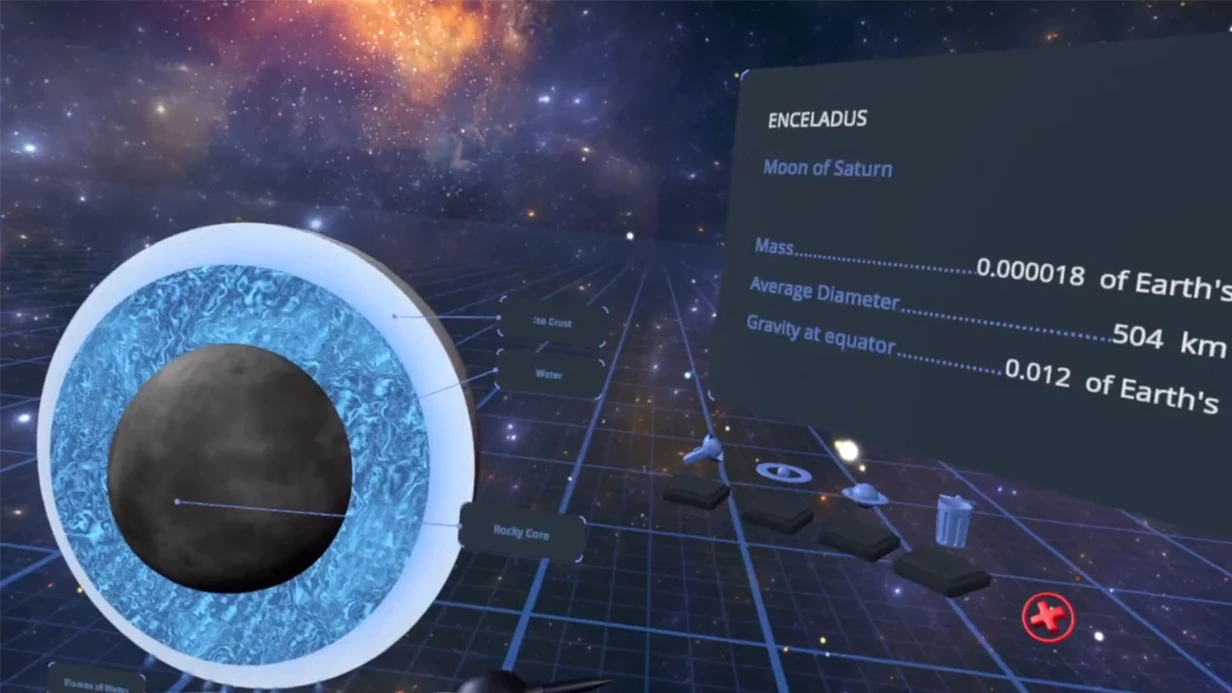
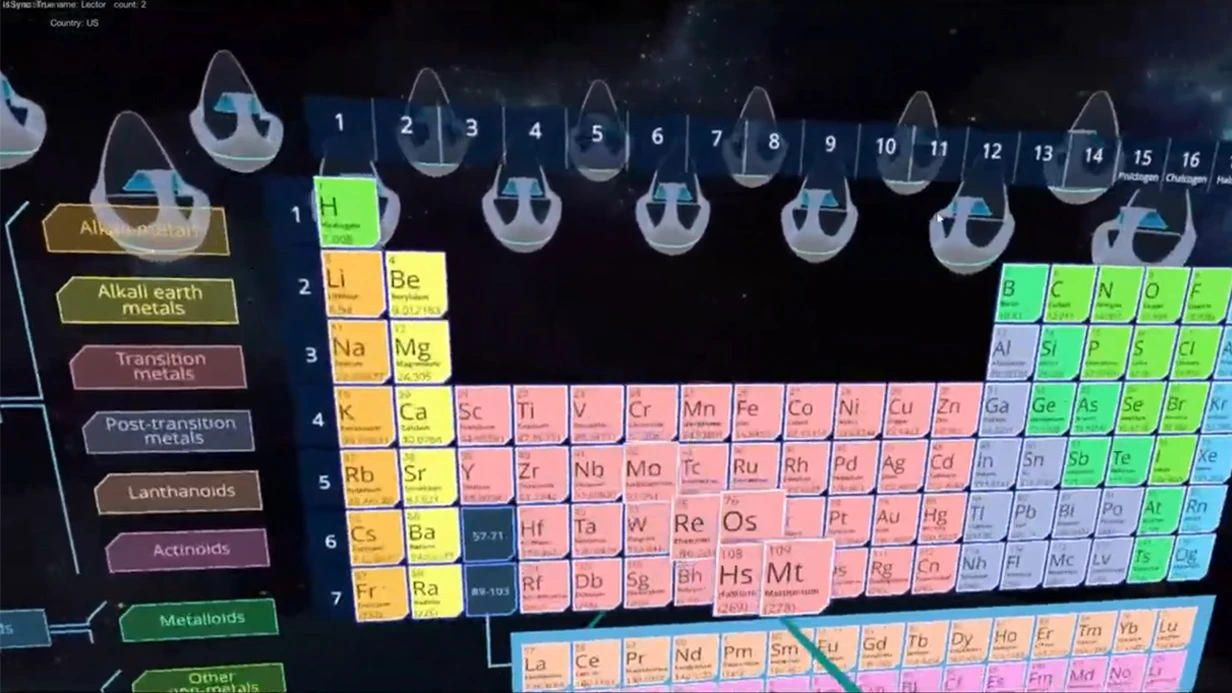
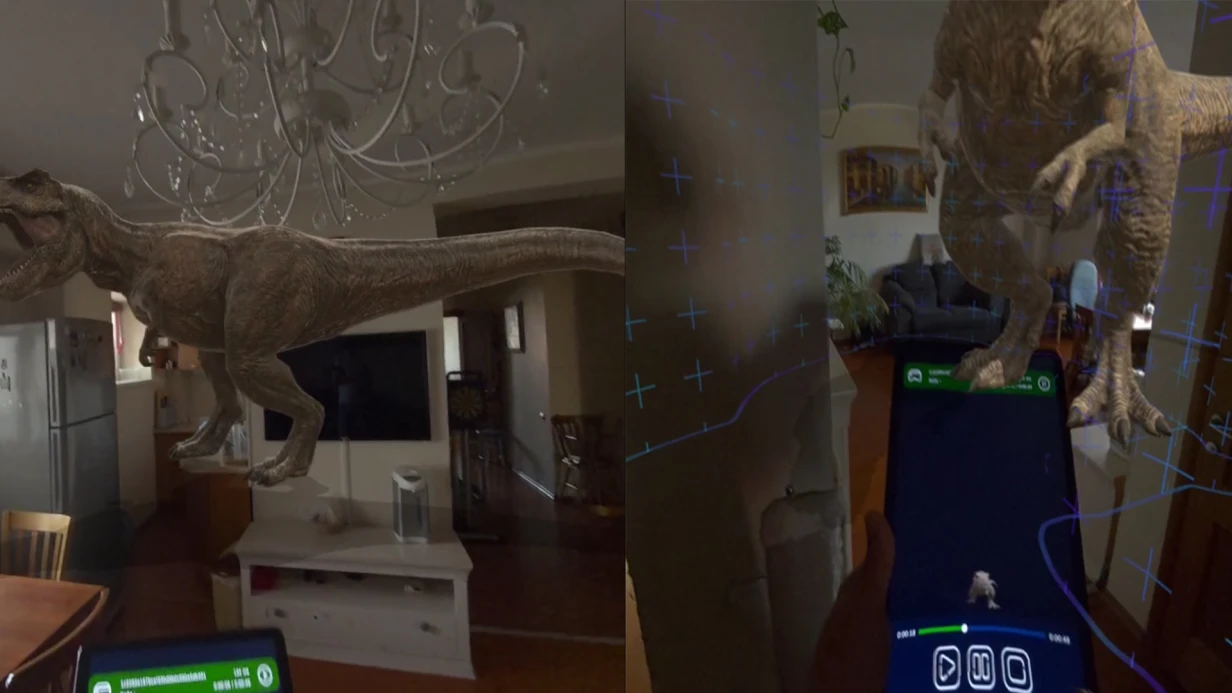
Instead of passively viewing slides, the student finds themselves inside the material: they see 3D models, interact with processes, and control the scenario themselves. This changes perception — knowledge is absorbed through action rather than reading.
The main benefit is depth of retention. Research shows that after an immersive format, learners reproduce material 30–40% more accurately than after text or video training.
For business, this means growth of real skills among employees or students, fewer mistakes in practice, and faster results. An educational VR/AR game pays off not as entertainment, but as a training tool that works immediately after launch.
The second benefit is the live reaction of the audience. Unlike traditional trainers, VR/AR provoke an emotional response: surprise, excitement, curiosity. People photograph and record such experiences and share them on social media — increasing brand awareness for free.
Every launch becomes a mini-marketing campaign that brings new clients and leads without additional advertising budget.
The third, often underestimated, benefit is learning analytics. The system records the actions of every user: how much time they spent in the scenario, which tasks caused difficulties, and what decisions they made.
This data allows a teacher or methodologist to see what is actually being absorbed and what needs improvement. Instead of "seems like everyone understood," you get an objective picture of performance and can precisely improve the program.
We develop educational VR/AR solutions using professional equipment and proven tools — this guarantees stable operation even under heavy load.
You get not just technology, but a ready-made tool that increases engagement, material retention, and brings new clients through audience interaction.
If you want your educational project to stand out and deliver measurable results, start by discussing the scenario: tell us what knowledge participants should gain, and we will choose the format that delivers maximum impact.
VR/AR/MR solution formats for educational game tasks
VR, AR, and MR formats solve different educational tasks — it is important to choose the one that matches your audience and venue conditions.
The difference is not in technology but in the result: one solution provides full immersion, another offers accessibility from any smartphone, and a third combines real and virtual objects. We match the format to the specific game, rather than fitting the game to the format.
| Format | For which audience and conditions | What it gives the client |
|---|---|---|
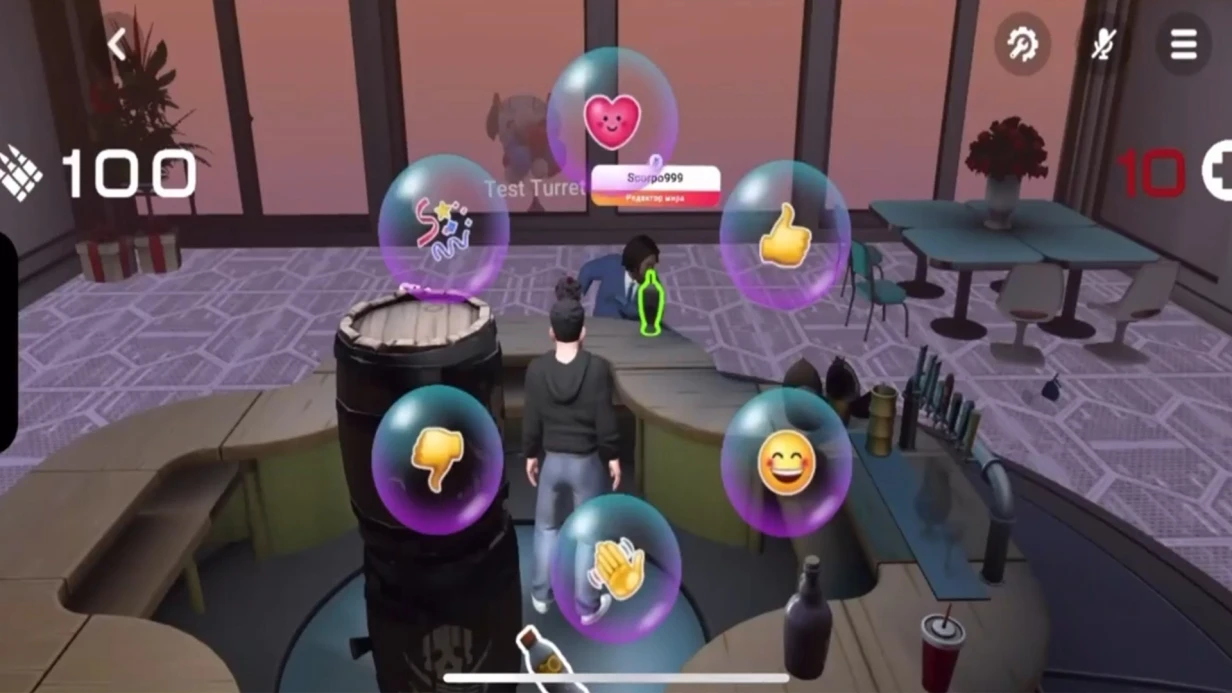
| VR — virtual reality | Headsets and controllers; for individual training, simulations, and topics where you need to "be inside" the process | Maximum immersion: complex scenarios are remembered through emotion, not rote learning. Suitable for practicing skills without risk |
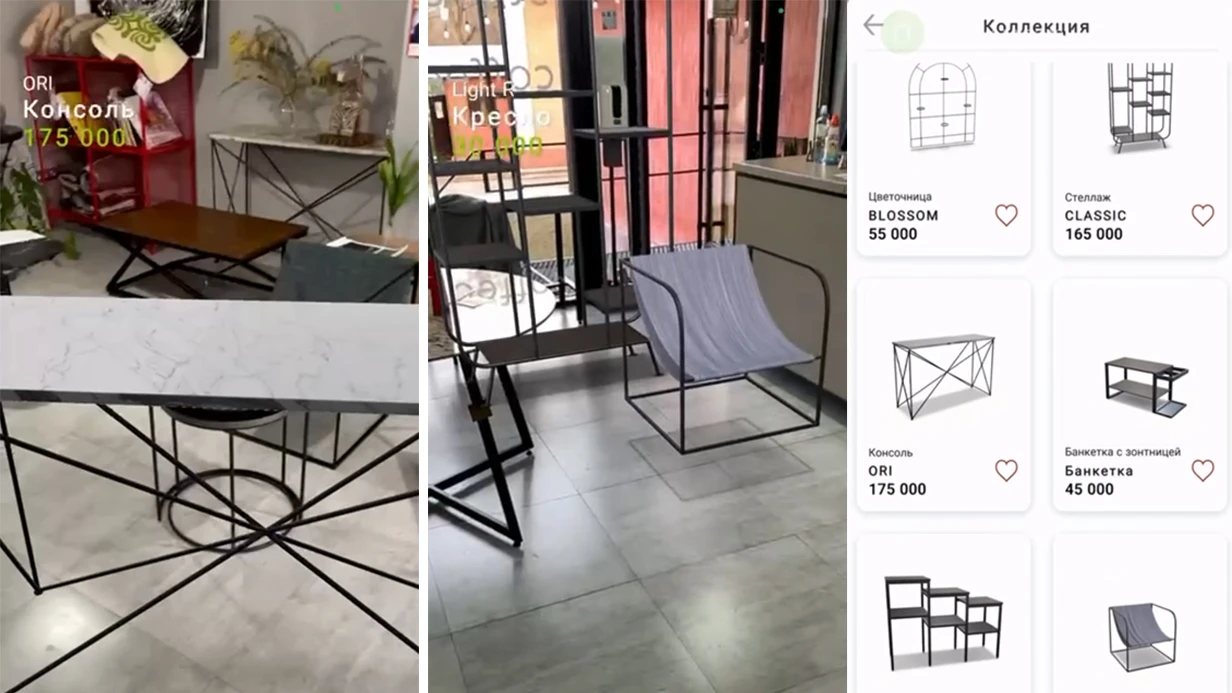
| AR — augmented reality | Any smartphones and tablets; for mass lessons, quests, excursions, and mixed groups | No need to purchase equipment — the game runs on students' devices. Easy to integrate into an existing lesson or event; maximum audience reach |
| MR — mixed reality | Headsets with transparent lenses; for teamwork, laboratory work, and interactive exhibits | Combines the real world and digital objects: participants see each other and simultaneously interact with a virtual model. High engagement and natural communication |
When choosing a format, focus on three questions: where the training will take place, how many people are simultaneously involved in the game, and what educational outcome you need. If mass engagement matters — choose AR. If you need deep environment simulation — VR. If the game is built around team interaction with physical objects and digital hints — MR.
We help you decide on the format at the brief stage: we analyze the game scenario, audience, and venue, then propose a solution that delivers the desired result without overpaying for unnecessary complexity. The main thing is that players gain knowledge and emotions, and you get a measurable effect.
How we will structure the project around your task
We structure our work so you can easily control the project's progress instead of guessing what is happening. No "black boxes": you always see which stage is in progress, what is already done, and what comes next.
- Brief and immersion — we study your educational program, student ages, and goals.
- Work plan — we fix the game composition, deadlines, and milestones.
- Scenario approval — we show the game structure, tasks, and learning logic.
- Development and intermediate demos — you see working versions and make edits on time.
- Testing and launch — we test on real devices and help launch the project.
- Post-launch support — we update the game and stay in touch.
So you can plan your time, we agree on a stage table at the start of the project. It looks like this:
| Stage | What we do | What you get |
|---|---|---|
| Brief | Gather requirements | Understanding of scope and goals |
| Design | Develop the scenario and structure | Document for approval |
| Approval | Show design and logic | Edits before development |
| Development | Create the game, show versions | Control over progress |
| Launch | Test and launch the project | Working game and instructions |
This table is not a formality but a management tool. You know what happens at each stage and can ask a question or adjust the task. This approach helps launch an educational game without surprises and exactly on schedule.
What is included in the delivery of a VR/AR/MR application
When you order a VR/AR/MR application, it's important to understand: you receive not just a program, but a ready-made tool for your business tasks. That is why the delivery package includes everything needed for launch and daily use — from files to team training.
Here is what is included in the package:
- Ready-made application, adapted to your tasks. It works on equipment you already have or that we help you choose.
- Documentation for staff — simple administrator instructions and user guides. No "requests to the developer" for small things.
- Staff training. We conduct sessions for your team in person or remotely. After that, your specialists manage the application themselves and help visitors.
- Source materials — graphics, scenes, settings. You remain the owner of the project and can refine it in the future without us.
- Post-launch support. For an agreed period, we stay in touch: fix issues, answer questions, help with updates.
Documentation and training are insurance against downtime. We do not hand over an application without support: you get detailed guides and the ability to ask questions to the development team.
If necessary, we hold a separate session for your trainers so they can share experience within the company.
Support begins on the day the project is handed over. For the first months, you have direct contact with the developers. We monitor stability, respond quickly to requests, and advise on how to use the application more effectively as your tasks grow.
As a result, you take a finished product along with the necessary documentation, trained staff, and support. This lets you launch the project right away without being distracted by technical matters.
Case study: VR trainer improves academic performance in a medical college
How an educational game changed the learning process
Our specialists from our team came to a medical college when students passed theory well but struggled in practical classes. Teachers lacked time to practice every action with the group, and outdated simulators required complex setup and a separate room.
We proposed an educational training game running via WebVR. It launches directly in the browser on any computer — students do not need to buy headsets or install programs.
This format allowed the trainer to be integrated into regular classes without changing the college's facilities.
Over the semester, about 120 students completed all game scenarios, which required performing actions in the correct order and avoiding mistakes. The system immediately highlighted errors, and the student could retry until reaching the correct result.
Final performance in practical skills increased by 38%. Teachers noted that students became more confident in performing algorithms and corrected mistakes faster. It became possible to teach each student at an individual pace without slowing down the group.
After the pilot launch, the college ordered additional modules, and the trainer became part of the regular curriculum. This says it all: a properly designed virtual experience brings measurable benefit and pays off through repeat requests.
How to choose the right format for your task?
There is no single answer — the right format is determined by the task, audience, and project constraints. For an educational game, the key criteria are the educational goal, number of participants, available equipment, project budget, and development timeline. We match the format to these parameters, not the other way around.
If you need to quickly engage a large number of students or employees without installing apps, the web format is optimal. It launches via a link in the browser from any device — this reduces preparation time and makes the project accessible to a wide audience.
With a limited budget, this option allows you to achieve a working result without extra investment in equipment.
When an educational task requires full immersion and emotional engagement, the VR format with headsets amplifies the effect. But it increases the project budget and the time needed to prepare spaces and equipment.
Therefore, for game scenarios we often combine approaches: the main scenario on the web, additional VR modules for advanced lessons.
To choose a format, just answer three questions: what the game should teach, how many people will play simultaneously, and what result you want by a specific date.
At the consultation, we assess these parameters, suggest options based on experience, and set realistic development timelines and budget for your task.
Frequently asked questions about timelines and cost of VR/AR/MR development
Before starting, clients most often ask about timelines, budget, and guarantees. We answer directly, the same way we work: we fix stages, dates, and estimates — no surprises.
How long does development of an educational VR/AR game take?
A short game for a single scenario usually takes 3–6 weeks. It all depends on the number of levels and platforms: faster for browser, longer for headsets. At the brief, we set timelines and milestones so you can see progress every week.
What does the development cost consist of?
It consists of the scope of the scenario, graphics, and integrations with your learning system. We give an exact estimate after the brief — transparently, stage by stage. You know what you pay for at each step, with no hidden extra charges.
What happens after launch? Will we have to keep paying extra?
We hand over the project with instructions and training for your team. The first month of support is included — we fix issues within the agreed scope. After that, you can extend the contract for updates: add a level or change a scene. This is cheaper than ordering a project from scratch.
What if the game does not run on students' devices?
We design it for the target platforms in advance: smartphones via browser or headsets for full immersion. You receive a test build and check it on your hardware. Guaranteed operation on agreed devices is specified in the contract.
Didn't find your question? Write to us — within 1–2 days we will send a plan, timeline, and a clear estimate.Discuss your educational project with our team engineers
Creating an educational game is not just development; it is finding a balance between educational value and an engaging storyline. Students quickly lose interest in boring simulations, while a format that is too entertaining does not deliver the necessary knowledge.
Therefore, it is important to discuss the scenario, methodology, and technical implementation before starting.
Tell us about your task — our team engineers will provide a consultation, analyze your idea, and advise which VR/AR/MR format will deliver the desired learning effect.
After your request, you will receive not general recommendations but concrete agreements: an audit of the idea, a cost calculation, and a work plan. This will allow you to assess the project's scope and understand what resources will be needed.
What you get immediately after contacting us:
- Audit of the learning task: we help formulate goals and understand how the game fits into the existing program.
- Format selection: we determine where a simple web version is enough and where full immersion is needed for better material absorption.
- Assessment of complexity and timeline: we break the work into stages and show how long each will take.
- Transparent cost calculation: an estimate with a clear list of work — no hidden extra charges or unexpected expenses.
- Work plan: a step-by-step schedule with milestones so you see progress at every stage.
- Practice examples: we show similar educational projects and discuss which solutions worked.
Leave a request for a consultation — an engineer will contact you soon, clarify details, and prepare a personal proposal. This way, you will get a ready action plan and know exactly how to implement your educational game.