

Training Manufacturing Personnel: Hidden Losses and Risks
Traditional training of manufacturing personnel is always a compromise. You need to ensure employee safety while providing real hands-on practice, but full-scale training on actual equipment is expensive and time-consuming.
As a result, enterprises cut costs on training programs — and the price of such savings is operational errors, equipment downtime, and a growing number of emergency situations.
The issue of production risks is especially acute. A newcomer encountering a complex machine or hazardous area for the first time inevitably makes mistakes. Each such mistake is not only repair costs but also a potential threat to the worker's own health.
That is why a significant portion of time goes not to skill practice but to theoretical safety training, which still does not provide the needed experience.
At the same time, training effectiveness remains low. The employee listens to a briefing, watches a presentation, but without practice, the material is absorbed only partially. Within a few weeks, the knowledge fades, and the person reverts to habitual, often incorrect actions. Retraining has to be done all over again — more time, more money, more time away from production.
We solve this problem: we move training into a virtual environment where the employee can safely make mistakes, practice algorithms until they become automatic, and do this without stopping production lines.
This is not a replacement for theory but full-fledged practice that shortens preparation time and reduces risks at the real site.
What Benefits VR Training Brings to Personnel
Training new employees in manufacturing is always a compromise between speed and quality. While a newcomer masters all operations, weeks pass, and every mistake on real equipment can result in downtime or injury. VR training eliminates this compromise.
First — speed. Scenarios in a virtual environment allow an employee to practice actions in 2–3 days instead of several weeks of theoretical briefings. The effectiveness of VR training is proven: material is absorbed faster because the person acts rather than listens.
Second — safety. A virtual simulator reproduces emergency situations without real risk. The employee learns to respond to abnormal situations, and the enterprise loses neither people nor equipment.
Third — standardization. All employees go through identical scenarios, so skills are leveled out. You get a predictable result: every worker knows the procedures and acts the same way.
Fourth — protection from errors. Virtual simulators reduce accident rates: the employee has already practiced dangerous situations in a safe environment, so they act confidently on the real production floor. This reduces downtime and recovery costs.
WebVR technology allows launching training directly in the browser — without installing heavy software or powerful computers. A virtual reality headset, such as Meta Quest, is all that is needed. This simplifies scaling training to all workshops and branches without additional investments.
VR/AR Solution Formats for Production Tasks
The choice of VR/AR training format depends on the specific task of the area: newcomers need to be quickly trained for safe work — virtual simulators help; reduce errors in assembly and maintenance — augmented reality briefings; practice actions in emergencies — full-immersion simulation. A brief checklist of the most in-demand formats is in the table.
| Format | Who it suits | What it gives the client |
|---|---|---|
| Virtual simulators | New employees, equipment operators | Skill practice without risk to people or machinery, reduced onboarding time |
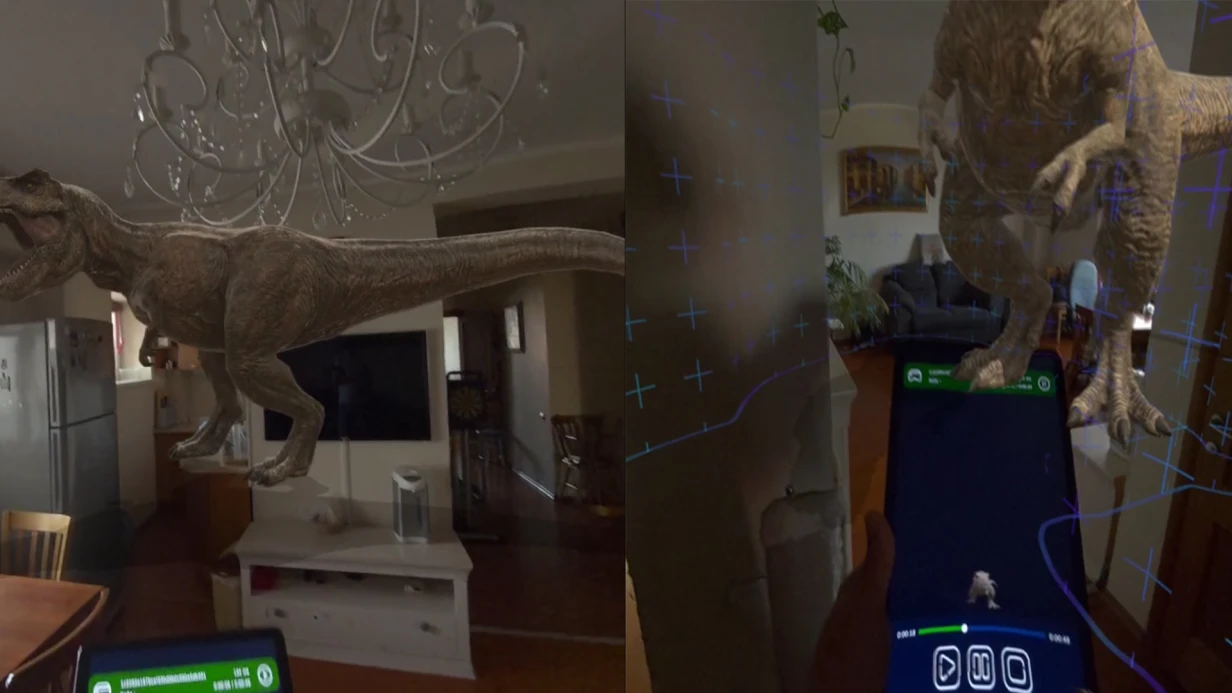
| AR briefings | Line workers, maintenance crews | Step-by-step hints in the field of view — fewer errors and less downtime |
| Hazardous situation simulation | Occupational safety specialists, workshop personnel | Training for actions in accidents and emergencies without threat to employees |
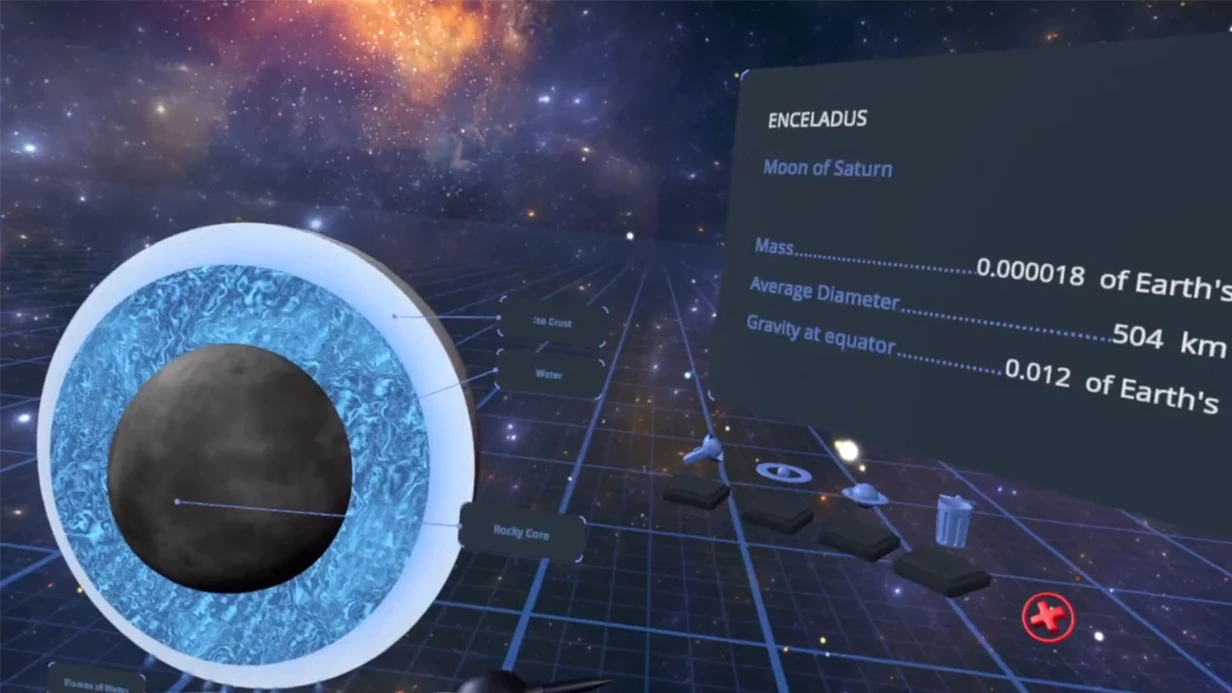
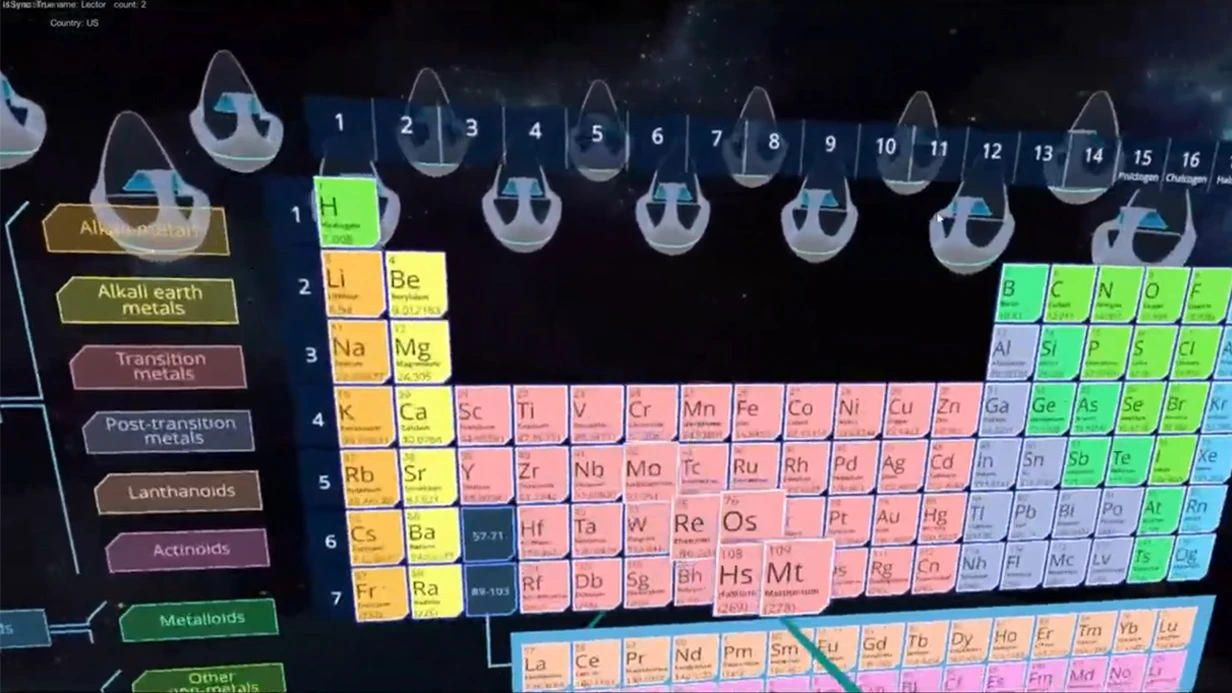
| Interactive equipment diagrams | Engineers, setup technicians, maintenance staff | Quick study of unit structure and operating principles in visual 3D |
| Virtual production tours | Trainees, contractors, enterprise guests | Familiarization with production areas and safety rules before first entering the site |
These are not demo videos but ready-made training modules: at the end of a session, you receive a report on how many operations were completed correctly and where the employee hesitates. This reveals the real level of preparation — no more guessing who is ready for independent work.
We will select a combination of formats for your area and help launch a pilot project without lengthy production shutdown.
Stages of VR/AR Training Development at an Enterprise
Implementing VR training in manufacturing is a project that pays off only with clear process organization. We structured the VR development stages so that you understand what is happening at each step and can control investments. Below is the path from brief to launch that dozens of enterprises have already completed.
-
Brief and task immersion. We collect requirements: which operations need to be practiced, how many employees to train, and what level of preparation newcomers have. We record the metrics you want to improve: time to full productivity, number of errors, adaptation time.
-
Analysis of production processes. We study workplaces, regulations, and typical errors. We identify scenarios where a VR simulator will deliver maximum effect and cut out the excess — so you do not spend budget on unused modules.
-
Training scenario design. Together with your technologists, we outline the steps, hints, and an employee action assessment system. The result is a detailed scenario that you approve before development begins.
-
Prototype development. We create a working sample of one training module. You see the graphics, logic, and controls before all funds are invested. This removes the risk of mismatched expectations.
-
Project approval and adjustments. We show the prototype to your team and make revisions to the scenario and interface. You get a product that exactly matches the internal regulations and standards of the enterprise.
-
Full-scale VR simulator creation. We refine all training modules, integrate a results tracking system, and connect clear statistics for the instructor or training manager.
-
Testing and launch. We test the simulator on real employees, train administrators, hand over documentation, and support the first groups. You get a ready-made solution without production downtime.
This is what VR training implementation looks like — with checkpoints and a guaranteed timeline. You are not just ordering development; you get a working tool that employees start using within the first week after launch.
What's Included in the VR/AR Training Delivery: The Package
You receive not just an application but a complete training system that can be implemented from day one. Below is the full delivery package so you understand exactly what you get and how it addresses your employee training task.
- Training scenarios for your tasks — analysis of real operations, emergency situations, and procedures of your production. The employee practices actions in a safe environment rather than learning from mistakes on the workshop floor.
- Industrial 3D models — digital copies of your equipment, tools, and facilities. The employee masters exactly the machinery they will work with, even before first contact with it.
- Methodological materials for the instructor — guides for conducting sessions, assessment criteria, and analysis of typical errors. Your specialists can conduct training without developer assistance.
- Instructions and admin panel — simple management: assign trainings, track progress, and view each employee's results. All data on a clear panel, without technical complications.
- Online platform with role-based access — employees take training on work computers or in VR headsets, and the manager sees statistics. Suitable for both in-person sessions and self-paced preparation.
- Training for your employees — we handle setup and train your instructors so they can independently integrate the training into the schedule. You do not need technical specialists on staff.
- Technical support and maintenance — we help with updates, resolve platform issues, and adjust scenarios to changes in your processes. Guaranteed stable operation at all stages.
This is a ready-made tool that integrates into your training system: from initial task setting to regular use. You get the full cycle — scenarios, content, platform, and support — not a "bare" application that needs to be finished on your own.
Case Study: How a Plant Reduced Operator Training Time with VR
At the machinery plant PromTech, training new machine operators took up to two months: the first weeks were spent on theory, then work with a mentor at the machine.
Due to a shortage of experienced specialists, the process constantly stretched out, and errors during the first independent startup led to defects and downtime.
We proposed replacing part of the training with a VR simulator. In four months, we created a virtual copy of the production area with real scenarios: machine setup, typical abnormal situations, quality control.
The operator practices actions in a safe environment, and the system records every decision and highlights errors.
The implementation results speak for themselves. Operator training time decreased by 30% — instead of two months, a newcomer reaches the machine in six weeks.
Startup errors decreased by 40%: the simulator allows bringing correct actions to automatism before contact with real equipment.
What This Gave the Plant
Production training stopped depending on mentor availability — the virtual instructor is accessible at any time and in any quantity. Material consumption for training parts decreased, and most importantly, the risk of injuries and equipment damage was reduced.
For management, this means fast return on investment: VR training costs are recovered through reduced defects and faster time to full productivity for newcomers.
This VR training case study shows: a virtual simulator is not an experiment but a working tool that delivers a measurable economic effect within the first months after implementation.
If you want to replicate such a result at your production facility — we will start with a short brief and select scenarios for your tasks.
How to Choose a VR Training Format for Your Specific Production?
The choice of VR training format directly depends on your production specifics: what exactly is manufactured, what equipment is used, and how critical personnel errors are.
No universal solution exists — the same scenario can be effective for a training workshop and completely useless for hazardous chemical production. That is why we first analyze your tasks, and only then propose a specific immersion format.
The key criterion is the type of equipment and hazard level. If an employee works with expensive machines or in a high-risk zone, the most realistic simulation with accurate physics and detailed emergency scenarios is required.
For training on regulated operations with standard equipment, a simpler interactive scenario that practices action sequences and typical abnormal cases is sufficient. The higher the cost of an error, the deeper the immersion should be.
The second factor is the number of employees and training goals. If you need to train hundreds of workers in standard operations, a lightweight format that can be quickly replicated and run on standard headsets without powerful computers is more cost-effective.
When it comes to preparing specialized professionals or practicing rare emergency scenarios, we use richer graphics and additional modules that allow modeling complex situations without risk to personnel.
At the same time, you get objective statistics: who has completed training, what errors they make, and where additional practice is needed.
Budget and implementation timelines also affect the format. A full-fledged VR program pays off faster in hazardous production where each incident is expensive, or where newcomer onboarding time needs to be reduced.
For a limited budget, you can start with one key scenario and gradually expand the program. We help you choose the optimal balance between detail, scope, and cost — and always show how saving on training translates into losses from defects or downtime.
Ultimately, the right format is determined not by trends but by your production specifics: type of operations, risk level, personnel size, and business goals.
We take on the analysis of all these factors and propose a solution that integrates into your existing training system and delivers a measurable result — from reduced injuries to faster adaptation of new employees.
Common Concerns When Ordering VR/AR Training
We understand: before entrusting employee training to new technology, you want to be sure it will not require production shutdowns, huge budgets, or break familiar processes. These concerns are natural — let us address the most common ones and show how we resolve them.
Is it difficult to integrate VR training into current processes?
Implementation does not require restructuring production. We connect equipment to the existing network, launch the platform, and conduct a short briefing for the administrator. This usually takes a few days, not months.
The entire process is supported by our specialist: from setup to first launch. You do not need to hire a separate IT employee — we handle technical support.
Won't it be too expensive?
The cost of VR training is often lower than organizing in-person simulators or off-site briefings. The equipment pays for itself through reduced downtime and fewer newcomer errors.
Moreover, one developed course can be used for an unlimited number of employees. This eliminates costs for repeated instructor sessions and classroom rentals.
Is VR compatible with our existing training systems?
We do not replace your LMS or internal procedures — we complement them. Courses are exported as a separate module, and completion results are easily transferred to your tracking system.
If needed, we integrate statistics through standard data exchange formats. You will not have to abandon familiar tools — VR becomes their natural extension.
How quickly will such training pay off?
Return on investment is visible after the first groups. Employees master equipment operation faster, make fewer defects, and act more safely in abnormal situations.
For example, in our projects, the time for a newcomer to reach full working pace is reduced by 1.5–2 times. Fewer errors — lower rework costs, fewer injuries — lower insurance payments.
What if the equipment fails during a session?
We work on professional equipment that has been proven in dozens of projects. All scenarios are tested before the course launch, and during the session itself, one button press is enough — the system is stable.
If something goes wrong, you will have our support contact: an engineer will connect remotely and resolve the issue within a business day. Training downtime is minimized.
We take on technical risks, and along with them, the responsibility for ensuring that training truly delivers results. One step remains — discussing your task on a short call.Order VR/AR Training Development for Your Production
Tell us about your task — and we will propose a solution for your production process. Ordering VR training from us means getting not a "box" with a simulator but a system that integrates into your employee preparation program and measurably reduces onboarding time.
Turnkey VR development includes everything: analysis of operations where errors cost the most, scenario design, creation of 3D models of your equipment, and an instructor interface.
We work with professional equipment and proven tools, so the result is stable — from prototype to final version.
After contacting us, you receive:
- consultation with a VR expert on your scenario — we will suggest which operations are most effective to move into a virtual environment;
- preliminary audit of the training process: we identify areas where VR will deliver a quick effect — from newcomers to retraining;
- cost calculation for development based on your scenario volume, number of workstations, and required level of detail;
- demo prototype of one module — you will see employee behavior in VR before full development;
- realistic launch timelines: from the first weeks to implementation depending on scale;
- integration plan: how the simulator fits into the current schedule, who will administer it, and how to evaluate results.
No hidden stages and no "we will finish it later" — we fix requirements, scope, and timelines in the contract.
The development cost depends on the complexity of the scenarios and the number of models, so we give the exact figure only after an audit, not "by eye."
Leave a request for a consultation — we will discuss your task, show examples of similar projects, and within a few days propose a plan with budget and timelines.
We will start with a short conversation that clarifies how VR will accelerate training at your specific production facility.