

Industrial Demonstration: How VR/AR Convince Clients Faster
Selling large equipment and complex technical solutions almost always comes down to one thing: it is hard for the customer to picture the product in action.
Drawings, photographs, and catalogs do not convey the scale of an installation, do not show it in a real workshop, and do not let the client feel how the equipment will fit into existing processes.
The client does not want to take risks — they want to see everything with their own eyes before signing the contract, and that is often physically impossible.
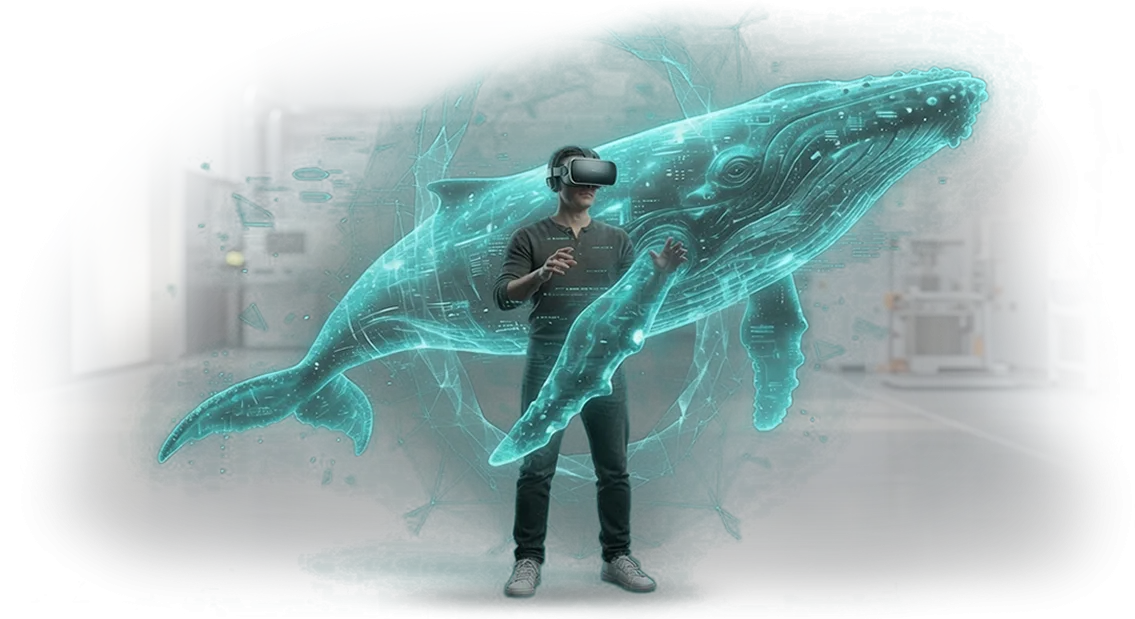
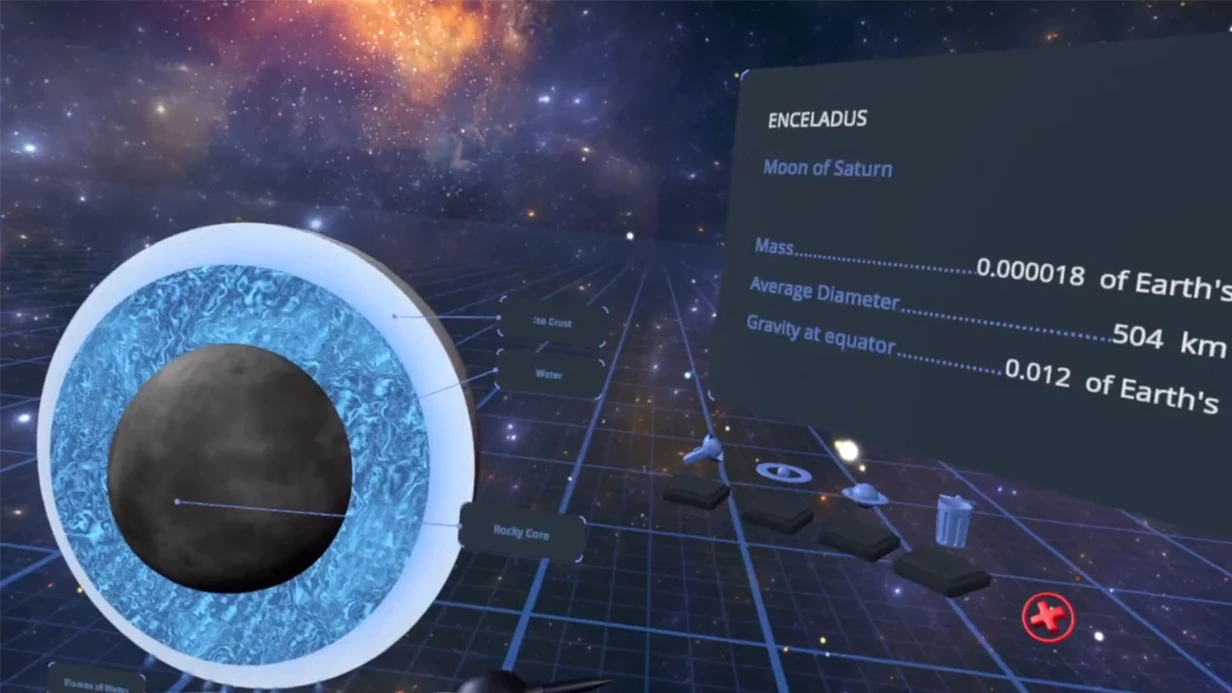
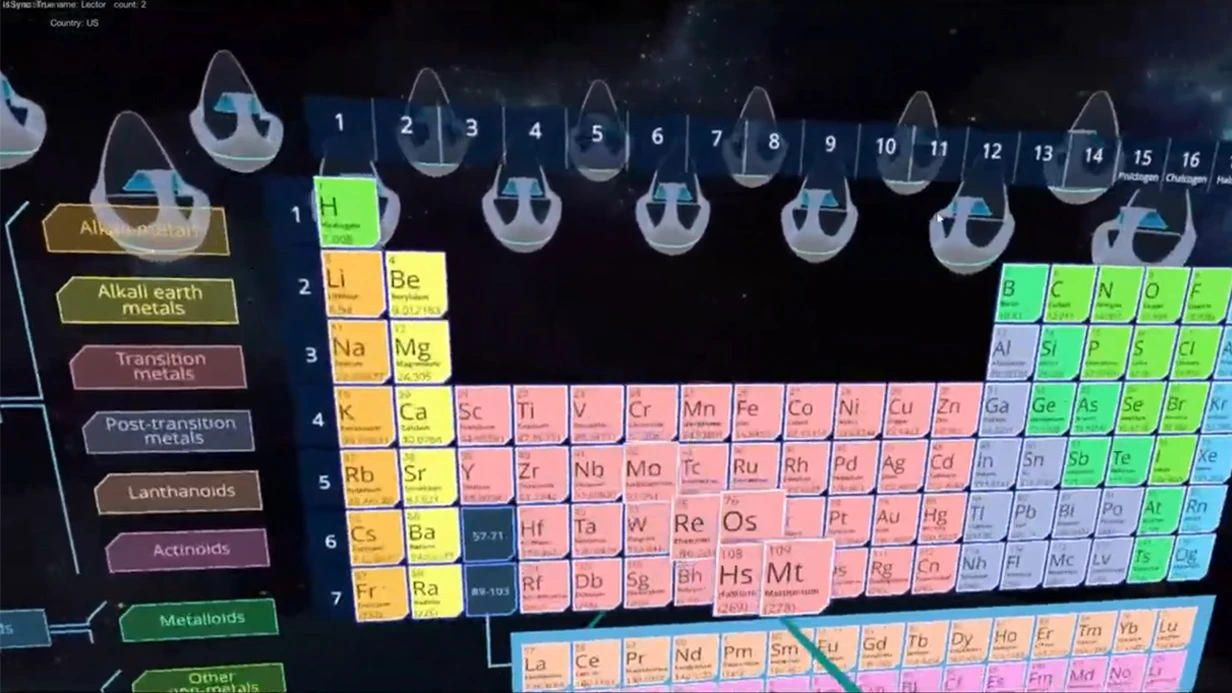
An immersive presentation solves this problem. Instead of flat images — a virtual tour of the plant, where the buyer "walks" through the workshop, examines the 3D visualization of the equipment from all sides, and even starts it up.
This VR format for B2B shortens the deal cycle: there is no need to bring the client to the production site or build an expensive booth, and questions about specifications are answered right during the demonstration.
We develop interactive solutions that work on any device — from a manager's tablet to a VR headset at an exhibition.
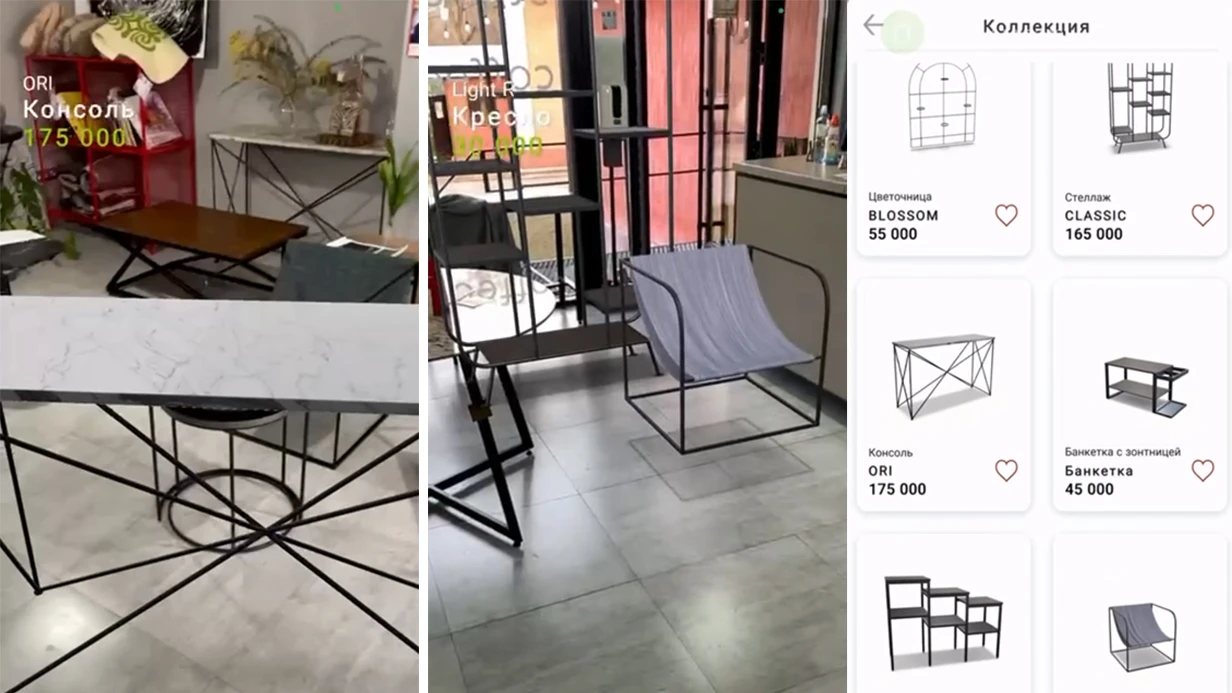
For industrial enterprises, this means visual clarity at every stage of negotiations: an engineer opens the 3D model and shows the components, a manager assesses the line's throughput, and the director sees the final layout of the site with the equipment's dimensions taken into account.
As a result, sales become predictable and the presentation manageable: you show the client exactly the scenarios that work toward closing the deal.
An interactive catalog and virtual demonstrations do not replace live communication, but they give it a solid visual foundation — and turn abstract "specifications" into a concrete solution that the client wants to buy.
What You Get: 5 Benefits of Implementing Immersive Technologies
For industrial companies, showing a large product is not easy: a scale model is expensive, a catalog is flat, and a site visit takes a long time. A VR/AR solution removes these limitations — the customer sees the equipment at real scale and in action right in the meeting room.
We build such demonstrations on professional equipment, so the result is stable and predictable.
Visual Clarity Without Compromise
A drawing or a slide does not convey the scale of an installation. In VR, the customer "walks around" the equipment, starts the process, and understands the operating principle in 10 minutes instead of half an hour of explanations. Fewer objections — more time for the essence of the deal.
Scalability to Any Market
One digital sample replaces dozens of physical models. The demonstration can be shown in any city — a headset or a tablet is enough. Client reach grows without business trips or logistics costs.
Higher Sales Conversion
When a client sees the product in action, decisions are made faster. In our projects, implementing a VR demonstration multiplies the conversion to meetings and commercial proposals. The result is easy to measure and link to revenue.
Shorter Deal Cycle
The demonstration brings participants together: engineers, finance officers, and the director look at the same thing at once, and questions are resolved on the spot. The average sales cycle shortens by several weeks, especially for standard products.
Brand Recognition
An unconventional presentation format becomes a news hook in itself. Participants share their impressions on social media, and the brand becomes associated with technological leadership. At exhibitions, a VR booth attracts noticeably more visitors than a classic display.
Industrial Demonstration Formats: From VR Showroom to AR Instructions
An industrial product is hard to show with words or flat photographs — the client needs to see how the equipment works, how it fits into the process, and how it is operated.
That is why we develop demonstrations in three formats, each solving its own task — from sales to staff training.
| Format | For Whom | What It Gives the Business |
|---|---|---|
| VR Showroom | For clients, partners, investors | Full immersion in the product without a physical sample. Higher interest, shorter deal cycle, stronger brand trust |
| AR Instructions | For staff, service teams, installers | Visual prompts right on the equipment. Faster training, fewer errors during assembly and maintenance |
| Web Demo | For a broad audience, remote negotiations, exhibitions | Instant access from any device — no app installation required. Maximum reach, easy to share a link before and after a meeting |
The formats are easy to combine: for example, at an exhibition we launch a VR showroom, and after the presentation we send the client a web demo. This way you get a unified demonstration ecosystem that works at every stage of the funnel.
Which format is right for you depends on the product and the audience. We help you choose a scenario, develop it turnkey, and support the launch — you get a ready-made tool, not just a "pretty picture."
How the Project Works: 6 Steps from Brief to Launch
For an industrial demonstration, a VR application is a tool that must run without failures and deliver measurable results: impress customers, train employees, and save time on real samples.
That is why we have built a process of six clear steps — at every stage you see what is happening and control the project's progress.
-
Brief and goals. We gather requirements: who your audience is, where and how the application will be used, which scenarios matter. We lock in goals — for example, increasing negotiation conversion or cutting training time.
-
Scenario and interactivity. We work out the demonstration logic: the sequence of actions, key messages, and interaction formats. You receive a scenario for approval and can make edits before development starts.
-
Design concept. We show what the virtual space and interface will look like. This removes the risk of "the wrong result" at later stages.
-
Development and testing. We build the application and test it on professional equipment and real scenarios. We refine it until it works reliably in your environment.
-
Launch and training. We install the system, configure it for your premises and equipment, and brief your team. You get a ready-made tool that can be used immediately.
-
Support and evolution. After launch, we stay in touch: we make edits, add new scenarios, and keep track of platform updates. The application keeps working, and you keep getting value from it.
This approach gives a transparent budget and clear timelines: every stage is agreed upon, and you always know where the project stands and what comes next.
As a result, you get not "development for the sake of development" but a working demonstration tool that brings real value to the business.
What's Included in the Delivery: A Complete Package for Your Sales Department
When you order a VR solution, you get not just an application but a ready-made tool for your sales department. We specify the full scope of delivery in the contract so you immediately understand what you will receive and how to use it. The package includes:
- A built WebVR application — runs in the browser on any modern laptop or tablet, with no additional software to install. This is your demonstration, ready to show to a client.
- VR project source files — the full code and assets remain your property. You can hand them to another contractor or make changes in-house.
- Project documentation — a description of the structure, instructions for launching and configuring, and recommendations for replacing textures, models, or texts without the developer's involvement.
- Staff training — several online sessions for your managers: how to launch the demonstration, control the scenario, and answer clients' technical questions.
- Update procedure — a clear process for making changes: what is covered by warranty support, how long a typical change takes, and who is responsible for specific tasks.
- Trial operation — after the build, we give you access for testing and run through the sales scenario together to make sure everything works in real conditions.
Thus, the sales department gets a tool that can be shown as early as the day after handover. And you get full control over the product and a clear process for evolving the demonstration. If you need a specific format or an additional package, we can discuss it at the brief.
Case Study: How a Plant Cut Its Deal Cycle in Half
An ordinary plant sells complex equipment, and previously every potential customer wanted to visit the production site in person. Arranging a visit took anywhere from two weeks to a month: scheduling, travel, meeting with technologists — and only then a substantive conversation. Managers spent hours on a single introduction, and the deal cycle stretched over months.
We suggested that the MetallProfil plant replace part of the on-site tours with a virtual tour of its workshops.
Instead of photos and videos, the client gets an interactive demonstration: they can "walk" along the production line, zoom in on components, and watch the assembly process.
All of it works right in the browser, without installing software or special equipment — a regular laptop or tablet in the meeting room is enough.
What Changed After the Launch
- The deal cycle was cut in half: clients make a preliminary decision after the first demonstration, not after a trip.
- The conversion from initial negotiations to commercial proposals rose by a third — customers immediately see the production standard.
- Managers save time: one virtual presentation takes 15 minutes instead of four hours of phone calls and emails.
Managers began using the VR demonstration more often as the first step, leaving the plant visit only for signing the contract. This eased the load on technologists and reduced travel expenses.
Here is how the plant's commercial director commented on the result: "We thought VR was just an eye-catching toy for exhibitions.
It turned out to be a working sales tool: the client sees the production without leaving the office, and questions drop away before the meeting even happens." After the first stage, the plant ordered an expanded version for export negotiations.
How to Choose the Right Format for Your Task?
Choosing a format starts not with technology but with the task: exactly what you want to show, to whom, and under what conditions.
For an industrial demonstration, there are usually three key criteria — the number of locations, the type of product, and the level of audience engagement. If the object needs to be shown in one place on a large screen or through a headset, a single installation is enough.
If the product is demonstrated at several exhibitions, to dealers in different cities, or to customers remotely, a web version that opens on any device without installation is more practical.
The second important factor is the product itself. Large-scale equipment, a production line, or a complex manufacturing process cannot be brought into a meeting room.
The VR format provides full immersion: an engineer "walks around" the installation, sees the internal components, and understands the operating principle.
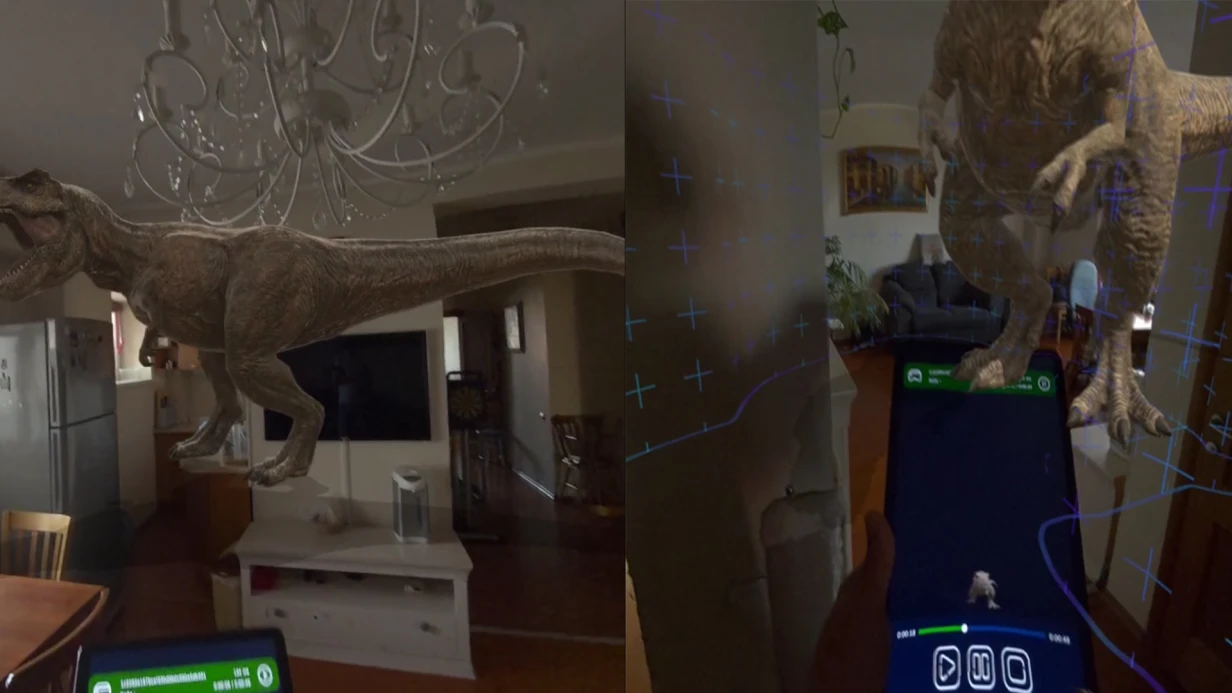
For objects that already exist in the physical world, augmented reality is more effective — it overlays digital data on a real sample and lets you show hidden capabilities right on the spot. Mixed reality helps combine both approaches when part of the process is virtual and part is real.
It is also worth thinking about who will use the solution. An executive needs only a short tablet presentation, a technologist needs an interactive instruction, and a client needs the ability to "tinker with" the product on their own.
The number of users and usage scenarios determines whether a single-user launch or a multi-user session is required. The technical side is resolved at the design stage — the important thing is to determine in advance which formats will deliver the most value to your audience.
The main rule: criteria first, format second. If there is one location and the audience will gather in a hall, choose a stationary VR zone.
If it is about a constant demonstration at a booth without an operator, an interactive web-VR that runs on a laptop or in a headset via a link will do. When the product already exists on site and you need to highlight its advantages, use AR.
Choosing a solution comes down to a simple question: what should people see and what should they do after viewing. Based on that, we select the right format for your task — not the other way around.
Common Doubts: What if the Solution Doesn't Fit or Breaks
Clients rarely ask about VR's capabilities — what scares them is the flip side: that the solution won't fit into production processes, will break in front of the customer, or will be left without support. These are the right questions, and we answer them before the contract is signed.
What if the VR solution doesn't fit our task?
Before we start, we review your scenario free of charge, visit your site, and test a prototype on your equipment. If we see that virtual reality will not deliver the needed result, we say so honestly and offer an alternative. We sign the contract only after you have approved the scenario and seen it in action.
Who is responsible if the solution breaks during a presentation?
We provide a warranty on all work and state it in the contract. For industrial demonstrations, we have a rapid-recovery system: remote access within a business day, an engineer's on-site visit, and a spare equipment kit at the venue — the presentation will not stop.
Is the solution compatible with our hardware and software?
We adapt VR to your infrastructure — from older laptops to industrial tablets and existing management systems.
Over the years, we have integrated virtual reality into workshops, laboratories, and exhibition booths, so we know how to make a solution work in your specific environment.
Still have doubts? Send us your scenario — we will review it free of charge and show you on a test stand how the solution will work for you.Leave a Request — Get a Cost Estimate and a Pilot Scenario
You already see how VR/AR changes the format of industrial demonstration: a complex product is explained in minutes, the customer's attention is held for a long time, and your brand is remembered as a technology leader. To get this result for your specific task, one step is enough — leave a request for VR development.
We will send you a cost estimate and realistic timelines, and we will also propose a pilot scenario — a short interactive story that lets you evaluate, before full production, how the application will work on your clients. This is not theory but a working format that most of our industrial projects start with.
What you get right after contacting us:
- a development cost calculated after audit for your demonstration type — from "bring an equipment model to life" to a full VR package;
- timeline benchmarks: when the pilot will be ready and when the final version will be;
- a concrete pilot scenario: what exactly your client will see and do in the first 10 minutes of the demonstration;
- a format recommendation: virtual reality glasses, a headset with sensors, 3D visualization on screen, or AR overlay on a real object;
- a clear list of equipment and our work — with no hidden "surprises" in the budget;
- an assessment of the value for your business: how much time and expense the new demonstration will save at every client meeting.
Submitting a request does not obligate you in any way. We will listen to your task, ask clarifying questions, and come back with a proposal you can compare against others. This way you will understand where to start and what effect to expect from VR tools.
Leave your contacts — and by the next business day you will receive the first figures and ideas for your industry.