

A virtual tour that retains customers and boosts sales
While a client browses your website, they compare you with competitors. If others have a visual virtual tour and you only have photos and descriptions — the choice is more often made not in your favor.
A 3D presentation removes the key objection "I can't see what I'm buying" and shortens the path from interest to a deal.
Without interactivity, visitors quickly leave: static images don't create a sense of presence, don't show scale, layout, or details. A virtual tour holds attention several times longer — the person decides for themselves where to look, what to open, how to move. This turns viewing into a live experience that is memorable and builds trust in you.
For you, this is not just an attractive format but a client retention tool. People return to the tour, forward it to colleagues and friends, reopen the site — and come back with a decision already made.
That's how interactivity works for sales: more time on the site, higher conversion, fewer unnecessary questions at the deal stage.
We create virtual tours that fit into your website and work toward results. We understand business objectives, propose the right format, and launch quickly — so you stop losing clients due to the lack of a visual presentation.
What benefits does VR and AR implementation bring to business?
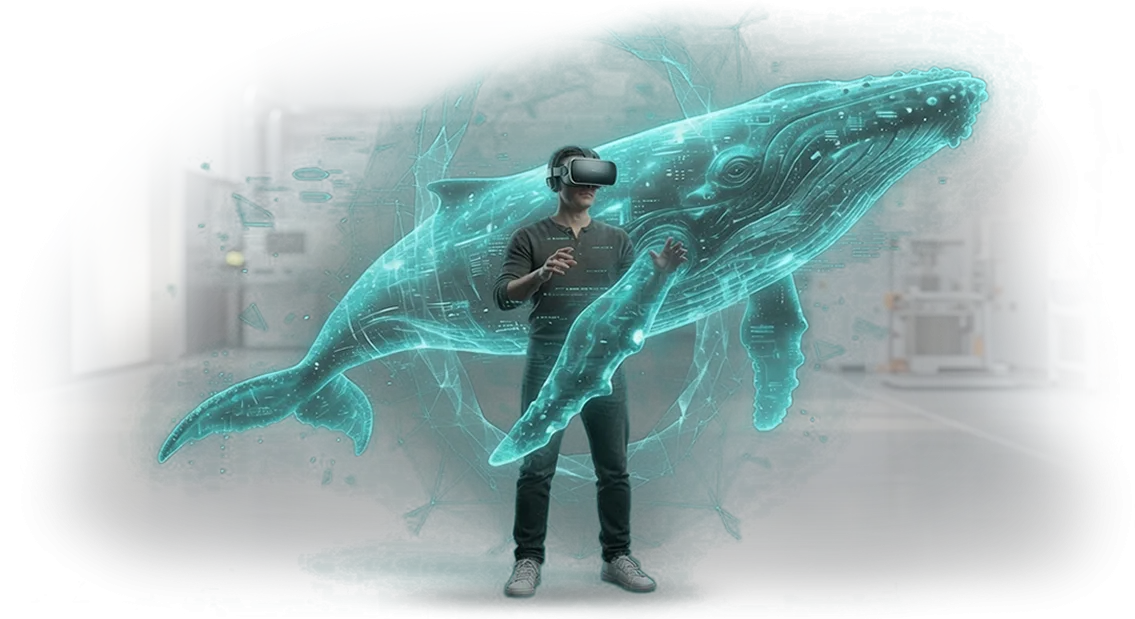
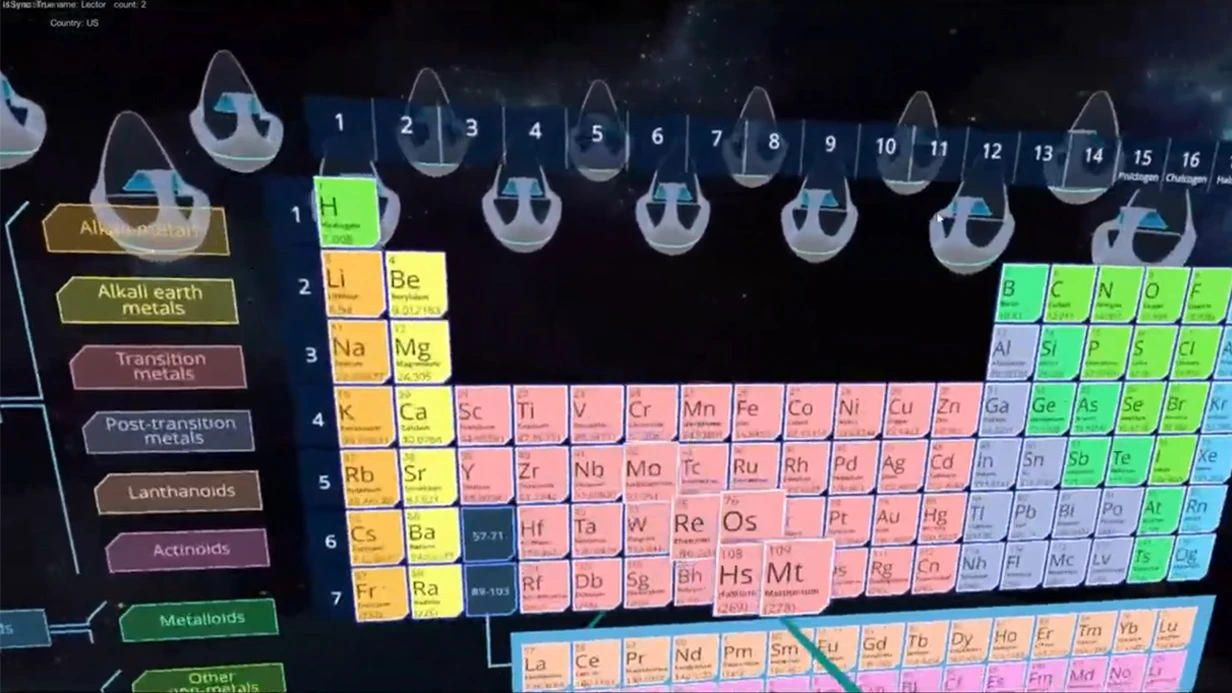
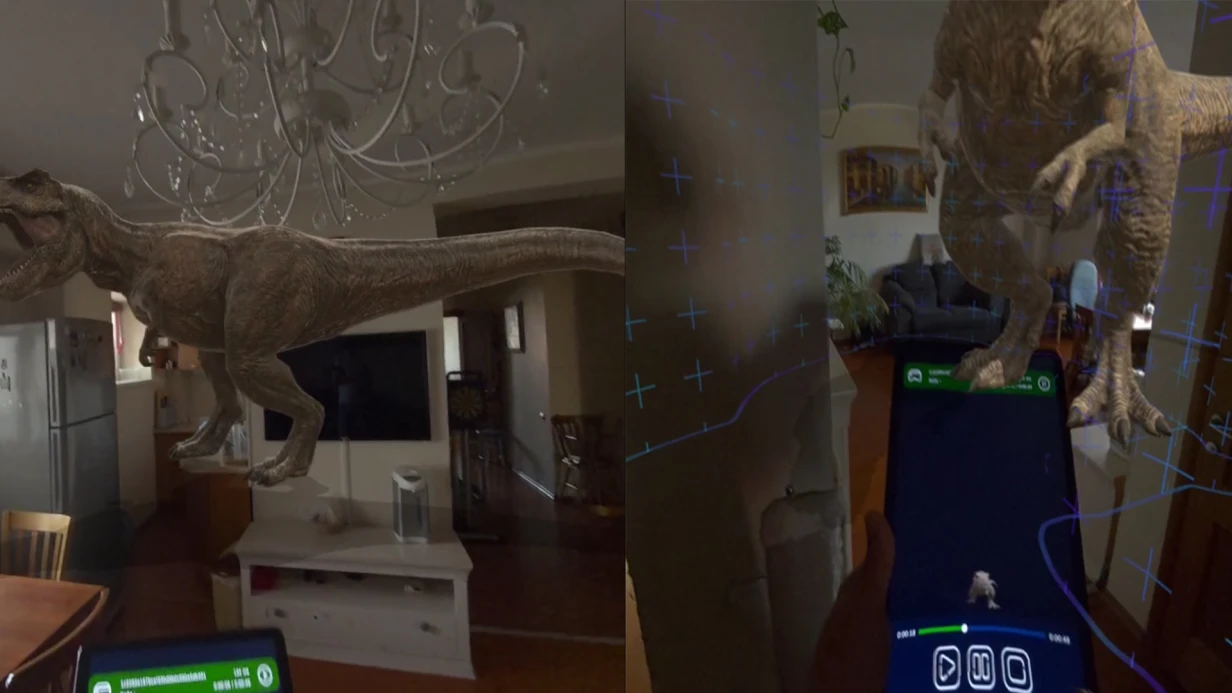
VR and AR for business are no longer experiments — they are a working tool that sells on your behalf. Instead of flat photos and text, the client gets the opportunity to "walk through" your facility, examine a product in detail, or see an interior before renovation.
This kind of 3D immersion holds attention several times longer than a regular presentation, which means it increases the chance of an order.
The main business benefits are greater engagement, brand trust, and higher conversion. When buyers interact with the product themselves, they make decisions faster.
For example, a virtual hotel tour removes doubts like "does it match the photos on the site?" — the guest sees the real environment and is already mentally there.
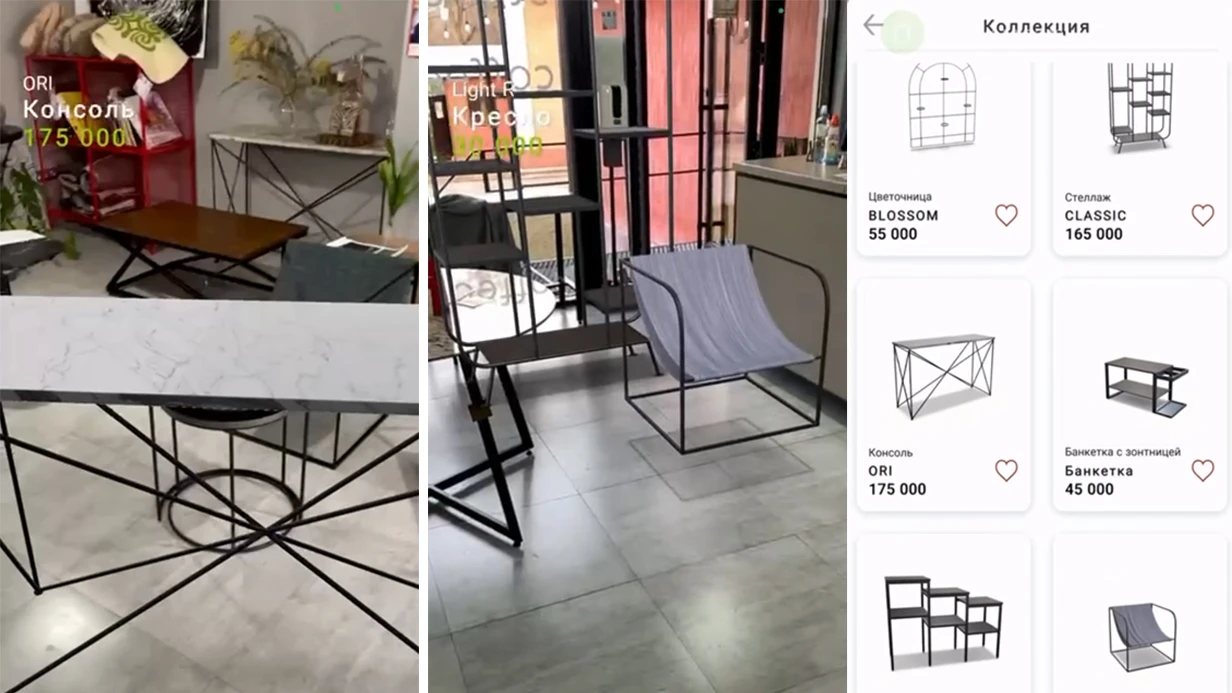
AR solutions let customers "try on" furniture or clothing, which reduces return rates and increases customer loyalty.
To create such projects, we use professional tools and web technologies, including the WebXR platform. This means your virtual tour runs directly in the browser on any device: smartphone, tablet, or computer. No need to install apps or buy expensive equipment — a link is enough. And we handle the entire technical side: from shooting and 3D modeling to publication and support.
The result is a virtual tour that increases user time on site by 2-3 times and, on average, lifts inquiry conversion by 25–30%. This is measurable value you'll notice from the first weeks after launch. Tell us about your task — we'll propose a solution that fits your budget and goals.
VR solution formats for different company tasks
The choice of virtual tour format directly affects whether a client sees your facility and decides to reach out. Panoramas, interactive scenes, and 3D models solve different problems: quick overview, deep immersion, or precise detailing.
The wrong format means lost inquiries, so it's important to define the tour's goal from the very start.
We compared the main VR formats by business criteria: reach, engagement, ease of use. The table will help you choose the right option or a combination of them.
| Format | Who it's for | What it gives the client |
|---|---|---|
| 360 panorama tour | Real estate, hotels, restaurants, museums | A quick overview without a visit, a sense of presence, and trust before the first call |
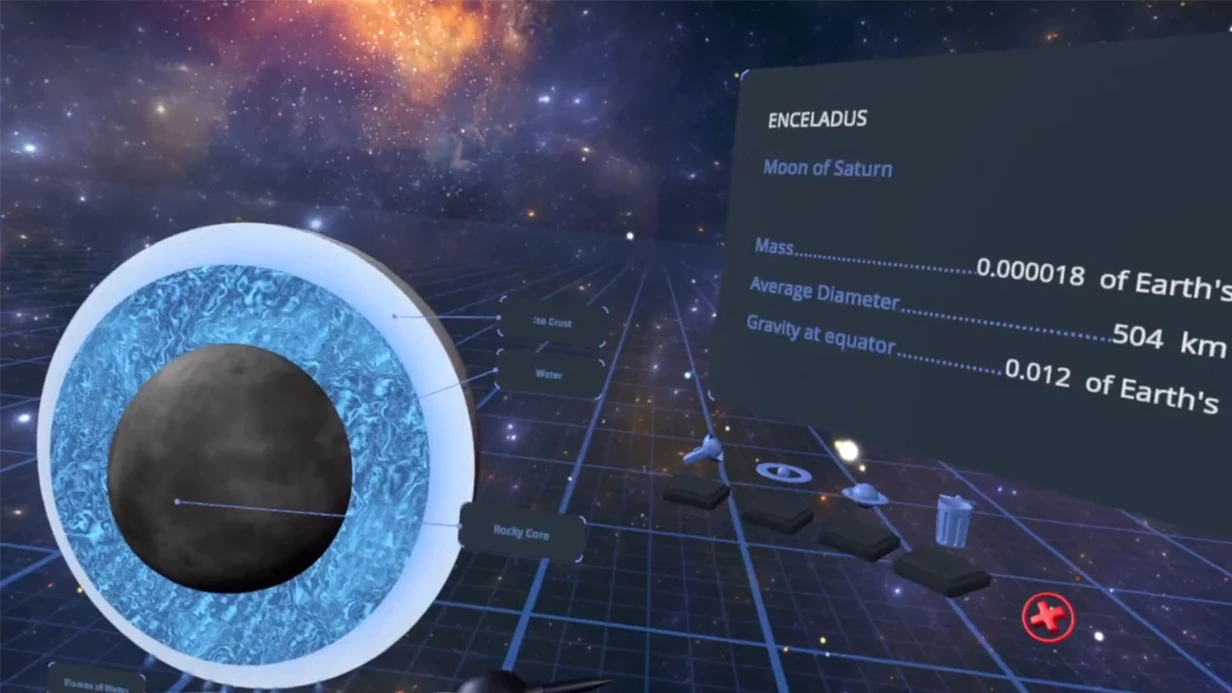
| Interactive scenes | Training, catalogs, exhibition stands | Visitors explore details on their own — time on site and engagement grow |
| 3D object model | Architecture, construction, manufacturing | Accurate understanding of dimensions and materials, fewer revisions during approvals |
| Browser-based solution | Any business with a website | Viewing without installing apps; the visitor stays on your page |
A panorama captures the atmosphere of a space, interactive scenes build a narrative, and a 3D model demonstrates expertise. The browser-based format combines all options and expands reach — users need only an internet browser and a link.
In our work, we often deliver combined scenarios: a panorama for the first impression, an interactive scene for exploring a key object, and 3D detailing to support the purchase decision.
We'll pick the right combination for your task and budget — send a brief, and we'll propose the best solution.
How a turnkey virtual tour is created
When working on a virtual tour, we always start with a short brief: we discuss the task, the audience, and the shooting points. From there, we handle all the organization — scheduling, site preparation, and agreeing on camera angles. You get a single point of contact and a clear plan instead of a dozen contractors.
- Brief and audience. During a call, we pin down the tour's goal: selling a property, training employees, or presenting at an exhibition. We determine how many objects and rooms need to be shown and agree on the timeline and deliverable format.
- Preview and scenario. We map a route through the venue and set the narrative accents: which areas to show first, where to embed a description, logo, or button. You get a diagram and a list of points for approval — no surprises on site.
- Shooting day. We arrive at the agreed time with our own equipment, causing minimal disruption to your operations. After the shoot, we send draft materials for a quick review.
- Assembly and refinements. We build the navigation, add hot spots, pop-up tooltips, and interactive elements. We show the intermediate result and make edits until it fully matches your expectations.
- Launch. We place the tour on your website or subdomain, add it to the main screen, and connect analytics. We test it on phones, tablets, and computers so visitors get the same smooth experience in any browser.
- Post-launch support. We stay in touch: we help replace outdated descriptions, add new objects, and refresh interactivity when your display changes. Renew the support, and the tour lives alongside your business instead of becoming outdated in a year.
This workflow delivers a predictable result: you know in advance what you'll get, how long it takes, and when the tour can be used in marketing.
As one client said at the start of an implementation project: "I don't want to get into the technology — I want a virtual tour that simply works and brings in inquiries." That's why a single manager oversees all stages, while technical questions stay inside the team.
In the end, you get a ready-made turnkey tool: a link, embed code, and a brief instruction for your staff. If needed, we'll prepare a dedicated page for the tour and advise on how to use it in email campaigns and social media.
What's included in delivery: a complete launch kit
You get more than just a ready link to a virtual tour — you get a complete working package. After the project is complete, all rights, files, and documentation pass to you — you're not tied to the contractor and can develop the solution yourself or with any contracting team.
Here's what's included in the delivery:
- Source project files — all the materials the virtual tour is built from: photo panoramas, models, and interaction scenarios. This is your property, not a "rented" solution.
- Ready-to-use build — a version you can publish on your website right away or share with clients via a link. No extra steps needed to launch.
- Code and content rights — official transfer of intellectual property rights. You can refine the tour, change contractors, or reuse the work in other projects.
- Technical documentation — a clear description of how to deploy the project on your hosting, update content, and connect analytics. Even if your specialist is new to such solutions, they'll figure it out.
- Administrator's guide — step-by-step instructions for changing navigation points, uploading new panoramas, and editing the interface without involving a developer.
- Launch checklist — a short action list for publication and quality control: checking load speed, correct rendering on different devices, and the final link for distribution.
- Post-handover support — for an agreed period, we answer your team's questions and help with initial setup. You're never left alone with the project.
This package eliminates the client's main risk — "what do we get and what do we do with it." You're buying not an abstract service but a manageable asset: the files are in your hands, the rights are confirmed, and your team understands how to use the solution. All that's left is to launch the tour and collect inquiries.
Case study: how a 3D product presentation increased conversion
When a product is hard to show in a flat photo, buyers hesitate and turn to competitors. We see this in nearly every other project: the website works, visitors come, but there are no inquiries.
The problem is that people lack a sense of "presence" — they can't picture the product in real life.
The solution is a virtual tour. It's a 3D product presentation where the client "steps inside" the object, examines it from all sides, and even interacts with details.
This format holds attention for minutes at a time and answers questions before the customer ever calls a manager.
A real example: developing a VR tour for the kitchen manufacturer KukhniMaster. Previously, the product page had only photos. Average viewing time didn't exceed 45 seconds, and inquiry conversion was 0.4%.
We built a virtual tour of three kitchen models: buyers could open cabinets, pull out drawers, and see how the facade colors changed under different lighting. The tour launched in one click, with no apps to install.
Project results: two months after launch, average time on page grew to 4 minutes, inquiry conversion increased 2.4 times, and repeat visits to the site rose by 60%.
Orders began coming not only from the city where the showroom is located but also from neighboring regions — people arrived already ready to buy.
The cost of the tour paid for itself within two months. The sales team stopped explaining ten times over what each kitchen looked like — buyers saw everything themselves on the site. After the launch, the client ordered tours for four more product lines. That's the best proof that the case was a success.
What to do if you have a non-standard task?
A non-standard task is more the rule than the exception. Every business has its own specifics: an unusual facility layout, a special product demonstration scenario, different visitor groups.
Ready-made templates don't work, so we don't force your task into a standard mold — we look for a solution that addresses your specific need.
An individual approach starts with a brief. We ask questions about goals, audience, and expected results — even if you feel you don't know much about technology.
Then we propose a virtual tour scenario tailored to your specifics: viewing points, transition logic, interactive elements, duration.
All of this is discussed before work begins, so you know in advance what you'll get. If the standard scenario doesn't fit, we don't push it.
For example, when you need to show several layout alternatives, add voice-over in multiple languages, or embed the tour into an existing company website.
We adapt the tour's structure to your task and offer options with a clear result at every stage. You're never left alone with the specifics: you can clarify details, make changes, and ask questions at any time. This is a normal working arrangement, not an exception.
The key is to get a working virtual tour, not just a pretty picture. So the result is a solution that solves your non-standard task and delivers a tangible outcome for your business. We work this way on every project, regardless of its complexity and initial requirements.
Answers to common questions about VR/AR development
Having doubts before you start is normal. A virtual tour can seem complicated: what if it drags on, costs too much, or doesn't fit into your current processes? We've gathered answers to the questions we hear most often before a VR/AR development order. Honestly, with no technical fog.
How long does virtual tour development take?
A basic tour with 10–15 viewing points is ready in 2–3 weeks. That includes shooting, processing, and assembly. If you need more scenes, animation, or website integration, the timeline grows to 5–6 weeks, but we fix the date in the contract and deliver in stages. You always see the intermediate result.
How much does it cost?
The cost depends on the number of objects, the level of detail, and where the tour will be used: on a website, in social media, or in a mobile app.
After the brief, we give you the exact figure — no hidden surcharges for "turns out we need more." You receive an estimate before the start and know exactly what you're paying for.
Is it hard to embed the tour into an existing website?
No. A finished virtual tour embeds just like a regular video player: we provide a link and embed code. It works correctly on desktops, tablets, and smartphones. Visitors don't need to download anything — they just open the page. It works with any site built on popular website builders and CMS platforms.
What about support after launch?
After the tour is delivered, you receive instructions on updating content. If you want to add new points or change descriptions, we'll take that on as a separate task. For the first month, minor edits are free; after that, we work at the agreed rates. You're never left alone with the project.
Start development: get a cost estimate and project plan
For a virtual tour to bring in clients rather than gather dust in a portfolio, it's important to define goals, audience, and touchpoints from the very beginning.
That's why we suggest starting the project with a short brief: you tell us about your task, and we show you how to solve it — without unnecessary research and lengthy documents.
Ordering development means getting a transparent process and a clear result. Immediately after you reach out, we prepare a cost estimate and a work plan, and you spend time only on approving key decisions.
What you'll get after reaching out:
- a cost estimate tailored to your task — we lock in the price before the start and don't change it along the way;
- a work plan with stages and deadlines — you always know what's happening and what comes next;
- format selection: a virtual tour, a mobile app, or a web version for your specific audience;
- examples of similar projects from our practice — see how the solution looks and works;
- answers to questions about integration with your website and social media;
- a commercial proposal with no hidden conditions — just the scope of work, timeline, and result.
This approach has already helped dozens of companies launch their projects faster than they expected. And you gain confidence that the next steps will lead to measurable results — more inquiries and greater brand awareness.
To start your project, leave a request on the website or message us in a messenger. We'll schedule a short call, clarify the details, and prepare an estimate with a work plan — free of charge and with no obligations. Start with concrete numbers and deadlines, not guesses.